
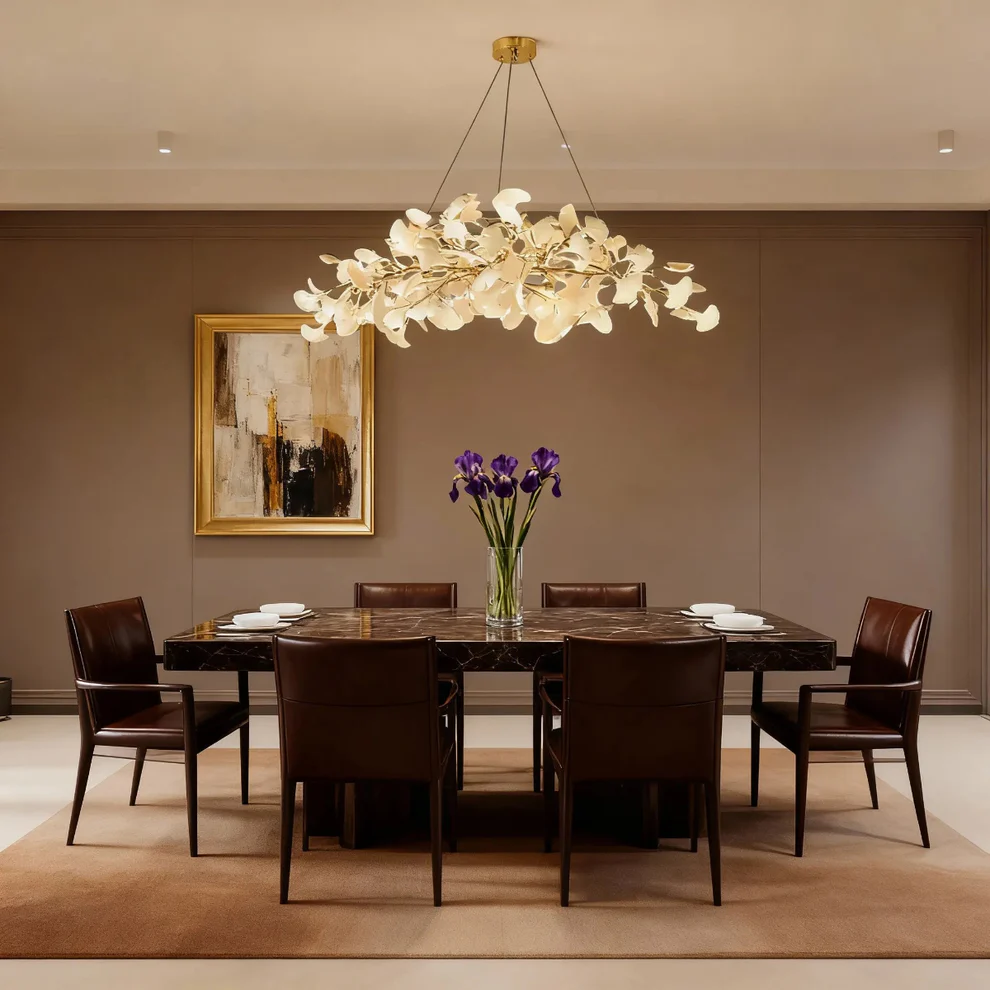
You can pick dining room lighting for your home if you follow some easy steps. The right fixture makes the room feel warm and friendly. This helps people connect when they eat together. Soft lighting makes the room feel cozy. Brighter lights make people feel more lively. Pendant lights over your table make the table stand out. They also make eating feel special. If you use ambient, task, and accent lighting together, you make a space that works for any event.
To understand the impact of proper lighting, consider a recent dining room upgrade we consulted on. The homeowners had a standard builder-grade chandelier that made their space feel sterile and unwelcoming. By swapping it for a linear modern American-style fixture—featuring sleek brass hardware and a refined walnut wood ring instead of basic natural wood—the entire room was elevated. Paired with a dimmable 3000K warm white LED system, the space instantly shifted into a "quiet luxury" setting. The homeowners noted that this simple lighting change not only highlighted their table decor but also made guests linger much longer after dinner parties.
Key Takeaways
Think about how you use your dining room. This helps you pick the best lighting. Different things you do need different lights.
Measure your room and your table. This helps you pick the right size light. The right size light makes the room feel nice and balanced.
Hang fixtures 30 to 36 inches above the table to ensure optimal illumination without obstructing views.
Pick a lighting style that matches your decor. When styles match, the room feels put together and welcoming.
Use different kinds of lights like ambient, task, and accent. Using layers of light makes the room feel warm and interesting.
Assess Your Dining Room Lighting Needs
Your Lighting Needs Checklist
Before looking at fixture styles or calculating sizes, ask yourself these three critical questions to evaluate your daily habits and space usage:
Primary Function: Is this table strictly for formal dinner parties, or does it double as a daytime home office and homework station? (This determines your need for high-lumen task lighting versus soft ambient glow).
Desired Atmosphere: Are you aiming for a bright, energetic family space, or a cozy, intimate environment for evening hosting? (This influences your dimmer requirements and bulb choices).
Natural Light: Does the room receive abundant sunlight through large windows, or is it an enclosed space? (This dictates how much baseline artificial light is necessary during the day).
Once you understand these habits, you can choose the right fixtures.
How You Use the Space
Think about how you use your dining room each day before picking lighting. Some people eat family meals here. Others have dinner parties or celebrate special days. You might do homework, crafts, or hold meetings in this room too. Each thing you do needs a different kind of light.
Warm lighting makes family dinners feel calm and cozy.
Cooler lighting helps you see better for parties or work.
Dimmable fixtures let you change how bright the room is.
Big dining rooms need large fixtures for even lighting. Small rooms do better with smaller lights.
Room and Table Measurements
First, measure the length and width of your dining room, as well as the dimensions of your dining table. Having both measurements ready will help you determine the perfect fixture size later, depending on whether the light hangs over the table or lights the whole room.
Be sure to note your ceiling height as well, as this will dictate your hanging options. For particularly long tables, you might also want to decide early on if you prefer one long linear fixture or two to three smaller pendants spaced out.
Aspect |
Small Spaces |
Large Spaces |
|---|---|---|
Fixture Scale |
Smaller, compact fixtures |
Larger, more elaborate fixtures |
Style |
Sleek, streamlined designs |
Grand chandeliers or multi-pendants |
Number of Fixtures |
Fewer needed |
More can be used for even light |
Measuring your room and table accurately from the start ensures your lighting fits seamlessly. This keeps you from picking fixtures that either overpower the space or get lost in it.
Choose the Right Fixture Size
Sizing Guidelines
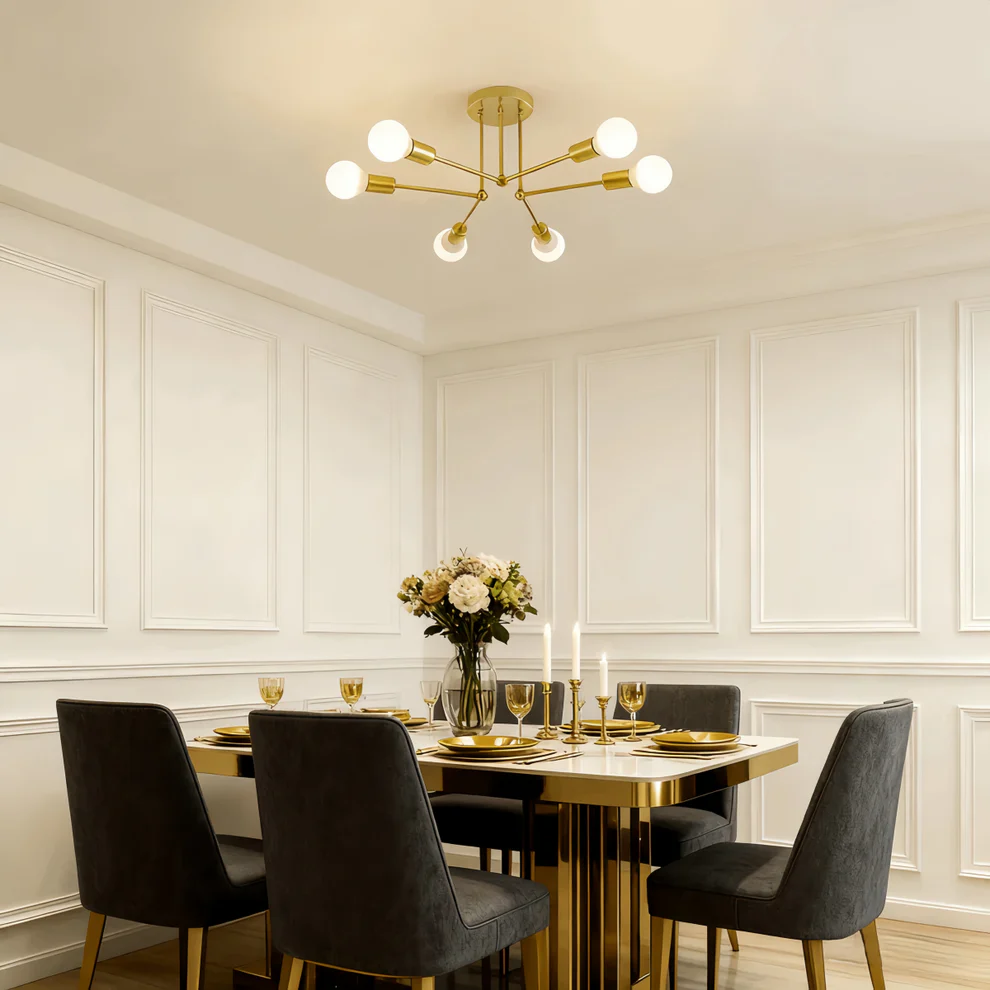
Pick a fixture that fits your space, but it is crucial to know which measurement to prioritize.
Rule 1: The Table dictates the size (For fixtures directly over the dining table). If your chandelier or pendant hangs over the table, always size it based on the table, regardless of the room size. The fixture should be half to two-thirds as wide as your table. For example, if your table is 36 inches wide, choose a pendant between 18 and 24 inches wide.
Rule 2: The Room dictates the size (For general ambient lighting). Only use the room dimensions if you are sizing a central ceiling light and there is no table underneath it, or if you are measuring for general room proportion. To do this, add your room’s length and width in feet, and use that number in inches for the fixture size (e.g., a 10 by 10 foot room needs a fixture about 20 inches wide). Following this guideline, small rooms typically require fixtures about 17 to 20 inches wide, while large rooms can accommodate fixtures up to 26 or 27 inches wide.
For fixtures hanging directly over your table (Rule 1), here are some easy formulas and examples to keep handy:
Fixture Type |
Formula |
Example Calculation |
|---|---|---|
Fixture Width |
Table width × 0.5 to 0.67 |
42" table → 21" to 28" wide fixture |
Linear Fixture Length |
Table length × 0.5 to 0.75 |
72" table → 36" to 54" long fixture |
Tip: Make sure the fixture is at least 12 inches narrower than your table in total (leaving about 6 inches of clearance on each side). This prevents bumping when people stand up and keeps the light visually centered.
Proportion to Table and Room
Your fixture should match your table and room size. If your fixture is too small, it will not stand out. The room will feel empty. If your fixture is too big, it will take over the space. The room will feel crowded.
Think about your room’s size too. The fixture should fit the space without being too big. Good sizing makes your dining area comfortable and stylish. If you follow these steps, your lighting will make your table look great and your room feel welcoming.
Fixture Size |
Consequence |
Impact on Atmosphere |
|---|---|---|
Undersized |
Does not stand out, looks like it disappears |
Room feels empty |
Oversized |
Takes over the room, feels unbalanced and uncomfortable |
Room feels crowded and messy |
Match the fixture shape to your table shape. Round tables look best with round fixtures. Long tables work well with long chandeliers. To maintain perfect visual harmony, the fixture should remain about half to two-thirds (50% to 67%) as wide as your table. This makes the room look balanced and helps your table stand out.
Dining Room Lighting Placement
Hanging Height
Hang your dining room fixture at the right height. This helps make the room feel nice and comfortable. Most experts say the bottom of the fixture should be 30 to 36 inches above the table. This height gives enough light for eating. It also does not block your view or make the room feel small.
Source |
Recommended Height |
|---|---|
Home Lighter |
30 to 36 inches above table |
Lamp Goods |
30 to 36 inches above table |
Painted Hinge |
30 to 36 inches above table |
If your ceiling is taller than 8 feet, you need to hang the fixture higher. For every extra foot, add 3 inches to the hanging height. For example, if your ceiling is 10 feet high, hang the fixture 36 to 42 inches above the table. This keeps the fixture looking right and not too low or too high.
Tip: Always measure from the tabletop, not the floor. This gives you the best height.
Fixture Positioning
Put your fixture in the right spot to light the table well. Place it right above the center of your dining table. Do not put it in the middle of the room if the table is not there. This way, the light shines where you need it most. It also stops weird shadows from showing up.
The shape of your table matters for fixture choice and placement. Use this table to match the right fixture to your table shape:
Table Shape |
Recommended Fixture Type |
|---|---|
Rectangular Table |
Linear or rectangular chandelier |
Round Table |
Round pendant or chandelier |
Square Table |
Square pendant or chandelier |
Long Rectangular |
Linear chandelier or row of pendants |
Oval Table |
Soft linear fixture or two balanced pendants |
Try not to make common mistakes when you hang your fixture. Some people hang lights too high or too low. This can make the room feel strange. If you hang it too low, you cannot see across the table. The room feels crowded. If you hang it too high, the table is too dark. The fixture looks like it does not belong.
Mistake Type |
Description |
|---|---|
Disproportionate Fixture Size |
Picking a fixture that is too big or too small looks odd. |
Hanging the fixture outside the 30-36 inch range can block views or make the table too dark. |
|
Misalignment of Fixtures |
Putting the fixture off-center means less light on the table. |
Note: Always check if your fixture is centered after you hang it. Move it if you need to so the light stays over the table.
Safety is paramount during installation. Always adhere to the following precautions:
Make sure the ceiling can hold the fixture.
Turn off the power before you start.
Use a voltage tester to check the power is off.
Call a professional if you are not sure.
Follow the instructions and check for loose parts.
Match Lighting Style to Decor
Popular Styles
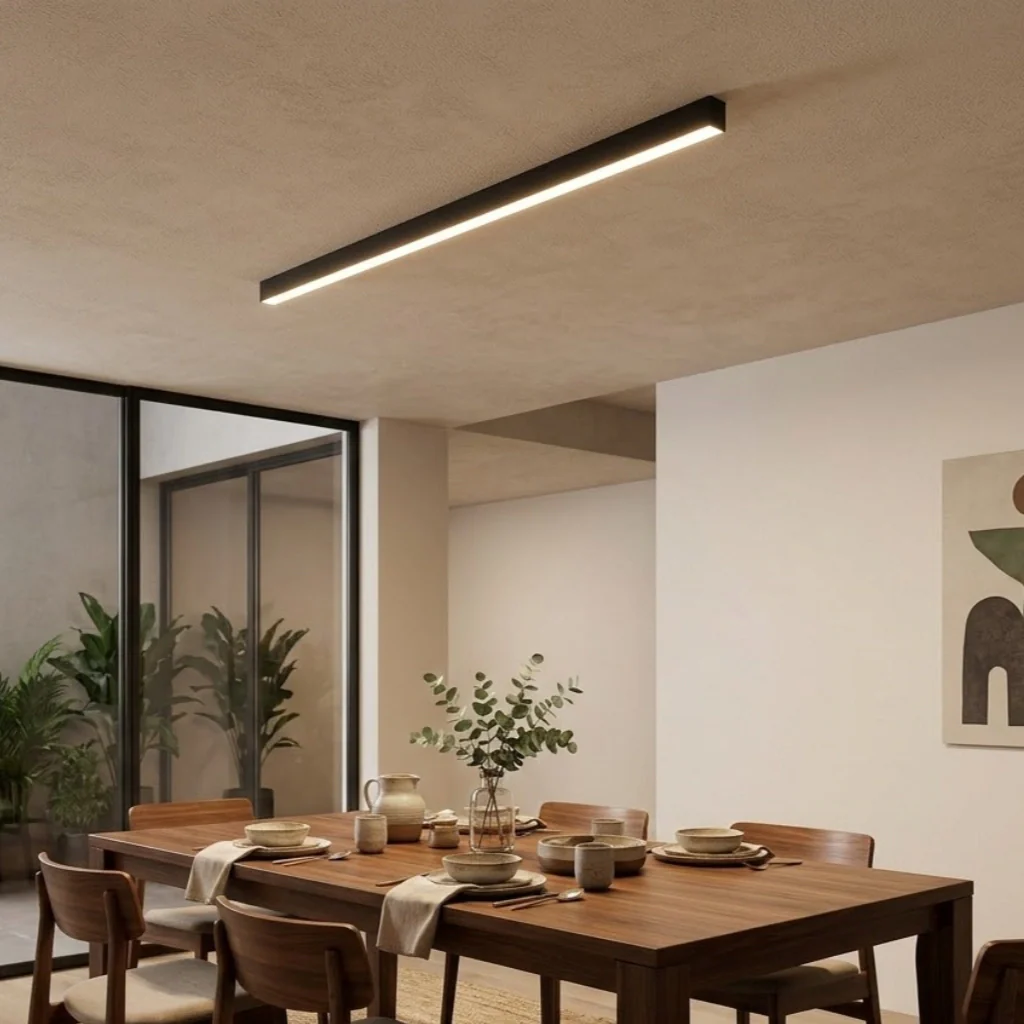
There are many lighting styles you can pick for your dining room. The style you choose can change how your dining area feels. It can also make your table stand out. Many people pick a chandelier as the main light. A chandelier can make your space look fancy or modern. It depends on the design you pick. Pendant lights give your room a smooth, simple look. Some people like big lights to make a bold look above the table.
Here is a table with popular dining lighting styles and what makes them special:
Lighting Style |
Description |
|---|---|
Mixed Materials |
Uses metal, wood, and glass together for a cool look in your dining room. |
Industrial Chic |
Has bare bulbs and metal for a modern, bold style. |
Mid-Century Modern Revival |
Has straight lines and old-style materials like brass for a retro feel. |
Oversized Fixtures |
Big chandeliers or pendants that grab attention in your dining room. |
LED and Energy-Efficient |
Good for the planet and saves energy in your dining area. |
Smart Lighting Integration |
Lets you control your dining lights for a special touch. |
Tip: Pick a chandelier or pendant that fits your dining room’s style. This makes your dining area feel special and inviting.
Coordinating with Your Room
Your dining lights should go well with your furniture and colors. Look at your dining table and chairs first. If your table looks rustic, a farmhouse chandelier or wagon-wheel light works well. For a modern room, pick lights with simple shapes and natural looks. A mid-century modern chandelier with brass or teak gives your room a vintage feel.
Think about these things when you match lighting to your dining room:
Room size: Choose a chandelier that fits your dining area.
Ceiling height: Make sure your chandelier hangs at the right height.
Table shape: Use a round chandelier for a round table or a long fixture for a long table.
Decor style: Match your chandelier to your room’s look for a neat style.
Natural light: Add more lights if your room does not get much sun.
Room usage: Pick flexible lights if you use the room for more than eating.
Budget: Find a chandelier that fits your needs and your budget.
Note: Treat your lighting fixture as the room's architectural centerpiece. The right design anchors the space and seamlessly ties your decor together.
Layer and Adjust Lighting
Multiple Fixtures
You can make your dining room feel nice by using more than one light. If you only use one ceiling light, the room can feel plain and cold. Using different lights adds layers and makes the space more interesting. Sconces, recessed lights, and pendants all help make the room feel balanced.
Sconces on the wall give off soft light and save space. They make the walls glow and help the room feel warm.
Recessed lights fill in dark spots and spread light evenly. You can use them to shine on art or cool parts of the room, which adds warmth and makes things stand out.
A pendant or chandelier over the table draws attention to the table and sets the mood. Wall lights that point up make the room look bigger and give a soft glow.
Tip: Use ambient, accent, and task lighting together. This way, every part of the room feels cozy and bright.
The table below shows how each light helps the room:
Fixture Type |
Lighting Role |
Effect on Atmosphere |
|---|---|---|
Sconces |
Ambient, Accent |
|
Recessed Lights |
Ambient, Accent |
Expands space, adds depth |
Pendant/Chandelier |
Ambient, Task |
Anchors, creates warmth |
Creating Ambiance
You can change how your dining room feels by changing the lights. Try not to use lights that are too bright or harsh. Use dimmer switches to make the lights softer or brighter. This helps you set the right mood for any time. Dimmer LEDs let you go from bright light for eating to soft light for relaxing. This makes the room feel warm and welcoming.
Put lights at different heights and places to make the room look cool and feel warm.
Start with ambient lighting, then add accent lights to show off decorations and add extra warmth.
Task lighting, like a buffet lamp, gives you enough light to serve food or read menus. It still keeps the room feeling nice.
Mirrors and shiny things help bounce light around. This makes the room look brighter and warmer.
As leading interior lighting designers often emphasize: "Lighting is the architectural jewelry of a room. It shouldn’t just illuminate a space; it must define its emotional boundaries."
For residential dining rooms, a 3000K warm white color temperature is the industry standard for creating an inviting atmosphere.
Color Temperature |
Visual Effect |
Best Used For |
|---|---|---|
2700K (Soft White) |
Very yellow and traditional |
Vintage or rustic farmhouse settings |
3000K (Warm White) |
Crisp, inviting, and natural |
Modern American, quiet luxury, highlighting food |
4000K+ (Cool White) |
Clinical and harsh |
Commercial kitchens, garages |
The 3000K spectrum provides a perfect balance. It brings out the rich tones in wooden furniture and makes food look its most appetizing, keeping the room feeling warm and welcoming without the overly yellow tint of older bulbs.
Smart lighting lets you control your lights with your voice or a timer. You can change ambient, accent, and task lighting to fit any event. Energy-saving LEDs with dimmers help you save power and keep the room feeling inviting.
When you use different lights and adjust them, your dining room will feel warm, comfy, and just right for every meal.
Case Study: Mastering the Modern American Dining Room
In a recent residential project, the dining space felt flat because it relied on a single overhead light. To create a cohesive, layered environment, we overhauled the lighting plan using specific, proportional fixtures.
We anchored the room with a central pendant featuring a rich walnut wood upper ring, intentionally choosing this over standard natural wood to elevate the premium, tactile feel. To address the shadows on the perimeter walls, we installed a specific wall-mounted light with a compact 22cm diameter; this precise sizing acted as a subtle accent piece that illuminated the buffet without crowding the wall space. Finally, to expand the visual depth of the room, a minimalist three-legged floor lamp was placed in the adjacent reading corner. By keeping all fixtures strictly at a 3000K color temperature, the space was transformed into a balanced, inviting environment that perfectly executed the quiet luxury aesthetic.
You can make your dining room feel close and cozy by doing a few easy things. First, think about what you need. Measure your room and pick the right size and spot for your light. Choose a style that looks good and works well. This helps people feel close when they eat together. Check these steps before you finish your lighting:
Make sure the fixture is at least half as wide as your table.
Use warm bulbs between 2700 and 3000K and add a dimmer.
Put the fixture in the center of your table for balance.
Pick bulbs with frosted glass or shades to stop glare.
Good lighting makes your dining room feel cozy and special. It shapes your dining time and makes your room more welcoming. If you pick strong fixtures and put them in the right place, you keep your room cozy and save energy. With smart choices, your dining room becomes a spot where people feel close and connect.
FAQ
How do you choose the right bulb brightness for your dining room?
You should use bulbs with 300 to 400 lumens per square meter. This gives enough light for eating and talking. Use a dimmer switch to adjust the brightness for different moods.
Can you mix different lighting styles in one dining room?
Yes, you can mix styles. Try pairing a modern chandelier with classic wall sconces. This adds interest and keeps your space unique. Make sure the finishes and colors work together.
What is the best color temperature for dining room lighting?
You should pick warm white bulbs between 2700K and 3000K. These bulbs create a cozy and inviting atmosphere. Avoid cool white bulbs, which can make the room feel harsh.
How do you clean and maintain dining room light fixtures?
Turn off the power before cleaning. Use a soft cloth to wipe dust. For glass parts, use a gentle cleaner. Check for loose screws or wires every few months to keep your fixture safe.
Share:
Step-by-Step Guide to Picking the Right Exterior Outdoor LED Lights
Should You Switch to LED Outdoor Lights Weighing the Pros and Cons