
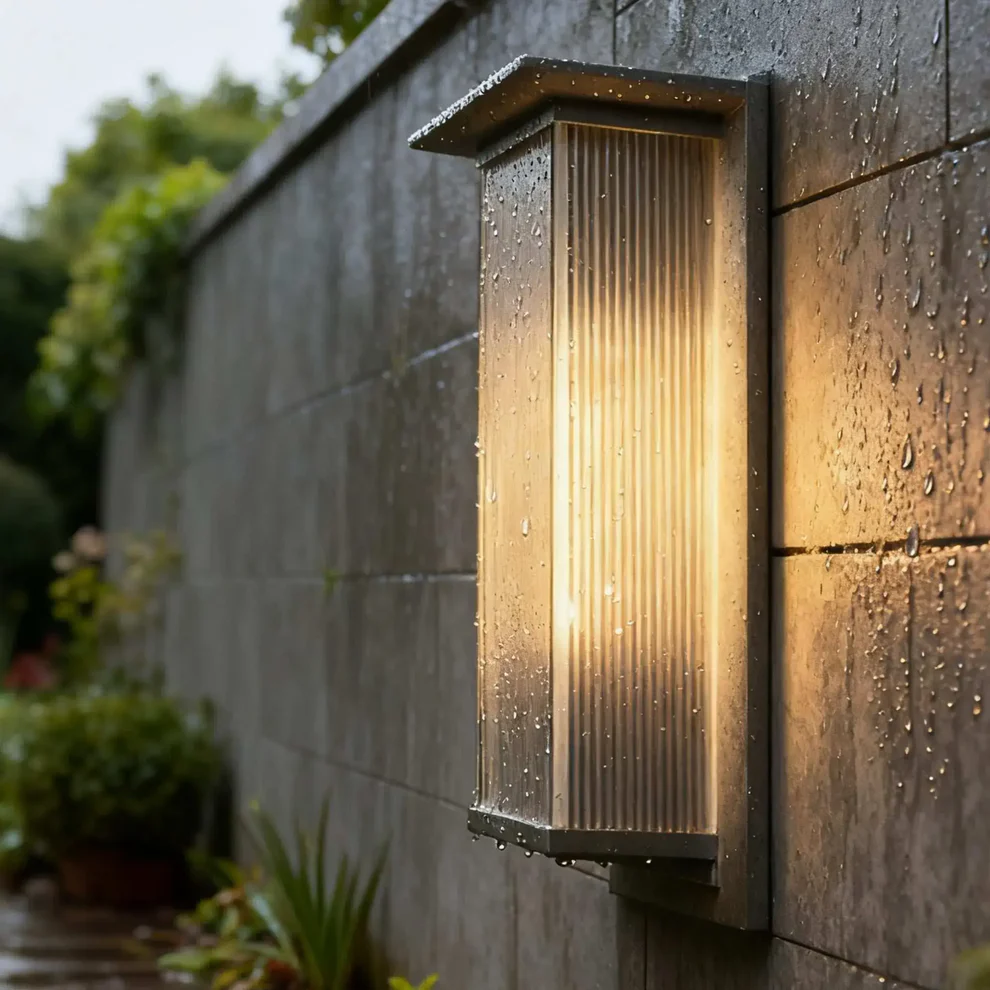
If you want to cut your energy bills and enjoy reliable lighting, switching to led outdoor lights makes sense for most homeowners. Led bulbs use up to 75% less energy than incandescent options, as shown below:
Lighting Type |
Energy Consumption |
Energy Savings |
|---|---|---|
Incandescent Bulb |
60 watts |
- |
LED Bulb |
10 watts |
75% less energy |
You will find the pros and cons include longer lifespan, lower maintenance, and smart features with led landscape lighting. However, higher upfront costs and installation challenges may affect your decision.
Key Takeaways
Switching to LED outdoor lights can save you up to 75% on energy costs compared to traditional bulbs.
LED bulbs last significantly longer, often up to 50,000 hours, reducing the need for frequent replacements.
Investing in LED lighting may have a higher upfront cost, but it leads to substantial long-term savings on energy and maintenance.
LED lights offer better light quality and flexibility, allowing you to customize brightness and color for different outdoor areas.
Choosing LED outdoor lights supports environmental sustainability by reducing energy consumption and waste.
Energy Efficiency of LED Outdoor Lights
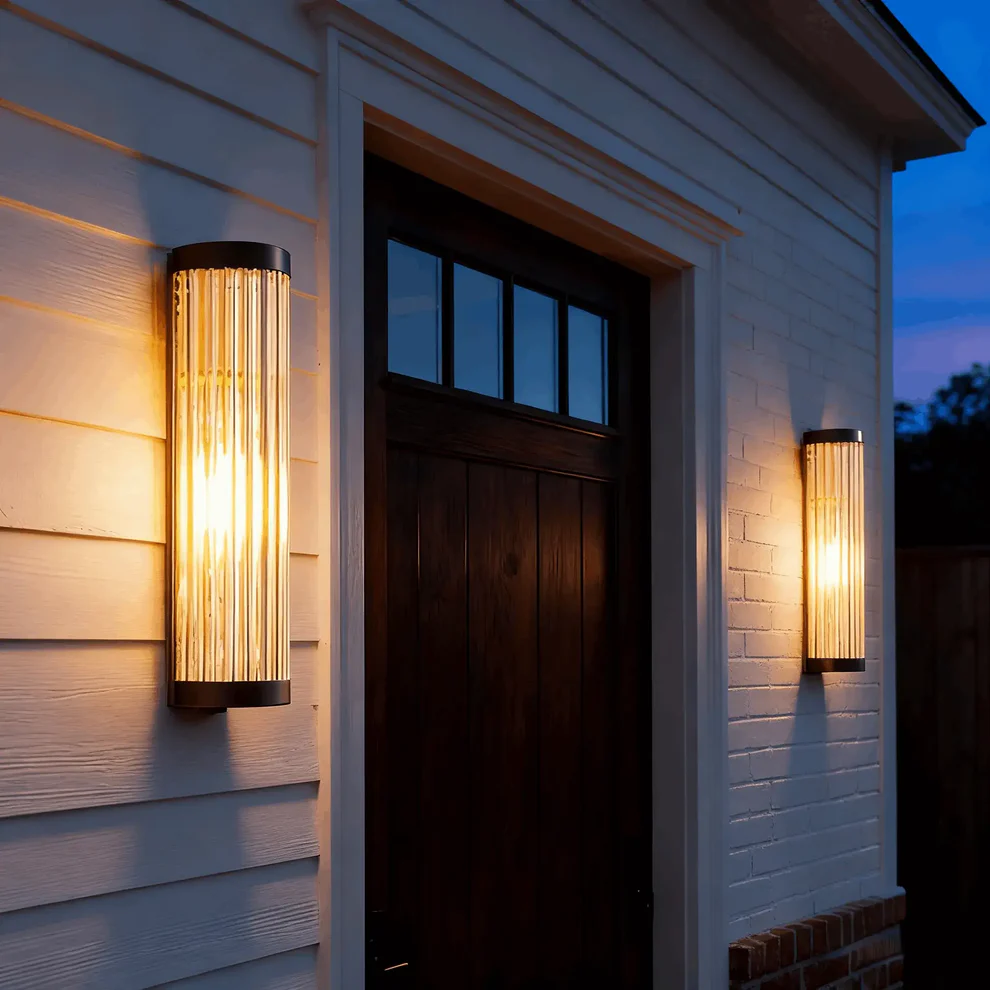
LED Energy Savings
You can achieve remarkable energy savings when you choose LED outdoor lights for your home.LED bulbs use up to 75% less energy than traditional bulbs, which means you lower your electricity bills and reduce your carbon footprint. When you replace a 60-watt incandescent bulb with a 10-watt LED bulb, you get the same brightness with much less energy usage. If you operate five 60-watt incandescent bulbs for five hours each day, you consume 300 watts. Switching to five 10-watt LED bulbs drops your energy usage to only 50 watts. This change delivers a practical impact for homeowners who want to cut costs and boost energy efficiency.
LED outdoor lights use up to 75% less energy than incandescent or halogen lamps.
You save about $60 per year in energy costs by switching to LED bulbs.
Over the lifespan of a single LED bulb, you can save $80 or more in electricity costs.
Cities and universities have reported energy savings of up to 75% after switching to LED lighting.
You benefit from advanced energy-efficient features in modern LED landscape lighting. These features include smart controls, motion sensors, and dimming options that further reduce energy usage. You gain more control over your lighting and maximize efficiency.
Feature |
LED Outdoor Lights |
Traditional Bulbs |
|---|---|---|
Energy Consumption |
Up to 75% |
Higher energy consumption |
Longevity |
Lasts up to 25,000 hours or more |
Shorter lifespan |
Operational Cost Savings |
Significant savings in long-term use |
Higher costs due to frequent replacements |
Environmental Impact |
Lower greenhouse gas emissions |
Higher emissions |
Traditional Lighting Consumption
Traditional outdoor lighting, such as incandescent and halogen bulbs, uses much more energy and offers lower efficiency. Incandescent bulbs convert only 10% of their energy into light, wasting the rest as heat. Halogen bulbs improve efficiency slightly, using 20-30% less energy than incandescent bulbs, but they still lag behind LEDs and CFLs.
Lighting Type |
Energy Efficiency |
Energy Consumption Rate |
|---|---|---|
Incandescent |
10% light output |
Least efficient |
Halogen |
20-30% less than incandescent |
More efficient than incandescent but less than LEDs and CFLs |
You pay higher annual energy costs when you stick with traditional lighting. The average household spends $70 to $75 per year on incandescent outdoor lights, while LED outdoor lights cost only $10 to $15 annually. This difference highlights the practical value of switching to LED bulbs.
Lighting Type |
Annual Energy Cost |
Savings per Year |
|---|---|---|
Incandescent |
$70 - $75 |
N/A |
LED |
$10 - $15 |
$60 |
Tip: If you want to maximize energy savings and efficiency, consider upgrading to LED outdoor lights. You will see immediate reductions in energy usage and operational costs.
You gain more than just lower bills when you choose LED landscape lighting. You also help the environment by reducing greenhouse gas emissions and minimizing waste. The energy-efficient design of LED bulbs makes them the best choice for homeowners who value sustainability and cost-effectiveness.
Lifespan and Maintenance
LED Longevity
You gain a significant advantage when you choose LED outdoor lights for your property. LED bulbs offer a lengthy lifespan, often lasting between 30,000 and 50,000 hours. This translates to about 10–15 years of use, even with regular operation. If you use an LED bulb continuously, it can provide reliable lighting for over five years without interruption. Compared to traditional options, LED landscape lighting stands out for its durability and low maintenance requirements.
Consider the following table, which highlights the average lifespan of common lighting technologies:
Lighting Type |
Average Lifespan (Hours) |
Average Lifespan (Years) |
|---|---|---|
LED Lighting |
30,000 to 50,000 |
10–15 |
Incandescent Bulbs |
1,000 |
~0.1 |
Halogen Bulbs |
2,000 to 5,000 |
~0.2 to 0.57 |
You spend less time and money replacing bulbs when you install LED fixtures. Commercial properties benefit from fewer replacements and reduced labor costs. Lower energy use and reduced heat output also contribute to easier maintenance.
Note: LED outdoor lights can last approximately 25 times longer than incandescent bulbs. This means you avoid frequent replacements and enjoy consistent performance.
Maintenance Needs for Traditional Lighting
Traditional lighting systems require much more attention and upkeep. Incandescent and halogen bulbs have a short lifespan, often burning out after just a few months of use. You must replace these bulbs frequently, which increases maintenance costs and adds hassle.
The table below compares maintenance frequency and costs for different lighting fixtures:
Type of Lighting Fixture |
Initial Cost (Per Fixture) |
Service Life |
Estimated 10-Year Cost (Inc. Maintenance) |
Maintenance Frequency |
|---|---|---|---|---|
LED Landscape Spotlights |
$50 - $150 |
10–15+ years |
$60 - $170 |
Minimal to none |
Traditional Halogen Spotlights |
$20 - $50 |
1–2 years |
$150 - $300+ |
Frequent bulb replacements |
You face higher long-term expenses with traditional bulbs. Frequent replacements and increased labor add to the total cost. LED bulbs reduce these burdens, making them a smart choice for anyone seeking low maintenance and reliable lighting.
LED lights last much longer than halogen or incandescent bulbs.
You spend less time on maintenance and enjoy greater convenience.
LED landscape lighting offers durability and consistent performance.
Light Quality and Outdoor Aesthetics
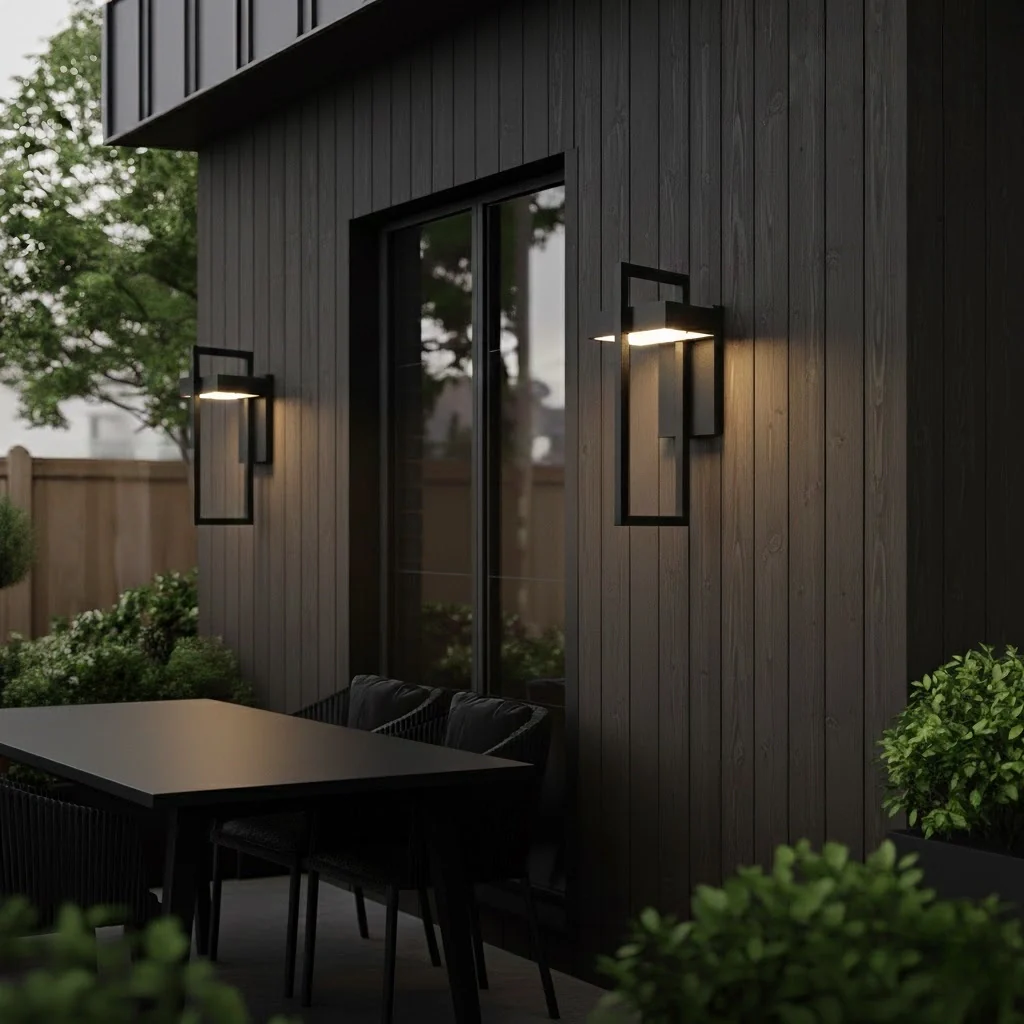
LED Light Clarity
You experience superior clarity and brightness when you choose LED outdoor lights. These fixtures deliver consistent brightness without flickering, which improves visibility and safety in your yard or driveway. The quality of light from LEDs remains steady over time, so you do not see the yellowish tint that often comes from traditional incandescent bulbs. You can select from a wide range of color temperatures, from warm white (2700K) to cool white (5000K), to match your design goals.
Feature |
LED Lighting |
Traditional Lighting |
|---|---|---|
Brightness |
Limited brightness consistency |
|
Color Temperature Range |
Available from warm white (2700K) to cool white (5000K) |
Limited flexibility in color options |
Light Quality |
Consistent brightness without flickering |
Can appear yellowish compared to LEDs |
You can also tailor the brightness for different outdoor areas. For example, you might use 100–200 lumens per square foot for pathways, 200–400 for patios, and 700–1300 for security lighting. This flexibility lets you create the right atmosphere while ensuring safety.
Color Temperature Concerns
You should consider color temperature when planning your outdoor lighting. The most popular choice for residential landscapes is 2700K warm white, which creates an inviting look. A 3000K setting offers a cleaner feel while maintaining warmth. Mixing different color temperatures is not recommended, as it can disrupt the overall design.
2700K warm white is ideal for a cozy, welcoming atmosphere.
3000K provides a versatile, balanced effect for most outdoor spaces.
Consistent color temperature supports a cohesive and attractive appearance.
Color temperature affects both mood and function. Warm white light encourages relaxation, while cooler light works better for tasks that require alertness.
Color Temperature Range |
Description |
Influence on Ambiance |
|---|---|---|
Warm Light (2700K - 3000K) |
Creates a cozy, inviting atmosphere. A 3000K warm white is widely considered the standard for elegant, high-end residential landscapes. |
Ideal for gardens, patios, and enhancing the natural colors of architecture and foliage. |
Neutral Light (3500K - 4000K) |
Offers a balanced, natural lighting effect without being overly harsh. |
Suitable for pathways and general outdoor safety lighting. |
Cool Light (5000K and above) |
Provides a crisp, bright, and energetic vibe with maximum clarity. |
Best for high-visibility areas like driveways, parking lots, and security floodlights. |
Tip: Choose one color temperature for all your outdoor fixtures to achieve a unified look.
Traditional Lighting Ambiance
Traditional incandescent bulbs give off a familiar, warm glow that many people associate with comfort. However, these lights often lack the better light quality and flexibility you find with LED options. Traditional lighting can contribute to light pollution due to increased glare and light spill. In contrast, LEDs direct light exactly where you need it, reducing waste and improving outdoor aesthetics.
You can enhance the natural beauty of your outdoor space with the right lighting choices. LED string lights, for example, add a soft glow and can be dimmed for special occasions. You gain more control over ambiance and visibility, making your outdoor areas both functional and beautiful.
Upfront Cost vs Long-Term Savings
LED Installation Cost
When you consider upgrading to led outdoor lights, you will notice a higher initial cost compared to traditional lighting. The cost to install each LED fixture usually ranges from $50 to $150, depending on the complexity of the setup and the type of fixture you choose. Professional installation for outdoor LED fixtures often costs around $50 per unit, which is about three to four times more than what you would pay for traditional options. The advanced technology and longer lifespan of led bulbs contribute to this higher upfront investment.
You may also find that high-quality LED floodlights or a stylish 22cm diameter wall-mounted light cost between $80 and $150 per fixture, while basic traditional alternatives can start much lower. The cost to run LED fixtures remains much lower over time, but the initial investment is something you need to plan for.
Note: The complexity of mounting and electrical work for LEDs can increase the cost to install, but you gain reliability and reduced maintenance in return.
Traditional Lighting Price
Traditional lighting offers a lower upfront cost, making it appealing if you want to minimize immediate expenses. You can expect to pay about $1 to $2 per bulb, with installation costs typically lower than those for LED fixtures. However, these savings at the start often disappear over time because traditional bulbs have a much shorter lifespan and require frequent replacements.
Fixture Type |
LED Upfront Cost |
Traditional Upfront Cost |
|---|---|---|
Path Lights |
$30 - $75 |
$10 - $25 |
22cm Wall-Mounted Light |
$50 - $120 |
$20 - $50 |
Floodlights |
$70 - $150 |
$30 - $60 |
You will also face higher lighting costs in the long run due to increased energy use and more frequent maintenance. The cost to run traditional lighting adds up quickly, especially if you have a large outdoor area or use your lights for many hours each night.
Long-Term Savings with LEDs
Although the upfront cost for led landscape lighting is higher, you will see significant long-term savings. The payback period for LED outdoor lights typically ranges from one to three years. This means you can recover your initial investment through lower energy bills and reduced maintenance within a short time frame. Factors such as energy costs, operating hours, and available utility rebates can influence how quickly you reach this break-even point.
ROI measures the overall return on investment for LED lighting.
The payback period tells you how quickly your upgrade pays for itself.
Utility rebates can shorten the payback period even further.
You can expect positive ROI within five years,and the savings continue to grow as you avoid frequent bulb replacements and reduce labor costs. Over a 10,000-hour period, switching from a 60W incandescent bulb to a 10W LED can save you up to 500 kWh per bulb.
For a typical homeowner, this translates to cumulative savings of around $300 over five years. However, for larger commercial properties or extensive landscape projects, the savings scale dramatically, sometimes reaching $10,000 to $15,000 over the same period.
Property Type (Over 5 Years) |
Cumulative Savings Estimate |
Maintenance Reduction |
|---|---|---|
Typical Residential (Homeowner) |
~$300 |
Fewer bulb replacements |
Large Commercial Property |
$10,000 to $15,000 |
Significantly lower labor costs |
According to the National Association of Realtors' Remodeling Impact Report, you can recoup up to 59% of your project cost when selling your home after adding landscape lighting. This makes led outdoor lights a smart investment, not just for energy and maintenance savings, but also for increasing your property value.
Tip: When you look at the total lighting costs over five to ten years, LED options almost always deliver better long-term savings and lower maintenance needs than traditional lighting.
You should weigh the higher upfront cost against the ongoing savings and reduced lighting costs. If you want to maximize your return and minimize hassle, LED outdoor lights offer the best balance of performance, efficiency, and value.
Environmental Impact
Eco-Friendly Benefits of LEDs
You make a positive impact on the environment when you choose an eco-friendly solution like LED outdoor lights. The significantly lower wattage of LED fixtures directly translates to a reduction in greenhouse gas emissions and less strain on local power grids. Each LED bulb consumes only only 10 watts, while incandescent bulbs use about 60 watts for the same brightness. This lower wattage puts less strain on your electrical system and supports a more sustainable lifestyle.
LED lights do not contain hazardous materials such as mercury, so disposal is safer for the environment.
The long lifespan of LED bulbs—up to 50,000 hours—means you throw away fewer bulbs, which reduces landfill waste.
Less frequent replacements also mean you use fewer resources for manufacturing and transportation.
You can see the difference in energy use and emissions in the table below:
Benefit |
LED Bulbs |
Incandescent Bulbs |
CFLs |
|---|---|---|---|
Lifespan |
50,000 hours |
1,200 hours |
8,000 hours |
Energy Consumption |
10 watts |
60 watts |
13-15 watts |
CO2 Emissions per Year |
451 lbs |
4,500 lbs |
1,051 lbs |
Greenhouse Gas Reduction |
9 billion pounds (if one bulb per household is replaced) |
N/A |
N/A |
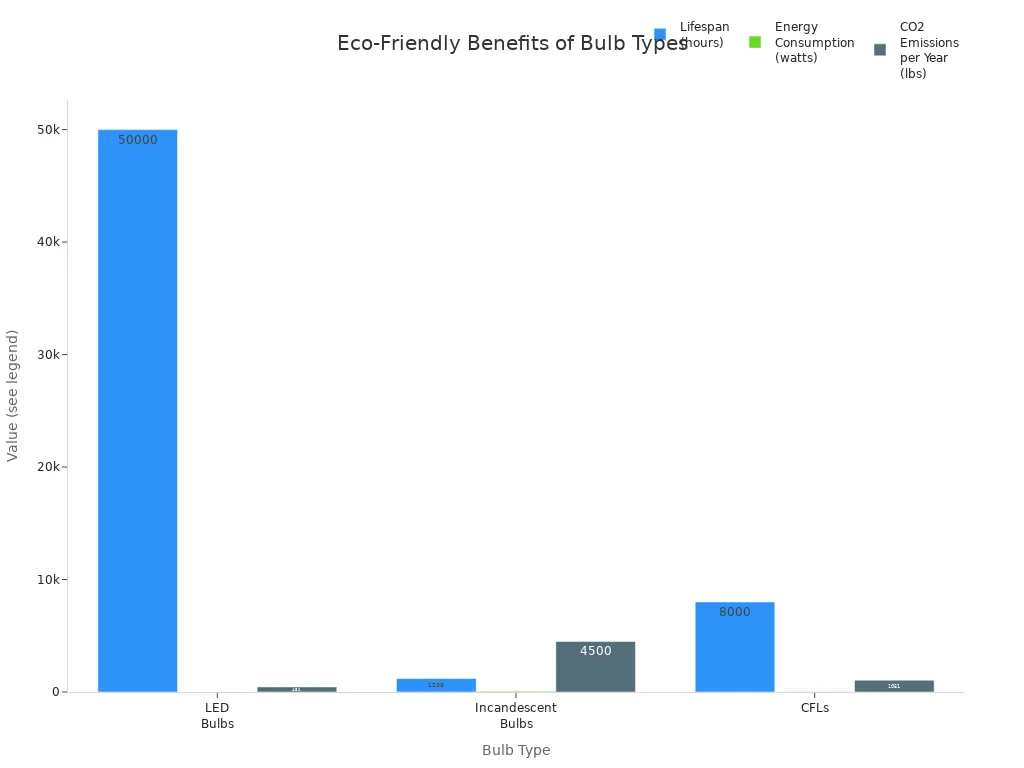
Switching to LED outdoor lighting gives you an eco-friendly way to brighten your property while supporting global efforts to fight climate change.
Traditional Lighting and Waste
Traditional lighting creates more waste and pollution. Incandescent bulbs last only about 1,000 hours, so you need to replace them often. This frequent replacement increases landfill waste and drives up maintenance costs. Many older bulbs also contain hazardous materials, which can harm the environment if not disposed of properly.
Incandescent and halogen bulbs use more energy, which leads to higher carbon emissions from power plants.
Shorter lifespans mean you buy and throw away more bulbs, adding to landfill problems.
Traditional lighting does not offer the same eco-friendly benefits as LED options.
You can make a difference by choosing products that last longer and use less energy. LED outdoor lights provide a clear path toward a cleaner, more eco-friendly future.
Safety and Durability
LED Heat and Weather Resistance
You want outdoor lights that can handle tough conditions. LED outdoor lights give you that peace of mind. These fixtures operate well in cold environments, even down to -25 degrees Fahrenheit. You do not have to worry about snow or ice causing damage. Their solid-state design means they do not shatter or fail under stress. You can count on them to work in extreme temperatures, moisture, and even when vibrations occur.
LED lights perform reliably in snowy climates.
The solid-state construction prevents breakage from heavy snow or ice.
You get consistent performance in both hot and cold weather.
LEDs lack fragile parts, so they resist damage from impacts.
You also benefit from low heat output. LED fixtures emit almost no forward heat, which keeps them cool to the touch. This feature reduces the risk of fire and makes your outdoor spaces safer for children and pets. LED outdoor fixtures often feature high waterproof ratings, such as IP65, ensuring they operate flawlessly in heavy rain or sprinkler systems. Combined with their solid-state design, you get consistent performance without the risk of shattered glass in extreme temperatures or vibrations.
Traditional Lighting Safety
Traditional lighting options, such as incandescent and halogen bulbs, come with more risks. These bulbs convert over 90% of their energy into heat. High heat output can lead to overheating and increase the risk of fire, especially if you place them near flammable materials. The glass components in these bulbs make them fragile and prone to shattering.
Aspect |
LED Lights |
Traditional Lighting |
|---|---|---|
Heat Output |
Converts over 90% of energy to heat |
|
Fire Risk |
Much lower risk of fire |
Higher risk of overheating and fire |
Durability |
More durable and resistant to breakage |
Less durable, more prone to shattering |
You may find that traditional bulbs struggle in cold weather. They often fail or break when exposed to extreme temperatures or vibrations. This means you face more frequent replacements and higher maintenance costs. Choosing LED lighting helps you avoid these problems and keeps your property safer year-round.
Flexibility and Smart Features
LED Smart Controls
You gain impressive control and convenience when you choose smart LED outdoor lights. These systems let you automate your outdoor environment with features that go far beyond simple on-off switches. You can set schedules for your lights, so they turn on and off exactly when you want. This automation helps you save energy and ensures your property always looks inviting.
You can adjust color temperature and even change colors to match your mood or highlight landscaping features.
Motion sensors activate lights when someone approaches, which boosts security and can send alerts to your phone.
Remote control through smartphone apps lets you manage your lighting from anywhere, whether you are at home or away.
You can customize brightness and duration, creating the perfect atmosphere for gatherings or quiet evenings.
Automation based on your preferences means you never waste energy on unnecessary lighting.
These smart controls make your outdoor spaces safer and more welcoming. You enjoy peace of mind, knowing your property is well-lit and secure, while also reducing your energy costs.
Tip: Smart LED systems often integrate with home automation platforms, giving you even more flexibility and control.
Traditional Lighting Limitations
Traditional outdoor lighting cannot match the flexibility of modern smart systems. You face several limitations when you rely on older technology.
You have limited color options, which restricts your ability to create different moods or highlight features.
Many traditional lights take longer to reach full brightness, which can be frustrating when you need immediate illumination.
Most older systems do not support advanced controls, so you cannot automate schedules or adjust settings remotely.
These limitations make it harder to adapt your outdoor lighting to your needs. Upgrading to smart LED options gives you the flexibility and control that traditional systems lack.
When you compare led outdoor lights to traditional lighting, you see clear advantages in energy efficiency, lifespan, and maintenance. The table below highlights key differences:
Feature |
LED Outdoor Lights (e.g., IP65 waterproof fixtures) |
Traditional Bulbs (Incandescent/Halogen) |
|---|---|---|
Energy Use (Per Bulb) |
10W |
60W |
Average Lifespan |
1,000 to 5,000 hours |
|
Initial Cost (Per Fixture) |
$50 - $150 |
$20 - $50 |
Annual Operating Cost |
$10 - $15 |
$70 - $75 |
Weather Resistance |
High (Durable, solid-state construction) |
Low (Glass components prone to shattering) |
Maintenance Need |
Minimal |
Frequent bulb replacements |
You save money over time because led bulbs last longer and use less energy. Led landscape lighting also supports sustainability goals. If you want lower costs, less hassle, and a greener choice, led is the smart upgrade.
FAQ
How long do LED outdoor lights usually last?
You can expect most LED outdoor lights to last between 30,000 and 50,000 hours. This means you may not need to replace them for 10 to 15 years, even with regular use.
Are LED outdoor lights safe to use in wet or cold weather?
Yes, you can use LED outdoor lights in wet or cold conditions. Most models have weather-resistant designs. They perform well in rain, snow, and freezing temperatures.
Do LED outdoor lights attract bugs?
LED outdoor lights attract fewer bugs than traditional bulbs. They emit less ultraviolet light, which reduces insect activity around your fixtures.
Can you dim LED outdoor lights?
Many LED outdoor lights support dimming. You need to check if your fixture and dimmer switch are compatible. Look for products labeled as "dimmable" for best results.
Will switching to LED outdoor lights save you money?
You will save money over time. LED lights use less energy and last longer than traditional bulbs. Lower electricity bills and fewer replacements help you recover your initial investment quickly.
Share:
How to Choose the Right Dining Room Lighting for Your Home
Simple Ways to Decorate with Modern Wall Sconces