
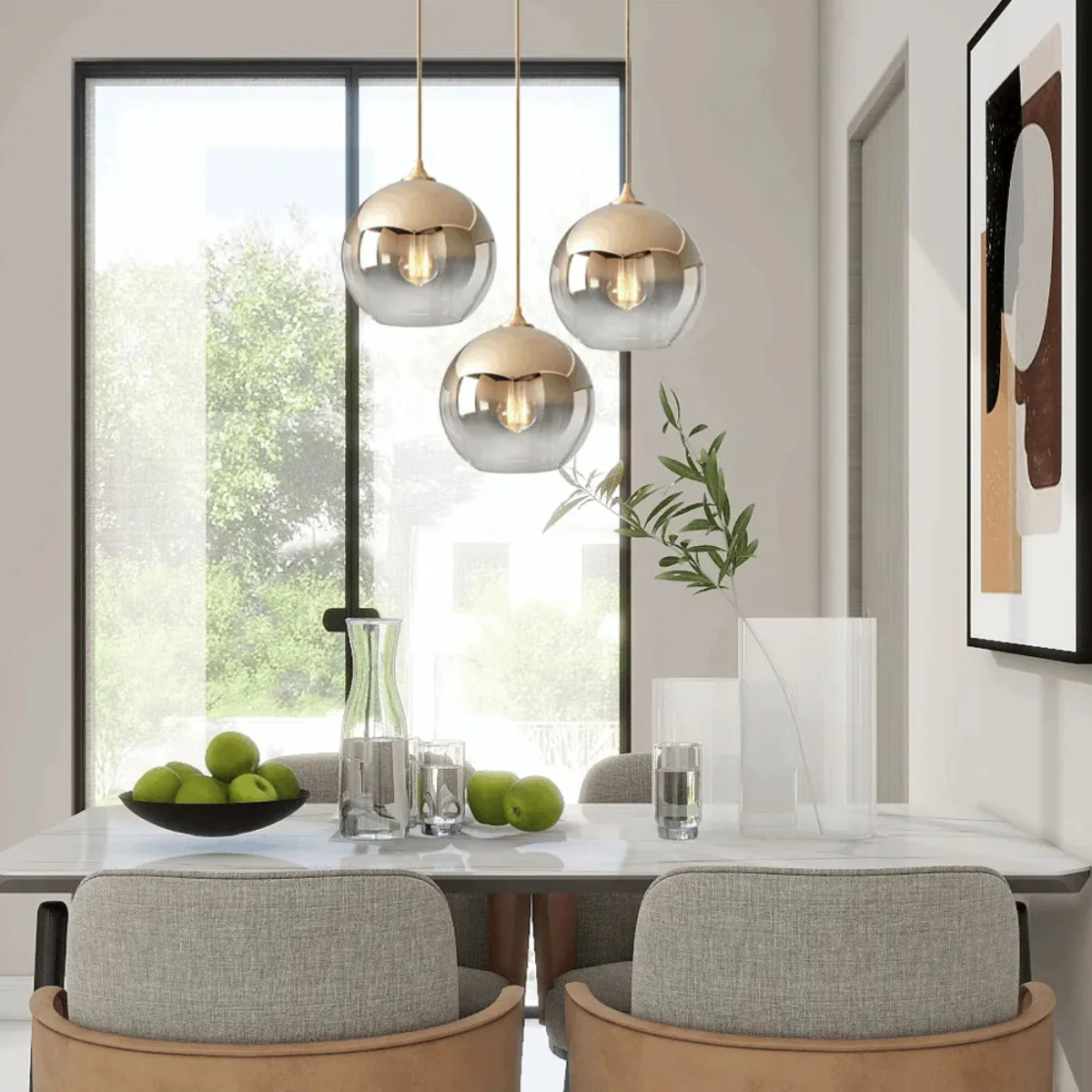
When you wonder how to choose the right dining room light fixtures, start by thinking about the mood and function you want for your space. You can create a cozy atmosphere that encourages conversation and relaxation. If you want to know how to choose a fixture that stands out, look for sculptural shapes or statement designs. You should also consider how to choose lighting that matches your table decor for a unified look. Good lighting in the dining room softens shadows and brings energy to gatherings. With a few steps, you can find a fixture that balances style, function, and proportion.
Key Takeaways
Consider the mood and function of your dining room lighting. Choose bright lights for lively meals and softer lights for intimate dinners.
Select fixtures that match your decor style. Use geometric pendants for modern spaces and candle-style lights for traditional settings.
Measure your dining room and table accurately. Ensure your light fixture fits well and hangs at the right height for optimal illumination.
Layer your lighting with different types of fixtures. Combine chandeliers, pendants, and sconces for a balanced and inviting atmosphere.
Opt for energy-efficient options like LED bulbs. They save money and reduce environmental impact while providing versatile lighting.
Dining Room Lighting Needs
Function & Ambiance
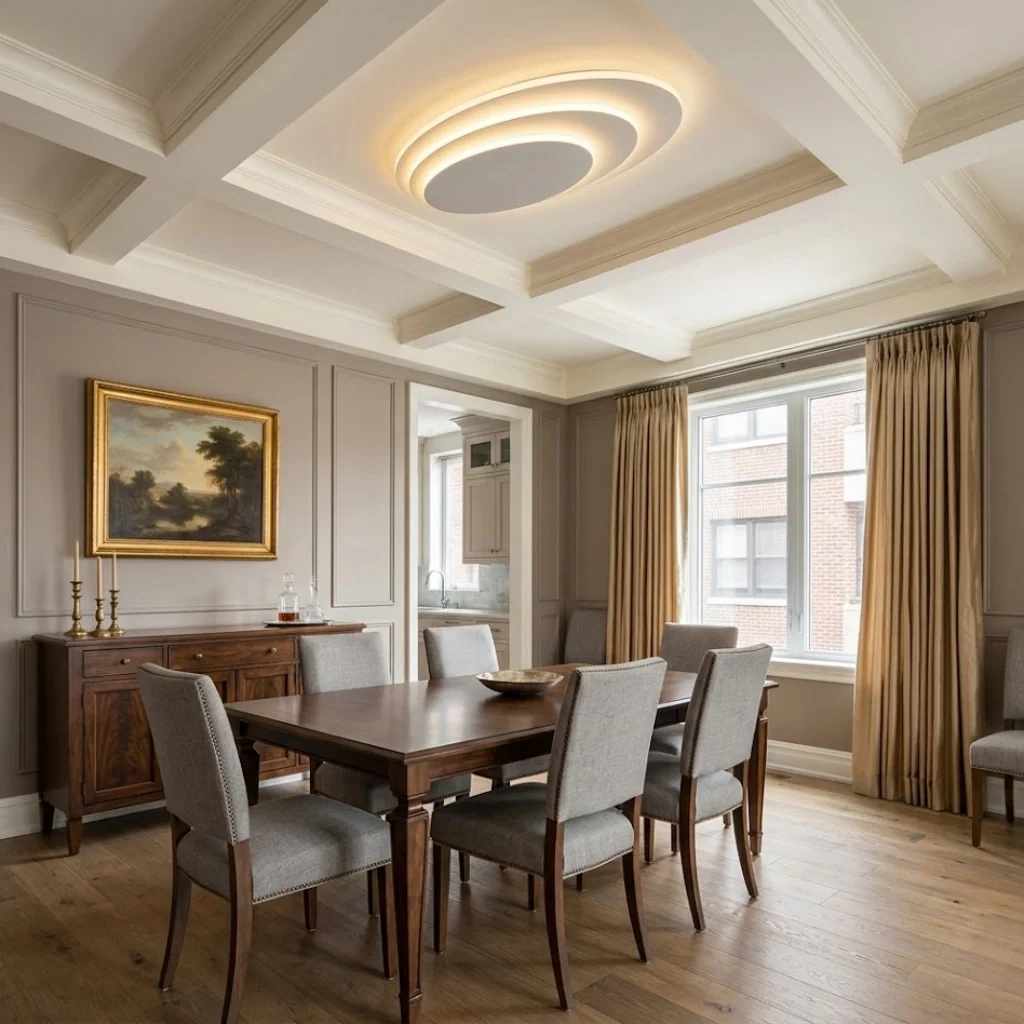
You need to think about the purpose of your dining room lighting before you choose a fixture. Ask yourself if you want bright light for lively meals or softer light for intimate dinners. Dining room lighting shapes the atmosphere and affects how you use the space. When you balance light and shadow, you create intrigue and privacy. Candlelight can add a romantic touch, making the dining experience feel special. Sufficient lighting helps you see your food and allows you to serve guests easily. Brighter lighting works well for lunch, while dimmer lighting encourages a relaxed pace during dinner. Dimmable fixtures and layered lighting give you control over the mood for different occasions. Adjusting color temperature can elevate the dining experience based on the time of day.
Tip: Try combining overhead lights with wall sconces or table lamps. This approach helps you achieve the right atmosphere for any gathering.
Balancing light and shadow creates intrigue and privacy in dining spaces.
Candlelight provides a romantic atmosphere, enhancing the dining experience.
Sufficient lighting is essential for functionality, allowing servers to perform tasks effectively.
Brighter lighting promotes energy, suitable for lunch, while dimmer lighting encourages a relaxed dining pace.
Dimmable fixtures and layered lighting can help control the mood for different dining occasions.
Color temperature adjustments can elevate the dining experience based on the time of day.
Adaptability
Dining room lighting should adapt to your needs. Adjustable fixtures, such as pendant lights, let you control brightness and atmosphere. You can modify them for casual meals or formal gatherings. Pendant lights occupy less space than traditional chandeliers, making them ideal for smaller dining rooms. Their sleek design blends with modern decor and enhances the room’s look. Pendant lights come in many styles, materials, and colors, so you can express your personal taste. You can group them in clusters for dramatic effects, serving both functional and decorative purposes. Adaptable lighting helps you create the right atmosphere for every occasion.
Choosing Dining Room Light Fixtures
Selecting the right dining room light fixtures shapes the atmosphere and function of your space. You can choose from several fixture types, each offering unique benefits for your dining room. Understanding the differences helps you match the fixture to your needs and style.
Chandeliers
Chandeliers serve as classic dining room light fixtures. You often see them as statement pieces above the dining table. They provide ambient lighting and create a focal point in the room. Chandeliers range from minimalistic designs to opulent styles, so you can find one that fits your taste.
Advantage |
Description |
|---|---|
Aesthetic Appeal |
Chandeliers add luxury and act as stunning centerpieces. |
Functionality |
They offer ample light and enhance sophistication. |
Ambiance |
Intricate designs reflect light in beautiful patterns, improving the evening atmosphere. |
Energy Efficiency |
Modern chandeliers use LED bulbs, combining elegance with sustainability. |
You can use a chandelier to illuminate the entire dining room and highlight your dining table light fixture. If you want a fixture that stands out, a chandelier gives your space a sense of grandeur. You should consider the size of your dining room and table to ensure the chandelier fits proportionally.
Tip: Choose a chandelier with dimmable bulbs. This feature lets you adjust the lighting for formal dinners or casual meals.
Pendants
Pendant lights offer versatility and modern appeal. You can hang them above the dining table for focused lighting. Pendants come in many styles, from sculptural mid-century shapes to sleek contemporary designs. You can use a single pendant for a minimalist look or cluster several for artistic impact.
Style |
Description |
Recommended Pendant Light |
|---|---|---|
Mid-Century Modern |
Sculptural shapes, brass or opal glass. |
1965 Pendant from Gubi. |
Scandinavian |
Simple designs in natural tones, black, or white. |
Hieroglyph Pendant from Workstead. |
Industrial |
Metal, matte black, or raw finishes. |
Tinkering Suspension Lamp from Moooi. |
Contemporary |
Geometric or minimalist with clean lines. |
Pendolo Pendant from Workstead. |
Pendant lights suit both formal and casual dining rooms. You can use them in spaces with lower ceilings or in rooms where you want a sleek, unobtrusive fixture. Pendants provide focused illumination, making them ideal as a dining table light fixture. You can also pair pendants with wall sconces for a layered lighting scheme.
Note: Pendants work well in modern dining room designs. You can select a style that matches your decor and enhances the room’s character.
Sconces & Other Types
Wall sconces and other fixture types add depth to your dining room lighting. Sconces mount on the wall and provide gentle ambient fill lighting. You can use them as decorative accents to complement your main dining room light fixtures.Here are a few ways to effectively incorporate sconces into your dining space:
Use sconces to offer soft lighting, creating a warm and inviting atmosphere around the perimeter of the room.
Pair sconces with table candles to establish a moody, intimate tone for evening dinners.
Use adjustable dimmers or indirect uplighting with your sconces to eliminate flicker and uneven lighting, improving visual comfort during meals.
Other fixture types include track lighting, flush mount lights, and semi-flush mount lights. Track lighting lets you direct light to specific areas, such as artwork or serving stations. Flush mount lights suit rooms with limited ceiling height, while semi-flush mount lights add dimension without overwhelming the space.
Fixture Type |
Description |
Use Case |
|---|---|---|
Pendant Lights |
Versatile fixtures that hang from the ceiling, available in various styles. |
Ideal for both formal and casual dining. |
Wall Sconces |
Elegant wall-mounted fixtures that provide ambient lighting and decoration. |
Adds sophistication to the dining room. |
Track Lighting |
Adjustable lighting systems that can direct light where needed. |
Great for highlighting specific areas. |
Flush Mount Lights |
Low-profile fixtures mounted directly against the ceiling. |
Suitable for rooms with limited ceiling height. |
Semi-Flush Mount Lights |
Fixtures mounted close to the ceiling with a slight gap for decoration. |
Offers a more dimensional look. |
You can layer different types of lighting to enhance your dining room. Combining wall sconces, pendant lights, and chandeliers creates a rich, textured environment. You should match the fixture type to your space and needs. For example, use a chandelier for a large dining room or pendants for a smaller area.
Tip: Layering lighting improves both function and design. You can adjust each fixture to create the perfect mood for any occasion.
Style & Materials
Matching Decor
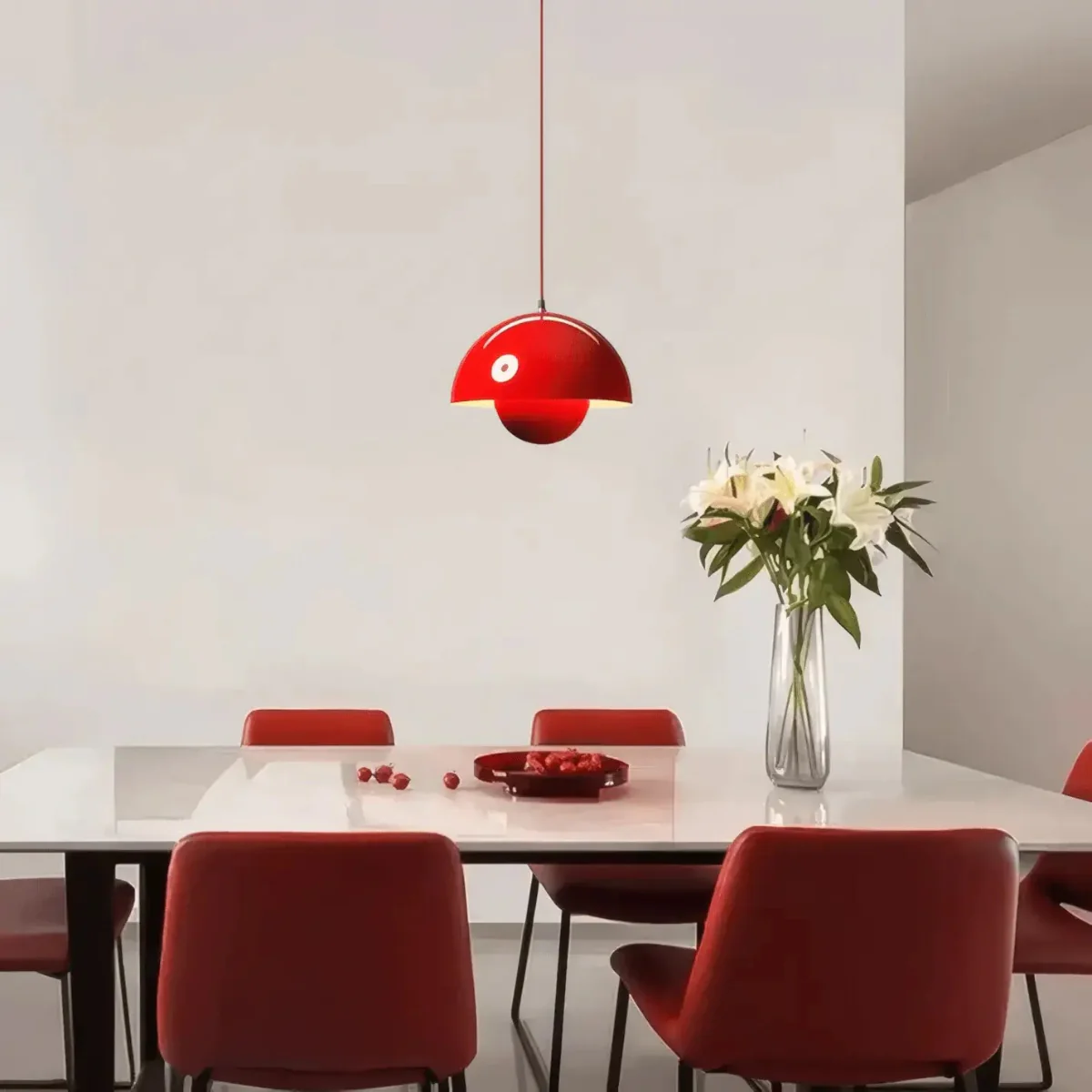
You can create a cohesive look in your dining room by matching your light fixture to your overall decor. Modern and minimalistic spaces benefit from sleek, geometric pendant lights or streamlined chandeliers. Traditional rooms look best with candle-style lights or crystal embellishments. When you choose a fixture that fits your dining room design, you highlight the style and make the space feel complete.
Modern dining room design: Use geometric pendants or simple chandeliers.
Traditional dining room: Choose classic candle-style or crystal fixtures.
Eclectic spaces: Mix materials and shapes for a unique look.
You can also add depth by combining different materials like metal, wood, and glass in your lighting. This approach creates a unique focal point and adds visual interest to your dining room.
Popular Finishes
Many popular finishes and materials appear in today’s dining room light fixtures. You see a mix of metal, wood, and glass in many designs. Brass, teak, and smoked glass are common, especially in mid-century modern dining room design. The table below shows some current trends:
Trend |
Description |
|---|---|
Combining metal, wood, and glass adds depth and visual interest. |
|
Industrial Chic |
Exposed bulbs and metal accents create a modern, edgy vibe. |
Mid-Century Modern Revival |
Brass and smoked glass reflect vintage charm. |
Oversized Fixtures |
Large fixtures serve as statement pieces and focal points. |
LED and Energy-Efficient |
Eco-friendly options reduce energy use and offer versatility. |
Smart Lighting Integration |
Fixtures with smart features provide convenience and customization. |
You can select a finish that matches your furniture or adds contrast for a bold effect.
Mixing Styles
You do not need to stick to one style. Mixing light fixtures, shades, and designs adds personality to your dining room. You might pair a modern pendant light with a classic chandelier. This blend creates an interesting mix of contemporary and traditional elements.
Add depth, personality, and visual interest by mixing light fixtures, shades, and styles. Consider combining a modern pendant light and a classic chandelier. That can bring an interesting element of contemporary and traditional designs to the space.
You can express your taste and make your dining room stand out by experimenting with different combinations.
Fixture Size & Proportion
Choosing the right size for your dining room light fixture is essential for both function and style. When you select a fixture that fits your space, you create a balanced look that supports your design goals. The right proportions help your lighting stand out without overwhelming the room.
Measuring Your Dining Room
Start by measuring your dining room and table. Accurate measurements help you find a fixture that fits your space and complements your design. Use a tape measure to record the length and width of your room, the size of your table, and the height of your ceiling. These numbers guide your fixture selection.
Measurement Aspect |
Guideline |
|---|---|
Fixture Height Above Table |
Hang the fixture 30–36 inches above the dining table for proper illumination. |
Fixture Height for 8 ft Ceilings |
Choose a fixture 16–24 inches tall. |
Fixture Height for 9 ft Ceilings |
Select a fixture 18–27 inches tall. |
Fixture Height for 10 ft Ceilings |
Opt for a fixture 20–30 inches tall. |
Room Size to Fixture Diameter Ratio |
Add the room's length and width in feet to get the ideal fixture diameter in inches (e.g., a 12x14 ft room = 26-inch fixture). |
Table Width vs. Fixture Diameter |
The fixture should be 12 inches narrower than the table width on all sides. |
Clearance from Floor |
Keep at least 6–6.5 feet of clearance from the floor for easy movement. |
Tip: Measure your room and table before shopping for a fixture. This step ensures your new lighting will fit perfectly and enhance your dining room design.
Table & Fixture Ratio
The relationship between your table and fixture size affects both the look and function of your dining room. A fixture that is too large can overpower the space, while one that is too small may look out of place. You can use simple ratios to guide your choice.
The fixture should be about half to two-thirds the width or length of your table.
For a 36-inch wide table, a 24-inch diameter chandelier works well.
Linear fixtures should be one-half to three-quarters the length of the table.
Fixture Type |
Recommended Size Ratio |
|---|---|
1/2 to 2/3 of the table's largest dimension |
|
Linear Fixture |
1/2 to 3/4 of the table length |
Note: Always leave at least 6 inches of space between the edge of the fixture and the edge of your table for a balanced look.
The 1/2 to 2/3 Rule
The 1/2 to 2/3 rule helps you achieve visual balance in your dining room lighting. This rule suggests that the width of your fixture should be between one-half and two-thirds the width of your table. Following this guideline prevents your fixture from looking too small or too large.
The 1/2 to 2/3 rule creates a strong visual connection between your fixture and table.
This proportion draws the eye and makes your lighting a focal point in your dining room.
-
For a 72-inch table, choose a fixture that is 36–48 inches wide (36 inches being half, and 48 inches being two-thirds).
Table Type
Fixture Recommendation
Rectangular/Oval
Use linear chandeliers or rows of pendants for balance.
Round/Square
Opt for a single central chandelier or clustered pendants for symmetry.
Example for 72-inch
A fixture should be around 36–48 inches wide.
Fixture Width Rule
Choose a fixture between half and two-thirds the width of the table.
Centering
Center the fixture along the long axis with at least 6 inches of clear space on either end.
Tip:The 1/2 to 2/3 rule works for most dining room designs. Use it as a reliable starting point, then adjust toward the smaller or larger end of the scale based on your personal style and the visual weight of the fixture.
Tips for Small and Large Dining Rooms
For small dining rooms under 100 square feet, select a chandelier with a diameter of 20 inches or less. This size keeps the design in scale with the space.
For large dining rooms over 500 square feet, choose a larger fixture that matches the spaciousness of the room. Oversized fixtures can make a bold design statement.
Always consider ceiling height. For ceilings over 8 feet, add 3 inches of fixture height for every extra foot.
Remember: The right fixture size brings harmony to your dining room and supports your overall design vision. Take your time with measurements and ratios to create a space that feels both comfortable and stylish.
Dining Room Fixture Placement
Hanging Height
You should hang your dining room light fixture at the right height to create a comfortable and inviting space. For most homes with 8-foot ceilings, place the bottom of your fixture 30 to 36 inches above the table. This height gives you clear sightlines across the table and ensures proper illumination for meals and gatherings. If your ceiling is higher, raise the fixture a bit more. For example, with a 10-foot ceiling, hang the fixture 36 to 42 inches above the table. When your ceiling is taller than 10 feet, a good rule is to hang the fixture about one-third of the way down from the ceiling to the floor.
Ceiling Height |
Recommended Height Above Table |
|---|---|
8 feet |
30-36 inches |
10 feet |
36-42 inches |
Above 10 feet |
One-third down from ceiling |
Tip: Hanging your fixture too low can cause glare, while placing it too high may lead to uneven lighting.
Centering Over Table
Proper placement of your fixture helps balance your dining room design. Always center the light directly over the table, not the room. This approach avoids awkward shadows and highlights your table as the main feature. If you use multiple pendants, keep 24 to 30 inches between each one for even light spread. For rectangular or oval tables, use a linear fixture that matches half to three-quarters of the table’s length. For round tables, a single central fixture works best.
Aspect |
Recommendation |
|---|---|
Centering Fixtures |
Center over the table, not the room |
Distance Between Pendants |
24-30 inches apart |
Fixture Size |
1/2 to 2/3 table width (chandelier), 1/2 to 3/4 table length (linear) |
Avoiding Glare
You want your dining room lighting to feel comfortable and inviting. To prevent glare, choose fixtures with diffusers or frosted glass. These features soften the light and reduce harshness. Adjustable hanging fixtures let you fine-tune the height for the best effect. Wider beam angles help spread light evenly, while narrow beams can create bright spots and shadows. Dimmers give you control over brightness, so you can set the mood for any occasion. Warmer color temperatures, such as 2700K to 3000K, make the space feel cozy and welcoming.
Use diffusers or frosted glass to soften light.
Install dimmers for adjustable brightness.
Center fixtures and align beams parallel to the table.
Choose wider beam angles for even light distribution.
Note: Good fixture placement improves both the look and function of your dining room, making every meal more enjoyable.
Features & Options
Dimmers
You can transform your dining room with dimmers. Dimmers allow you to manage light intensity, so you create a personalized atmosphere for every meal. You adjust the brightness to match the mood, whether you host a lively gathering or enjoy a quiet family dinner. This flexibility enhances the ambiance and makes your space more inviting. Dimmers also help you reduce energy use when you lower the lights. You gain control over your lighting and make every occasion feel special.
Tip: Install dimmers to easily switch between bright light for homework or crafts and soft light for evening meals.
Energy Efficiency
Choosing energy-efficient lighting options helps you save money and protect the environment. LED bulbs use less electricity than traditional incandescent bulbs. You spend less on utility bills and replace bulbs less often. The table below shows how LED bulbs compare to incandescent bulbs:
Lighting Type |
Wattage Consumption |
Annual Savings |
Lifespan (hours) |
Total Savings Over Lifespan |
|---|---|---|---|---|
Incandescent (60W) |
60 |
$0 |
1,000 |
$0 |
LED (10W equivalent) |
10 |
$6 |
25,000 |
$138 |
You see that LED bulbs last much longer and offer significant savings over time. Energy-efficient fixtures make your dining room more sustainable and cost-effective.
Smart Lighting
Smart lighting gives you more control and convenience. You can schedule different lighting scenes for various occasions. Customizable settings let you create the perfect environment for a dinner party or a family meal. You adjust brightness, color temperature, and timing using mobile apps or voice commands. Smart fixtures help you tailor the lighting to match the mood and activity. Modern ceiling lights with smart technology allow remote control and adaptability. You enhance energy efficiency and create the ideal atmosphere for every dining experience.
Schedule lighting scenes for special events.
Customize settings for different dining experiences.
Adjust brightness and color temperature remotely.
Improve energy efficiency and sustainability.
Create the perfect mood for any occasion.
Checklist & Expert Tips
Review Before Buying
You should review a checklist before you buy a dining room light fixture. This step helps you avoid mistakes and choose the best option for your space. Consider these important points:
Measure your ceiling height to determine the right drop length.
Check the width and length of your dining table to ensure proportional scaling.
Look at the fixture's diameter or length to make sure it fits your table's dimensions (remember the 1/2 to 2/3 rule).
Measure the distance from the table surface to the bottom of the fixture (30–36 inches works well for standard 8-foot ceilings).
If using multiple fixtures, decide how many pendants you need and maintain 24–30 inches of space between them.
Think about the type of light you want: task, ambient, or decorative, and consider layering them.
Make sure your fixture works with dimmers or smart bulbs if you want adaptable lighting features.
Tip: A tailored checklist keeps you organized and helps you find a fixture that perfectly matches your dining room's needs and style.
Common Mistakes
Many people make the same mistakes when selecting dining room lighting. You can avoid these issues by learning what to watch for:
Hanging the chandelier too high or too low can disrupt the room’s look and function.
Choosing a fixture without thinking about how it spreads light can cause harsh shadows and discomfort.
Over-relying on a single light source often leads to poor illumination and unflattering shadows.
Do not rely only on the main fixture. Add layers of light for a balanced effect.
Install a dimmer switch so you can adjust the lighting for different occasions.
Note: Good lighting design uses more than one fixture and lets you control brightness.
When to Get Help
You may need help from a lighting professional if you feel unsure about measurements or installation. An expert can give you advice on fixture size, placement, and wiring. You can also ask for expert tips for choosing the right style and features for your dining room. If your project involves complex wiring or smart home integration, a licensed electrician ensures safety and proper setup.
Call a professional if you want your dining room lighting to look great and work well.
You can find the ideal dining room light fixture by following a few clear steps. First, measure your space and table. Next, select a fixture that matches your style and meets your lighting needs. Balance the size and placement for visual harmony. Consider features like dimmers and energy efficiency.
Remember: When you balance style, function, and proportion, you create a welcoming dining room. You can confidently choose a fixture that makes every meal feel special.
FAQ
How do I choose the right size light fixture for my dining room table?
You measure your table’s width or length. Select a fixture that is about two-thirds the width or half to three-quarters the length. This ratio creates balance and avoids overwhelming your space.
Can I use multiple light fixtures in my dining room?
You can layer lighting by combining chandeliers, pendants, and sconces. This approach improves both function and style. You create a warm atmosphere and highlight different areas.
What is the best height to hang a dining room light fixture?
You hang your fixture 30–36 inches above the table. This height gives you clear sightlines and proper illumination. For higher ceilings, raise the fixture slightly.
Are LED bulbs a good choice for dining room lighting?
LED bulbs save energy and last longer than traditional bulbs. You reduce your electricity costs and avoid frequent replacements. LED bulbs also offer many color temperatures for different moods.
How do I avoid glare from my dining room light fixture?
You choose fixtures with diffusers or frosted glass. Install dimmers to control brightness. Wider beam angles help spread light evenly and reduce harsh spots.
Share:
Simple Ways to Decorate with Modern Wall Sconces
How to Select the Perfect Wall Light for Your Baby’s Room