
Choosing between clear and frosted glass pendant lights is not just about style. In a kitchen, the glass finish changes how light falls on the countertop, how much glare you notice, how often the fixture looks dusty, and even how open or soft the room feels.
If you want the short answer, here it is: clear glass pendant lights usually work better when you want a brighter, more open look, while frosted glass pendant lights are often the better choice when you want softer light and less visual harshness. The right option depends on how you use your kitchen, how much natural light the room gets, and whether your priority is task lighting or atmosphere.
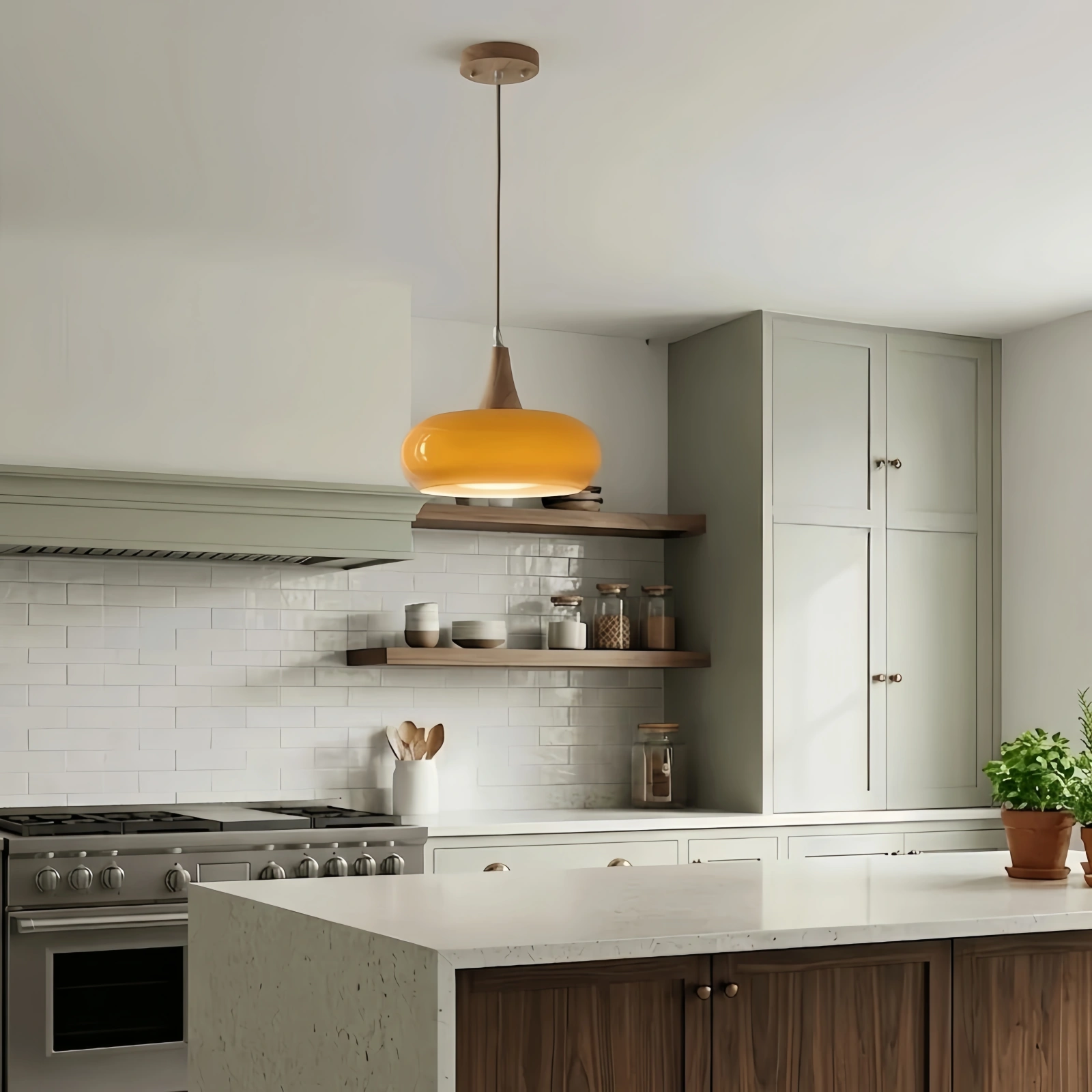
Quick Answer Before You Buy
Choose clear glass pendant lights if you want:
stronger downward light over a kitchen island
a lighter, more open visual look
a modern or airy feel
visible decorative bulbs or detailed metal hardware
Choose frosted glass pendant lights if you want:
softer light with less glare
a cleaner look that hides the bulb
a more relaxed and polished mood
lower-maintenance glass that does not show fingerprints as easily
If your kitchen does double duty as both a prep space and a gathering space, frosted glass is often the safer all-around choice. If your kitchen island is used heavily for chopping, meal prep, or reading recipes, clear glass can be the stronger performer.
A Side-by-Side Comparison
Feature |
Clear Glass Pendant Lights |
Frosted Glass Pendant Lights |
|---|---|---|
Light effect |
Brighter and more direct |
Softer and more diffused |
Glare |
Higher chance of glare |
Lower glare |
Visual weight |
Light and open |
More softened and solid |
Bulb visibility |
Visible |
Usually hidden |
Cleaning |
Shows smudges more easily |
More forgiving |
Best for |
Task lighting, small kitchens, modern looks |
Ambient lighting, open-plan kitchens, softer interiors |
What Changes in Real Life: Clear Glass vs Frosted Glass
A lot of buying guides stop at “clear is bright, frosted is soft.” That is true, but it is not enough to make a smart decision. What matters is how each one behaves in daily use.
1. Brightness and Work Surface Visibility
Clear glass allows light to pass through with less diffusion. That usually creates a more direct and sharper pool of light on the island below. If your kitchen needs stronger task lighting, especially in the evening, clear glass can help the work surface feel more defined.
Frosted glass softens and spreads the light. You still get illumination, but the effect is gentler and less concentrated. This can feel more comfortable in kitchens where the island is also used for coffee, conversation, casual dining, or late-night ambient lighting.
Best pick for prep-heavy kitchens: Clear glass
Best pick for soft everyday ambience: Frosted glass
2. Glare and Eye Comfort
This is one of the biggest differences, and it matters more than many people expect.
With clear glass, the bulb is often more visible. Depending on bulb brightness, bulb style, pendant height, and where you stand, you may notice stronger glare or bright hot spots. In a kitchen with glossy counters, polished stone, or reflective cabinet finishes, that effect can feel even stronger.
Frosted glass helps diffuse the brightness. The bulb is less exposed, the light feels more even, and the fixture is usually easier on the eyes when seated nearby.
If glare annoys you, frosted glass is usually the better choice.
3. How the Kitchen Feels Visually
Clear glass tends to feel lighter and less bulky. Because you can see through it, it usually keeps sight lines more open. That is especially useful in smaller kitchens or narrow kitchen islands where you do not want the lighting to feel heavy.
Frosted glass has a more solid visual presence. It softens the look of the fixture and can make a kitchen feel calmer, warmer, and a little more finished. In some spaces, that is exactly what you want. In very tight kitchens, though, it may feel slightly heavier than clear glass.
Best for small kitchens: Usually clear glass
Best for softer, more composed styling: Usually frosted glass
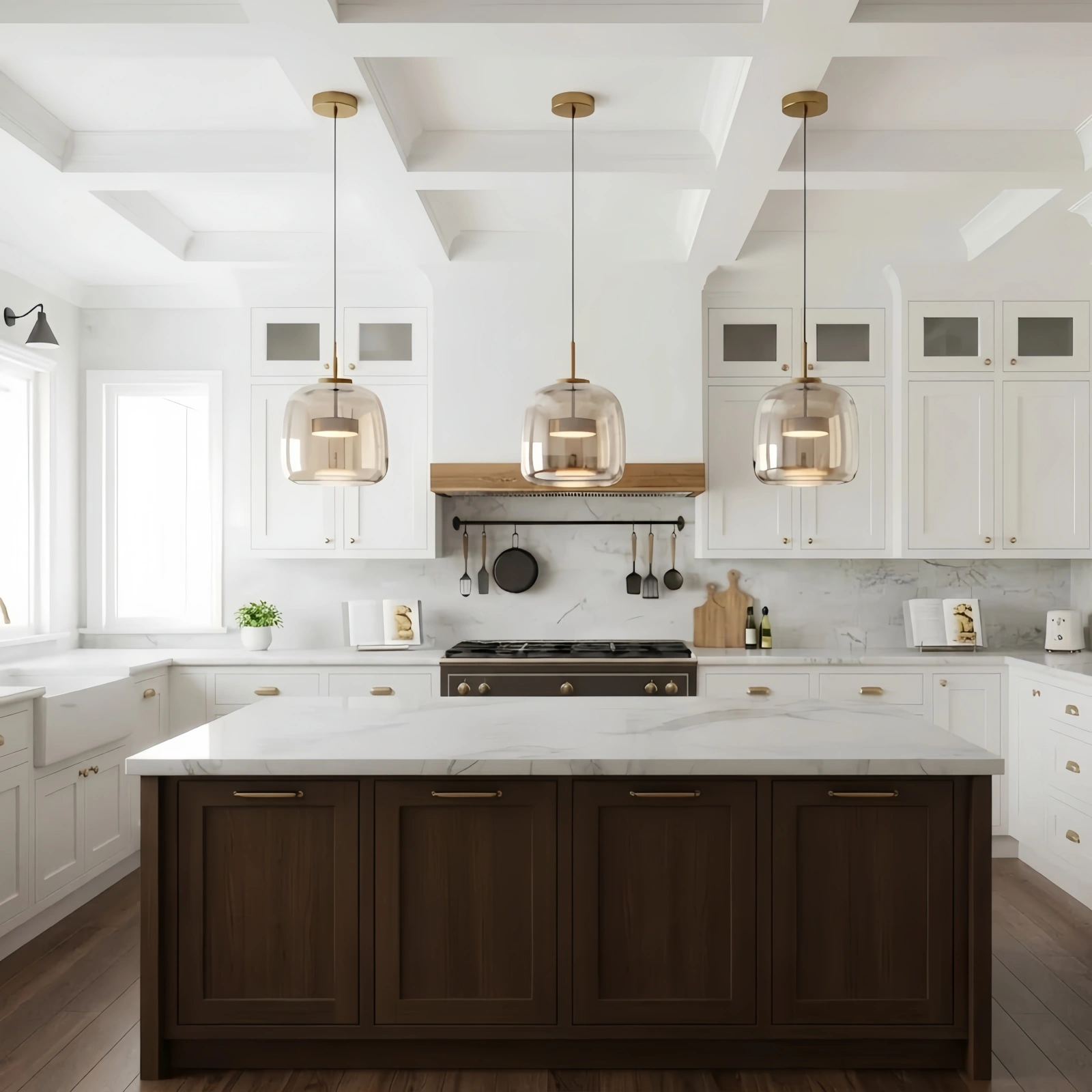
Which One Works Better for Different Kitchen Types?
For Small Kitchens
If your kitchen is short on natural light or feels visually crowded, clear glass pendants often help the space stay lighter and more open. Because the material is transparent, the fixture itself does not interrupt the room as much.
That said, if you prefer frosted glass in a small kitchen, you can still make it work. Just choose a simpler shape, keep the scale modest, and avoid overly thick or oversized shades.
For Kitchen Islands Used for Prep
If the island is where you chop vegetables, portion ingredients, or do most of your evening cooking, clear glass often makes more sense. It delivers a crisper, more focused effect that can help the island surface feel brighter.
For even better performance, pair clear glass pendants with the right bulb output and proper spacing instead of relying on the glass alone.
For Open-Plan Kitchens
In open layouts where the kitchen flows into the dining or living area, frosted glass often blends more naturally into the rest of the home. The light feels softer from a distance, and the fixture is less visually sharp when seen from multiple angles.
If you want the kitchen to feel integrated rather than spotlighted, frosted glass usually wins here.
For Traditional or Warm-Toned Kitchens
Frosted glass generally suits warm wood cabinetry, brass accents, cream tones, and more classic materials. It creates a softer finish and often feels more timeless.
Clear glass can still work beautifully in these kitchens, especially if you are using vintage-style bulbs or statement hardware, but the styling needs to be more intentional.
For Modern Kitchens
Clear glass often fits modern kitchens very well, especially spaces with clean lines, pale stone, matte black accents, brushed metal, or minimal cabinetry. The reason why clear glass pendant lights are one of the most popular choices for modern kitchen pendant lights because their transparent design keeps the space feeling open and visually clean.
If your kitchen already has a lot of hard surfaces, though, a frosted finish may help soften the room.
For Luxury and Contemporary Kitchens
Textured glass, smoked glass, and handcrafted glass pendants can add a decorative focal point while maintaining an elegant and sophisticated look.
The number of kitchen island pendant lights needed depends on your island length, pendant size, ceiling height, and the amount of illumination required. Choosing the right quantity helps create balanced illumination while maintaining a clean and organized kitchen design.For comfortable installation, kitchen island pendant lights are usually hung 30–36 inches above the countertop.
Kitchen Island Size |
Recommended Pendant Quantity |
|---|---|
4–5 feet island |
1 large pendant light or 2 small pendant lights |
6–7 feet island |
2 pendant lights for balanced coverage |
8+ feet island |
3 pendant lights for even illumination |
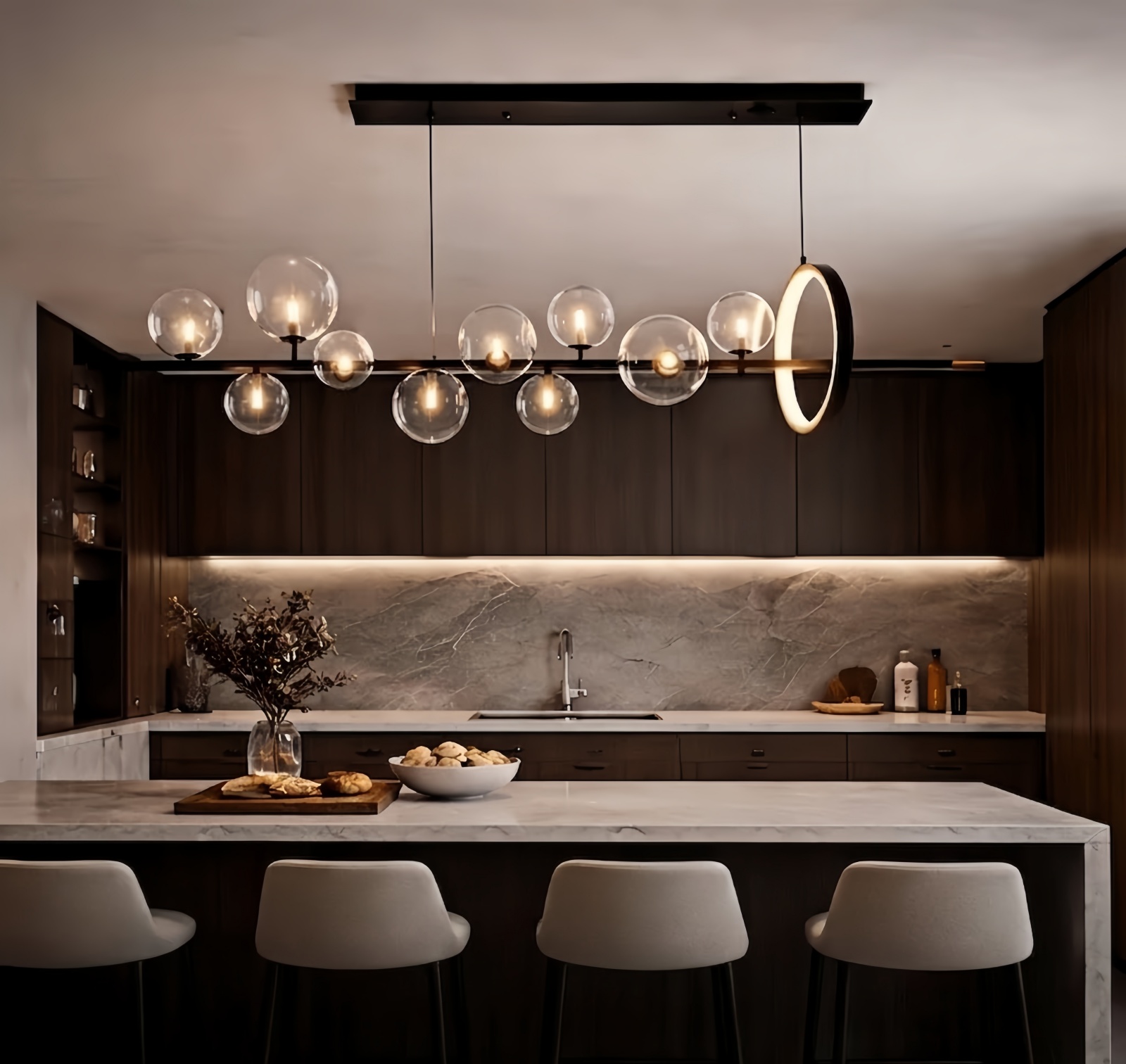
Common Problems With Clear Glass Pendant Lights
Although clear glass pendant lights offer a stylish and bright appearance, homeowners should consider a few practical factors before choosing this option.
Common Concern |
Solution |
|---|---|
Visible fingerprints and dust |
Clean the glass regularly with a soft cloth |
Stronger glare from exposed bulbs |
Use dimmable LED bulbs or lower brightness bulbs |
Visible bulb appearance |
Choose decorative filament bulbs that enhance the design |
Clear glass is an excellent choice for homeowners who want maximum brightness and a modern appearance, but it requires more attention to bulb selection and maintenance.
Common Problems With Frosted Glass Pendant Lights
Although frosted glass pendant lights are popular for their soft and comfortable illumination, there are also a few practical factors homeowners should consider before choosing this option.
Common Concern |
Solution |
|---|---|
Slightly reduced brightness |
Choose higher-lumen LED bulbs or multiple pendant lights to provide sufficient illumination |
Less visible decorative bulbs |
Use stylish fixtures with unique shapes, textures, or finishes to enhance the overall design |
Light may feel too soft for task areas |
Combine frosted pendant lights with additional task lighting for cooking and food preparation areas |
Limited visual transparency |
Choose textured or partially frosted glass designs to add more decorative detail |
Frosted glass pendant lights are an excellent choice for homeowners who want comfortable, glare-free lighting and a warm atmosphere. However, selecting the right bulb brightness and placement is important to ensure the kitchen receives enough functional lighting.
Maintenance: Which One Is Easier to Live With?
This part is practical, but important.
Clear glass shows more. Dust, fingerprints, streaks, and even the condition of the bulb are easier to notice. If your kitchen gets greasy quickly or your pendants hang low enough to be touched often, you may end up wiping them more than expected.
Frosted glass is more forgiving. It does a better job of hiding minor smudges and keeps the bulb from becoming part of the visual clutter.
Lower-maintenance option: Frosted glass
Higher-maintenance but visually lighter option: Clear glass
The Better Choice Depends on What You Want Most
Here is the simplest way to decide:
Choose clear glass if your top priority is brightness, openness, and a more modern look.
Choose frosted glass if your top priority is comfort, softer light, and a cleaner overall appearance.
If you are stuck between the two, ask yourself one question:
Do I want my kitchen island lighting to feel sharper or softer?
That answer usually points you in the right direction faster than style labels do.
Can You Mix Clear and Frosted Glass Pendants?
Yes, but only if it looks intentional.
Mixing both finishes can work in a larger kitchen, especially if you are zoning the space. For example, clear glass can go over the main prep island, while frosted glass or another softer fixture style works over a breakfast nook or nearby dining area.
What usually does not work is mixing them randomly in the same row over one island. If you want a clean and elevated result, keep one island run consistent.
Best Buying Tips Before You Order
Before choosing either option, check these details:
Pendant Height
If the pendants hang too low, glare becomes more noticeable, especially with clear glass.
Bulb Brightness
A very bright bulb inside a clear glass shade can feel harsh fast. The same bulb behind frosted glass will usually feel softer.
Shade Size
A larger frosted shade can look heavy in a small kitchen. A very small clear shade may not provide enough visual presence in a large island setup.
Countertop Reflectivity
Glossy white quartz, polished stone, and reflective surfaces can amplify glare from clear glass.
Room Function
If the kitchen is mainly for cooking, clear glass may serve you better. If it is where people gather, snack, chat, and linger, frosted glass may feel more pleasant over time.
Final Verdict
There is no single winner for every kitchen, but there is a better fit for the way you live.
Clear glass pendant lights are better for kitchens that need a brighter, cleaner, more open lighting effect.
Frosted glass pendant lights are better for kitchens that need softer light, less glare, and a more comfortable everyday feel.
If you want a safe choice that works well in most homes, frosted glass is often easier to live with. If you want a brighter island and a more modern, airy finish, clear glass is usually the stronger option.
The best kitchen lighting does not just match the room. It matches how the room is used.
FAQ
Are clear glass pendant lights too harsh for a kitchen?
Not always. They can work very well in kitchens that need stronger task lighting. The result depends on bulb brightness, pendant height, and surrounding materials. If you are sensitive to glare, choose carefully.
Do frosted glass pendant lights give enough light for cooking?
Yes, in many kitchens they do. They create a softer effect, but with the right bulb output and proper spacing, they can still provide practical light over an island.
Which glass finish looks cleaner over time?
Frosted glass usually hides fingerprints, dust, and bulb visibility better than clear glass.
Which is better for a small kitchen island?
In many small kitchens, clear glass helps keep the room feeling more open. If you prefer frosted glass, choose a compact shape so the fixtures do not feel heavy.
Share:
Modern Crystal Pendant Lighting Trends Shaping Interiors in 2026
Kitchen Island Pendant Light Height Mistakes That Make Your Kitchen Look Wrong