
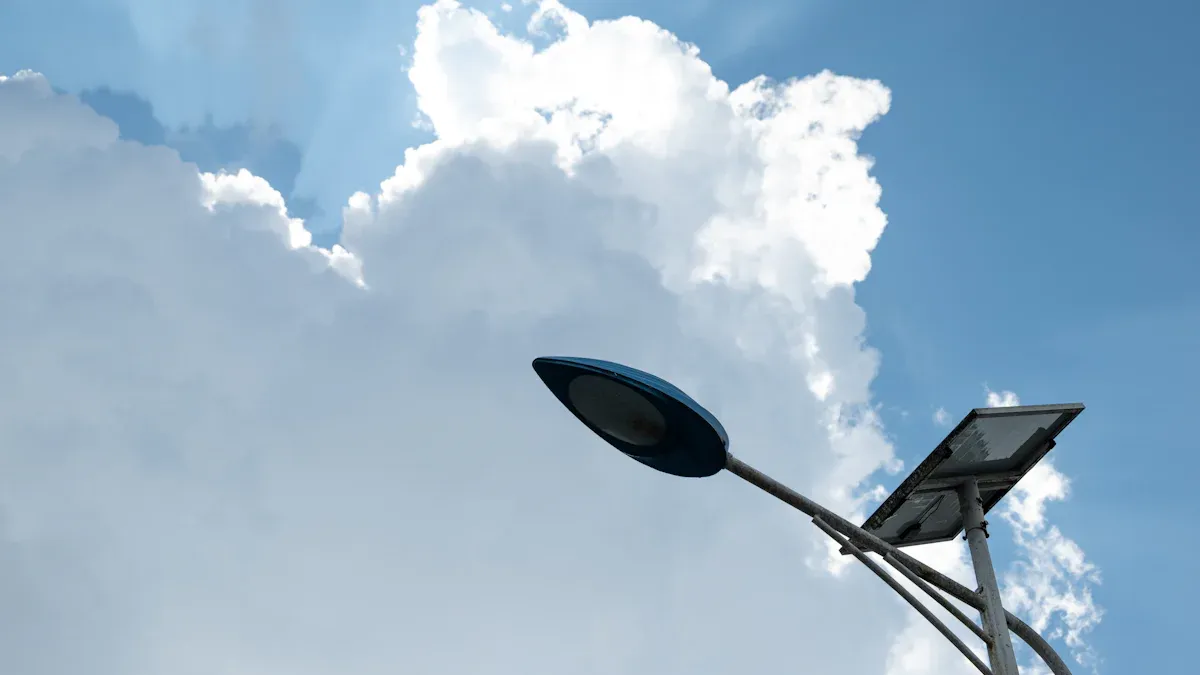
Solar lamps operate by converting sunlight into electricity during the day. Solar panels absorb energy and store it in batteries. At night, sensors and controllers activate the LEDs, providing you with bright and clean light. You don’t need to flip any switches; these lamps turn on and off by themselves from dusk to dawn.
-
Main parts you find in every solar lamp:
Solar panels
Batteries
Sensors/controllers
LEDs
You get steady light and help the planet at the same time.
Key Takeaways
Solar lamps change sunlight into electricity. They give clean energy for light at night. You do not need to turn them on yourself.
Put your solar lamp where it gets direct sunlight. Leave it there for 6 to 8 hours each day. This helps the lamp stay bright and keeps the battery strong.
LEDs in solar lamps use less energy. They last much longer than regular bulbs. This saves you money and makes less trash.
Clean the solar panels often. Check the batteries too. This helps your solar lamp work well for a long time.
Using solar lamps lowers your carbon footprint. It helps keep the environment clean. Solar lamps also save you money on lighting.
How Solar Lamps Operate
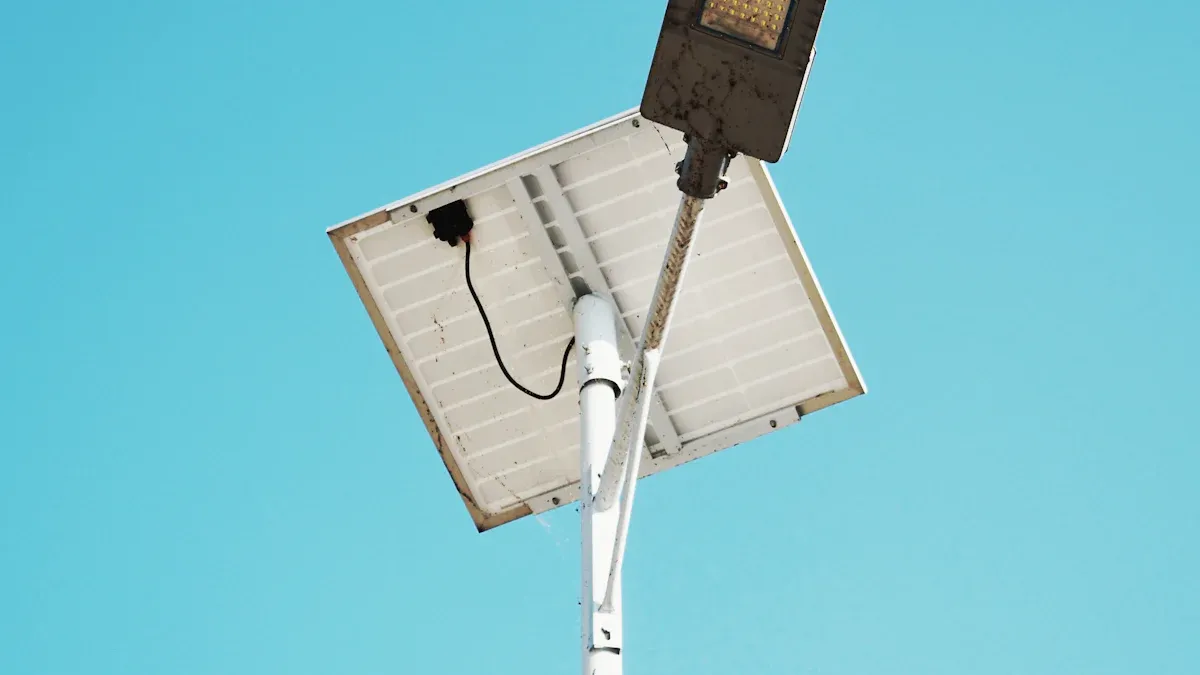
Solar lamps operate through a smart process that brings sunlight into your nights. You see the magic happen in several steps. During the day, the solar panel captures sunlight and turns it into electricity. This electricity moves through diodes, which control the flow and keep the energy safe. The battery stores this energy until you need it. As the sun sets, a controller board and a photoresistor sense the darkness. The system releases the stored power, and the LED lights switch on automatically. You get bright, clean light without lifting a finger.
Solar Panels and Energy Capture
Solar panels sit on top of your lamp and work as the main energy collectors. They use photovoltaic cells to absorb sunlight and convert it into electrical energy. The process starts as soon as the sun rises. You do not need to do anything; the panels work on their own. Most solar panels in lamps have an energy conversion efficiency of about 11.25%. This means only a small part of the sunlight becomes electricity, but it is enough to power your lamp at night.
Tip: Place your solar lamp where it gets the most sunlight. Direct sunlight for 6–8 hours gives you the best results.
Here is what you need for a full charge:
At least 4–6 hours of direct or indirect sunlight each day for good charging.
For maximum brightness and longest runtime, aim for 6–8 hours of direct sunlight.
Even with just 4 hours of bright indirect light, you can get 5–6 hours of pathway lighting at night.
Solar lamps operate on 100% renewable energy. They produce zero emissions and help lower your carbon footprint. By using solar energy, you help reduce greenhouse gas emissions and conserve non-renewable resources. You support a cleaner environment every time your lamp lights up.
Battery Storage for Nighttime Power
The battery is the heart of your solar lamp at night. It stores the energy collected during the day and releases it when darkness falls. You find two main types of batteries in solar lamps. Each type has its own strengths:
Battery Type |
Average Cycle Life |
Average Depth of Discharge |
Best Application |
|---|---|---|---|
LiFePO4 (Lithium Iron Phosphate) |
2,500–4,000 cycles |
90–95% |
Street and area lights |
Lead-Acid (Gel / AGM) |
500–1,000 cycles |
50% |
Older systems |
A fully charged battery can power your lamp for 8 to 12 hours at night. This is possible when the lamp gets 6 to 8 hours of direct sunlight during the day. You do not need to worry about running out of light. The system works automatically, switching on when it gets dark and turning off when the sun rises.
Solar lamps operate with a simple and reliable process. You get clean energy, automatic operation, and long-lasting illumination. You help the planet and enjoy bright nights with very little effort.
Automatic Lighting and Control
Light Sensors and Controllers
Solar lamps know when to turn on and off. Light sensors inside the lamp check how bright it is outside. When the sun goes down, the lamp turns on by itself. When the sun comes up, the lamp shuts off. You do not need to press any buttons. Some lamps have motion sensors. These turn the light on when they see movement. This helps keep your home or garden safe.
Ambient light sensors turn the lamp on at night and off in the morning.
Solar lamps use sensors to check light levels, so they work automatically.
Motion sensors in some lamps turn the light on when something moves, making things safer.
Controllers help control electricity and keep the battery safe. There are two main controller types in solar lamps:
Controller Type |
Description |
Applications |
|---|---|---|
PWM |
Uses proven technology, costs less, good for small lamps. |
Stops batteries from getting too full and helps them last longer. |
MPPT |
Gets the most energy from sunlight, best for big lamps, charges faster. |
Sends the highest voltage to the battery, making it work better. |
PWM controllers are good for small lamps and help batteries last. MPPT controllers work best for bigger lamps and use more sunlight.
Dusk-to-Dawn Operation
Solar lamps turn on at night and stay on until morning. Sensors and controllers work together to save energy and keep the lamp bright. Even when it is cloudy or rainy, dusk-to-dawn sensors still work. The lamp may charge slower, but it will still light up at night.
Weather Condition |
|
|---|---|
Cloudy |
Works well, but may charge slower |
Rainy |
Still works, bigger batteries help it last longer |
Overcast |
Can still get sunlight, so it works even when it is not very bright |
Energy-saving tricks help your lamp last longer. Smart batteries charge and use power in the best way. Some lamps use timers or motion sensors to save battery life. Supercapacitors in some lamps charge fast and use energy well. These things help your lamp give you light every night.
Tip: Put your solar lamp where it gets lots of sunlight. This helps the sensors and controllers work better.
Efficient LED Illumination
LIGHTSLUX'S Light
Why LEDs Are Used
You find LEDs in almost every solar lamp. LEDs, or light-emitting diodes, give you many advantages over old-fashioned bulbs. They use much less energy and last much longer. You get bright light without wasting power. LEDs also shine light in one direction, so you do not need extra reflectors or covers. This makes your lamp more efficient.
Here is a quick look at why LEDs are the best choice for solar lamps:
Advantage |
Description |
|---|---|
LEDs use at least 75% less energy than incandescent lighting. |
|
Long Lifespan |
LEDs can last up to 25 times longer than incandescent bulbs. |
Directional Emission |
LEDs shine light where you need it, so less energy gets wasted. |
Low Heat Output |
LEDs stay cool, while old bulbs waste energy as heat. |
You also help the planet when you use LEDs. They have a smaller carbon footprint than incandescent or fluorescent bulbs. LEDs do not contain mercury, so they are safer for your family and the environment. Fluorescent bulbs can break and release harmful mercury, but LEDs avoid this problem.
LED Efficiency and Longevity
LEDs give you bright light while using very little power. Most solar lamps with LEDs use only 2 to 18 watts. Incandescent bulbs use 25 to 100 watts for the same amount of light. You save energy and get more light for your money.
Bulb Type |
Energy Consumption (Watts) |
Efficiency Comparison |
|---|---|---|
LED |
2–18 |
Up to 90% more efficient than incandescent |
Incandescent |
25–100 |
|
Fluorescent |
9–26 |
About 75% more efficient than CFLs |
LEDs also turn more electricity into light. In 2013, common residential LEDs reached 76 lumens per watt. High-performance models went above 135 lumens per watt. This means you get more brightness from every bit of energy stored in your solar lamp.
You do not need to change LEDs often. High-quality LEDs can last 25,000 to 50,000 hours. That means your solar lamp can shine for 5 to 10 years before you need a new bulb. You get reliable light every night and spend less time on maintenance.
Tip: Choose solar lamps with high-quality LEDs. You will enjoy brighter nights and fewer replacements.
Performance and Maintenance
Sunlight Exposure and Placement
Your solar lamp works best in direct sunlight. Solar panels need the sun to make energy. Shade from trees or buildings blocks sunlight. Even a little shade can cut power by half. If your lamp is in full shade, it may only work a little.
Put your solar lamp where it gets six hours of sunlight.
Stay away from places with shadows or things blocking the sun.
South-facing spots are best if you live in the Northern Hemisphere.
Tilt the solar panel to match where you live for more sunlight.
Use a light meter to check how much sunlight your lamp gets.
🌞 Tip: Direct sunlight helps your solar lamp charge quickly and shine brighter at night.
Battery Quality and Replacement
Good batteries help your solar lamp work well. Lithium-ion batteries last longer than lead-acid batteries. Very hot or cold weather can make batteries wear out faster. Fewer charges help batteries last longer.
Battery Type |
Average Lifespan |
Notes |
|---|---|---|
Lithium-ion |
5–10 years |
High efficiency, long life |
Lead-acid |
2–5 years |
Lower efficiency, shorter life |
Pick good batteries for better results. Put your lamp in a sunny spot to keep batteries healthy. Use a charge controller to stop batteries from getting too full.
Simple Maintenance Tips
Taking care of your solar lamp is easy. Clean the solar panels a few times each year. If you live near dust or trees, clean them more often. Check batteries for rust and make sure they are tight. Change batteries when they stop working. Look at the charge controller for problems. Test it to keep the battery safe. Check the lamp and LED bulbs for damage. Clean the lens so the light stays bright. If the light is dim or flickers, check the wires and connections.
Clean solar panels every six months, or more if it is dusty.
Get a professional to check your lamp every five years.
Watch how your lamp works with apps or regular checks.
Do extra maintenance if you see any problems.
🛠️ Note: Cleaning and checking your solar lamp helps it work well for many years.
Solar Lamps work by taking in sunlight during the day. They store this energy in batteries. At night, they use the stored energy to light up your space. You save money because they use the sun’s power. Solar lamps are good for the environment since they do not make pollution. You do not need to set up lots of wires or fix them often. You can use solar lamps in gardens or along walkways. If you want lights that are easy and save money, solar lamps are a great choice.
FAQ
How long do solar lamps last at night?
You usually get 8 to 12 hours of light from a fully charged solar lamp. The exact time depends on the battery size, sunlight hours, and lamp settings.
Can solar lamps work on cloudy or rainy days?
Yes, solar lamps still work on cloudy or rainy days. The panels collect less energy, so the light may not last as long. You still get some illumination at night.
Do I need to turn solar lamps on or off every day?
No, you do not need to turn them on or off. Solar lamps use sensors to detect light. They turn on at dusk and off at dawn automatically.
Where should I place my solar lamp for best results?
Place your solar lamp in a spot with direct sunlight for at least six hours each day. Avoid shade from trees, buildings, or other objects.
Share:
Outdoor Wall Lighting Ideas to Brighten Winter Nights
Porch Lights Showdown Which Style Fits Your Home Best