
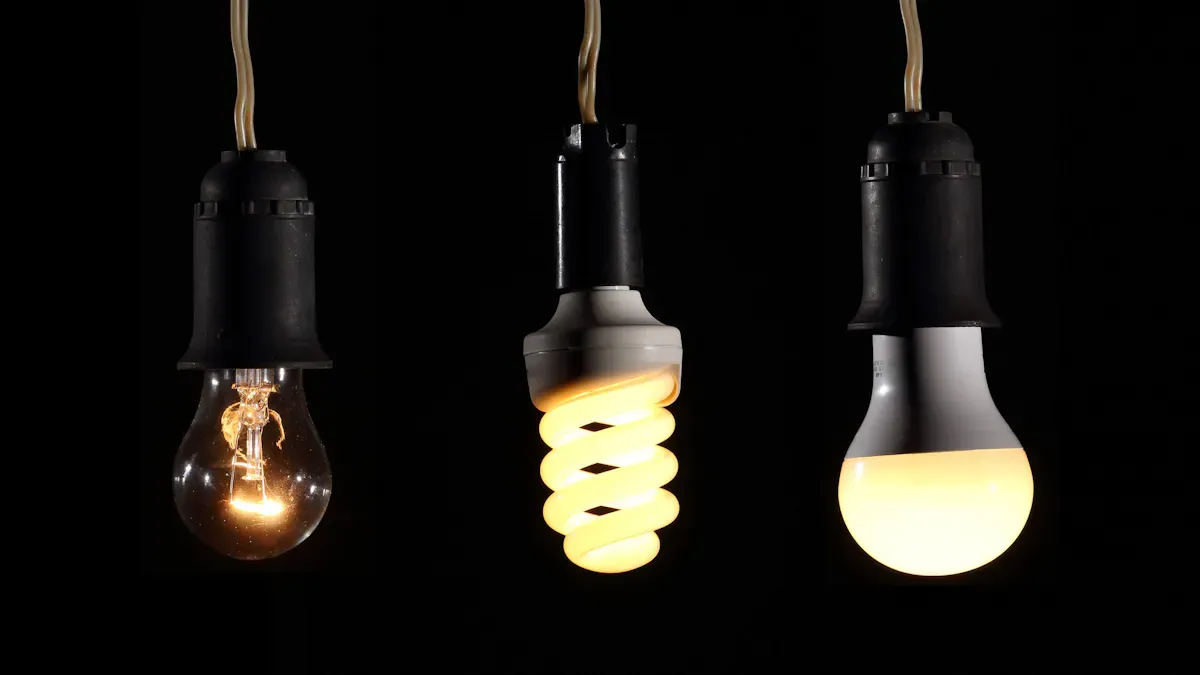
You may ask what really makes incandescent vs LED bulbs different.
The biggest difference is how they make light. Incandescent bulbs heat a wire to produce light, while LEDs use special materials to emit light you can see.
This distinction is important because your choice between incandescent vs LED affects how much energy you use. It also impacts safety and how much money you spend over time. There are rules and deals that help you pick better lighting. This guide will assist you in choosing the right bulbs for your room.
Key Takeaways
Incandescent bulbs make light by heating a filament. LED bulbs use a chip to make light. This makes LEDs use less energy.
LED bulbs last much longer than incandescent bulbs. They can last from 25,000 to 100,000 hours. Incandescent bulbs last about 1,000 hours.
Using LED bulbs can help you save money on your energy bills. You might save between $225 and $300 each year.
LED bulbs come in many colors and brightness levels. You can pick the lighting you want for different moods and activities.
LED bulbs are safer because they do not get as hot. This lowers the chance of burns and fire compared to incandescent bulbs.
What Are Incandescent Bulbs and LED Bulbs
Incandescent Bulbs Overview
Incandescent bulbs are found in many homes and old buildings. They make light in a simple way. Electricity goes through a thin wire called a filament. The filament gets very hot and starts to glow. This glowing makes the light you see. The glass bulb covers the filament and keeps it safe. It also helps the filament last longer. Most filaments are made from tungsten. Tungsten can get very hot without melting.
Here is a quick comparison of definitions from major lighting organizations:
Bulb Type |
Definition |
|---|---|
Incandescent |
A bulb that uses a filament that heats up to produce light. |
Incandescent |
A bulb that utilizes electricity to heat a wire until it’s hot enough to emit light. |
Incandescent bulbs shine with a warm and soft light. People like them for cozy rooms or soft lighting. These bulbs are simple to use and easy to change. When you turn them on, they get hot. The heat comes from the filament inside the bulb.
LED Bulbs Overview
LED bulbs use new technology to make light. Inside the bulb is a tiny chip. When electricity goes through the chip, it makes light. This is called electroluminescence. LED bulbs use much less energy than incandescent bulbs. You save money and power with LED bulbs.
Here is a quick comparison of definitions for LED bulbs:
Bulb Type |
Definition |
|---|---|
LED |
A light-emitting diode that operates by passing an electric current through a microchip, illuminating tiny sources called LEDs. |
LED |
Stands for light emitting diode; produces light up to 90% more efficiently than incandescent bulbs. |
Some people think LED bulbs only make blue or white light. But LEDs come in many colors and shades. Some think LEDs break easily, but they are stronger than incandescent bulbs. Others say LEDs never get hot. They do make some heat, but it stays near the base.
Tip: LED bulbs last much longer than incandescent bulbs. You can use them for years before needing a replacement.
-
Common misconceptions about LED bulbs:
LEDs do not only make blue or white light. They come in many colors.
LEDs are not weak. They are tougher than incandescent bulbs.
LEDs can have good light quality. Many have high color rendering.
LEDs do make some heat, but not as much as incandescent bulbs.
Incandescent vs LED: How They Work and Key Features
How Incandescent Bulbs Work
You see incandescent bulbs in many homes. These bulbs use a simple method to make light. Electricity flows through a thin wire called a filament. The filament heats up until it glows. This glowing wire gives off light and warmth. The glass bulb protects the filament and keeps it safe. Incandescent bulbs shine in all directions, so you get light spread across the room. You notice that these bulbs get hot quickly. This heat comes from the filament inside.
How LED Bulbs Work
LED bulbs use a different process. When you turn on an LED bulb, electricity moves through a tiny chip. This chip is made from special materials. The chip creates light using electroluminescence. LED bulbs do not need a filament. Instead, they use diodes to make light. You find that LED bulbs stay cooler because they manage heat with built-in heat sinks. LED lights shine in a specific direction, so you can focus light where you need it. You also see that LED bulbs turn on instantly and do not flicker.
Note: LED bulbs last much longer than incandescent bulbs. You change them less often and save money over time.
Main Features Compared
You may wonder how incandescent vs led bulbs compare in everyday use. Here is a simple table that shows the main differences:
Feature |
Incandescent Bulbs |
LED Bulbs |
|---|---|---|
Brightness |
Emits a warm, soft glow |
Can replicate warmth with options like 'soft white' |
Color Temperature |
Warm, yellowish light |
Available in a range of colors including cool whites and vibrant shades |
Lifespan |
Approximately 1,000 hours |
Ranges from 25,000 to 50,000 hours or more |
You get instant-on capability with both types. LED bulbs offer more choices for color and brightness. Incandescent bulbs give you a classic, cozy feel. LED vs incandescent bulbs show big differences in energy efficiency. LED bulbs use less power and produce less heat. Incandescent light uses more energy and gets hotter. You see that LED lights last longer and cost less to run. When you compare bulbs, think about how long you want them to last and how much energy you want to save.
Difference Between LED and Incandescent: Efficiency, Lifespan, and Cost
Energy Efficiency
You want to know how much energy your bulbs use. This is where the difference between led and incandescent bulbs becomes clear. Incandescent bulbs waste a lot of energy as heat. When you touch an incandescent light, you feel how hot it gets. Most of the energy turns into heat, not light.
LED lights work in a smarter way. They use special chips to make light with much less wasted energy. You get the same brightness, but your power bill drops. Here are some facts about energy efficiency:
LED bulbs use about 90% less energy than incandescent bulbs.
LEDs use 75% less energy and last up to 25 times longer than incandescent bulbs.
Some LED bulbs can use up to 85% less energy than traditional incandescent lights.
You see that led efficiency means you save money and help the planet. LED lights also stay cool, which makes your home safer. When you upgrade to LED, you choose a more energy efficient way to light your space.
Lifespan Comparison
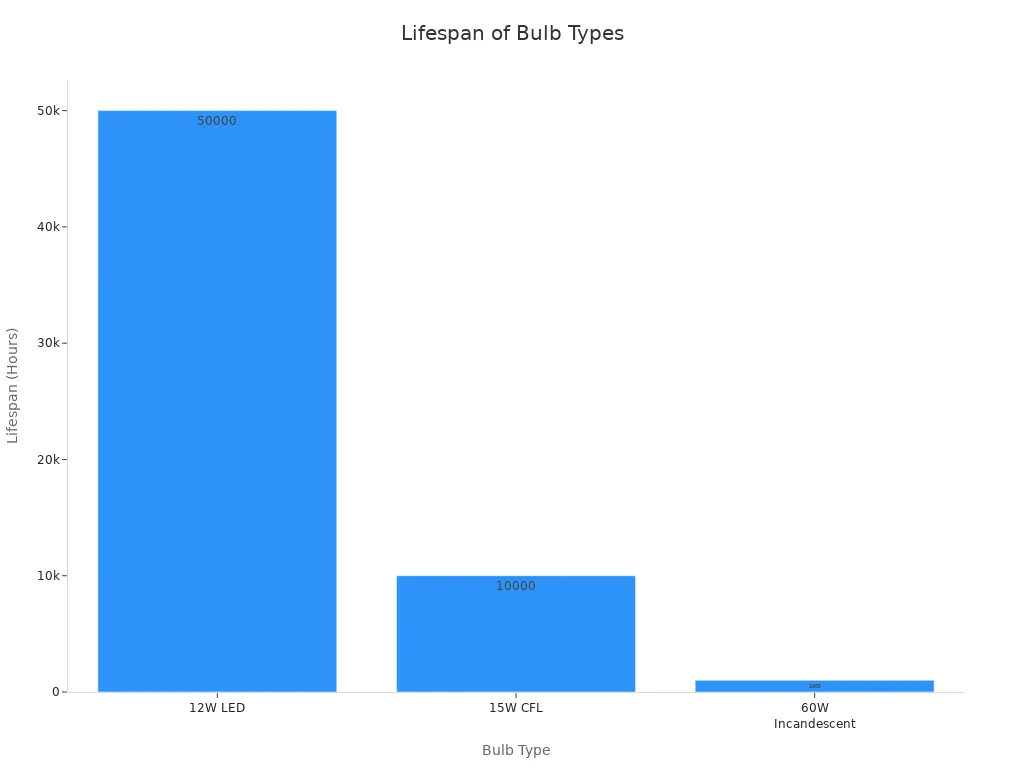
You want bulbs that last. Incandescent bulbs burn out quickly. You may need to change them every few months, especially if you use them often. LED bulbs last much longer. You can use them for years before you need a new one.
Here is a table that shows how long different bulbs last:
Bulb Type |
Lifespan (Hours) |
|---|---|
LED |
25,000 to 100,000 |
Incandescent |
~1,000 |
CFL |
~10,000 |
Halogen |
~2,000 |
You can see that led bulbs last much longer than incandescent bulbs. In real life, LED bulbs can last between 20,000 to 40,000 hours. Incandescent bulbs usually last around 1,000 hours. LED lights do not burn out suddenly. They slowly get dimmer, so you have time to replace them.
Cost Savings Over Time
You may notice that LED bulbs cost more when you buy them. Incandescent bulbs are cheaper at first. But you need to look at the big picture. LED bulbs save you money in the long run. You buy fewer bulbs and pay less for electricity.
Here is a table that shows how much you can save:
Savings Type |
Amount |
|---|---|
Annual Energy Savings |
$225-300 per year |
10-Year Savings |
$2,250-3,000 |
Lifetime Savings |
$4,000-6,000 |
Payback Period |
6-12 months |
You can see that switching to LED lights gives you big savings. The payback period is short. In less than a year, you can earn back what you spent on new bulbs. After that, you keep saving money every month.
LED bulbs also mean less work for you. You do not need to change bulbs as often. Fewer replacements mean lower maintenance costs. LED bulbs can last up to 25 times longer than incandescent bulbs. They do not fail suddenly. Instead, they slowly lose brightness, so you have time to plan for a replacement.
If you want to upgrade your lighting, you can also look for rebates. Many utility companies and government programs offer deals that cover 20% to 50% of your project costs. This makes it even easier to switch to LED.
Tip: To estimate your annual energy savings, use this formula: (Existing Watts – LED Watts) × Hours of Operation × Number of Fixtures ÷ 1,000.
When you compare incandescent vs led, you see that led wins in every way. You get better energy efficiency, a longer lifespan, and more savings. If you want to make your home or office brighter, safer, and cheaper to run, led vs incandescent is an easy choice.
LED vs Incandescent: Light Quality, Safety, and Design
Light Quality and Color Options
You want your space to look and feel right. The quality of light matters. When you compare incandescent vs led, you notice differences in color and brightness. Incandescent bulbs give off a warm, yellowish glow. This makes rooms feel cozy. LED bulbs offer more choices. You can pick from warm white, cool white, or daylight. This helps you match the light to your mood or activity.
Bulb Type |
Color Temperature Range (K) |
Description |
|---|---|---|
LED Bulbs |
2,500 to 3,000 |
Warm white, ideal for relaxing |
3,500 to 4,100 |
Cool white, suitable for workspaces |
|
5,000 to 6,500 |
Daylight, best for reading or tasks |
|
Incandescent Bulbs |
3,000 to 3,500 |
Warm light, comfortable for living |
You may also care about how true colors look under your light bulbs. This is called the color rendering index (CRI). Incandescent bulbs score close to 100, so colors look natural. LED bulbs usually score in the 80s to low 90s, which is still very good for most uses.
Bulb Type |
CRI Value Range |
|---|---|
Incandescent |
Close to 100 |
LED |
80s to low 90s |
LED lights can also change colors. Some let you pick any shade you want. This gives you more control over your space.
Safety and Heat Output
Safety is important when you choose light bulbs. Incandescent lights get very hot. They can reach up to 200°C. This heat can cause burns or even start fires. LED bulbs stay much cooler, usually between 35°C and 55°C. You can touch them without worry.
Bulb Type |
Approximate Operating Temperature (°C) |
|---|---|
LED |
35°C – 55°C |
Incandescent |
100°C – 200°C |
Bulb Type |
Safety Risks |
|---|---|
Incandescent |
High overheating risk, can reach temperatures exceeding 1,200 degrees, responsible for fires. |
LED |
Lower heat production, significantly reduced risk of overheating and fire hazards. |
LED bulbs use energy efficiently. They turn most energy into light, not heat. This means you get more savings and a safer home. You also lower the risk of fire when you upgrade to led lights.
Design Flexibility
You have more choices with led bulbs. They come in many shapes and sizes. You can find standard bulbs, reflector bulbs for spotlights, and even smart bulbs you control with your phone. Some led bulbs change color or brightness with a tap.
Standard A19 bulbs for everyday use
Reflector bulbs for focused lighting
Smart LED bulbs for app control and dimming
Color-changing bulbs for fun and mood lighting
RGB LED bulbs for creative color schemes
LED lights fit almost any fixture. Incandescent bulbs have fewer options. With led vs incandescent, you get more ways to light your home. You can use led lights for reading, parties, or relaxing. This flexibility helps you save money and energy while making your space look great.
Choosing the Right Bulb for Your Needs
Best Uses for Incandescent Bulbs
You may wonder if there are still good reasons to pick incandescent bulbs. In some cases, these light bulbs work better than LED. Lighting experts suggest using incandescent in these situations:
In heating equipment, such as ovens or microwaves, where high heat can damage LED bulbs.
When you want a special look, like the warm glow of Christmas lights or vintage lamps.
If you do not care about energy efficiency or cost, such as in homes with few fixtures or low utility rates.
In low-traffic areas, like closets or storage rooms, where bulbs are rarely used.
For temporary lighting, such as parties or construction sites, where you only need light for a short time.
You get a classic feel and soft light with incandescent bulbs. These bulbs can be a good choice when style or heat is important.
Best Uses for LED Bulbs
LED bulbs fit most places in your home or office. You can use them for many tasks and save money over time. Here is a table showing common uses for LED bulbs:
Setting |
Common Applications |
|---|---|
Residential |
Ceiling lights, lamps, under-cabinet lighting, and outdoor fixtures |
Commercial |
Displays, general lighting, panels, track lighting, and dimmable lights |
You can use LED lights for reading, working, or relaxing. LED bulbs work well in hallways, stairways, and kitchens. You can also find smart LED bulbs that let you change color or brightness with your phone. The long LED lifespan means you change bulbs less often, which adds to your savings.
Tip: LED bulbs give you more choices for color and brightness. You can pick soft white for comfort or daylight for tasks.
Factors to Consider
When you choose between incandescent vs led, think about your needs. Here are some things to keep in mind:
Look at the color of the light. Daylight LED bulbs can feel harsh, but soft LEDs are more comfortable and close to soft white incandescent light.
Think about energy efficiency. LED bulbs use less power and last longer, which means more savings.
Check the use case. LED lights work well for under-cabinet lighting, motion sensors in hallways, and places where you want to control brightness.
Consider the environment. LED bulbs last longer, but you must recycle them properly. Some contain materials that can harm the earth if not disposed of correctly. Local rules may require you to recycle LED bulbs at special centers.
Decide if you want to upgrade your lighting. LED vs incandescent gives you more options for design and savings.
You can pick the right bulbs by thinking about light quality, cost, and how you use each space. If you want to save money and energy, LED bulbs are usually the best choice. If you need a certain look or heat, incandescent lights may work better.
You can spot big differences between LED and incandescent bulbs. LEDs use much less energy. They last a lot longer and do not get as hot. Incandescent bulbs are cheaper to buy at first. But you have to replace them more often. Most families save money with LED bulbs. LEDs also help cut down on waste.
Feature |
LED Bulbs |
Incandescent Bulbs |
|---|---|---|
Efficiency |
80-90% |
Lower |
Lifespan |
25x longer |
Short |
Cost |
Higher at first |
Lower at first |
Think about what you need from your lights. If you want to save money over time, pick LEDs. LEDs are also safer because they stay cool. If you like a warm light or only need it for a short time, incandescent bulbs might work better.
FAQ
Can you use LED bulbs in any fixture?
You can use LED bulbs in most fixtures. Check the label for compatibility. Some older dimmers or enclosed fixtures may need special LED bulbs.
Do LED bulbs save money right away?
You pay more for LED bulbs at first. You save money over time because LEDs use less energy and last longer. Your electricity bill drops.
Are LED bulbs safe for children and pets?
LED bulbs stay cool. You can touch them without getting burned. They do not break easily. You get safer lighting for your home.
Do LED bulbs work with dimmer switches?
Many LED bulbs work with dimmers. You need to buy bulbs labeled "dimmable." Some older dimmer switches may not work well with LEDs.
How do you recycle old LED bulbs?
You should not throw LED bulbs in the trash. Take them to a recycling center. Some stores collect used bulbs. Ask your local waste service for help.
Share:
What Is the Impact of Alabaster Color on Interior Lighting
Best Reading Lamps for Home Use and How to Pick One