
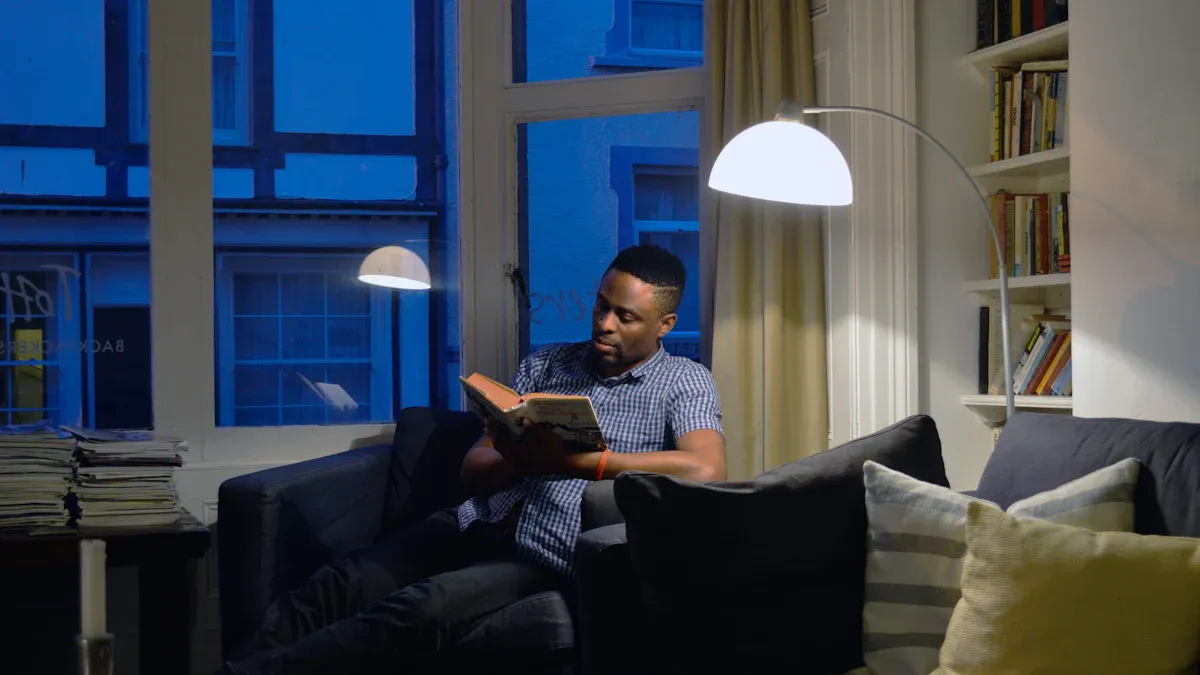
You want to find the best reading lamps for your home. These lamps let you change how bright the light is. You can also control the color temperature. The lamp shines light where you need it. This helps protect your eyes when you read. Anti-glare technology keeps your eyes from getting tired. You can pick a lamp that fits your room. You can also choose one that matches your style. Try to find energy-efficient LED lamps. Lamps with warm light look like sunlight. This makes reading easier. If you pick the right lamp, you get a cozy place to read your favorite book.
-
Adjustable brightness helps your eyes feel less tired.
-
Directional lighting stops glare from bothering you.
-
Color temperature control gives warm light for comfort.
Key Takeaways
-
Pick a reading lamp that lets you change how bright it is. This helps your eyes feel better and makes you more comfortable. - Find lamps that give off warm light (2700K-3000K). Warm light makes your reading space feel cozy. - Choose LED lamps because they use less energy. LED lamps save you money and last longer than old bulbs. - Think about how the lamp looks and what it can do. Lamps with arms you can move help you shine light where you want it. - Check reviews before you buy to make sure the lamp is comfy and works well for you.
Key Features of the Best Reading Lamps
Adjustable Arms and Heads
You want your reading lamp to work with you, not against you. Adjustable arms and heads let you move the light exactly where you need it. This means you can point the light on your book, magazine, or tablet without shadows getting in the way. If you like to read in different spots or change your posture, this feature makes a big difference.
Here’s a quick look at why adjustable arms and heads matter:
|
Feature |
Benefit |
|---|---|
|
Adjustable arms/heads |
Direct light where needed, reducing shadows |
|
Tailors light intensity for comfort |
|
|
Adjustable color temp |
Optimizes reading conditions |
-
You can bend the lamp for custom light positioning.
-
You get better readability.
-
You can adapt to different reading environments.
Brightness Levels and Lumens
Not all reading tasks need the same amount of light. Some people like a bright light for studying, while others want a softer glow for bedtime stories. The best reading lamps let you adjust the brightness. Look for lamps that offer between 500 and 1000 lumens. For simple reading, 450 lumens is usually enough. If you need to focus on small print or detailed work, you might want up to 1100 lumens.
Tip: A minimum of 500 lumens helps prevent eye strain during reading. For focused tasks, aim for lighting that gives up to 400 lux.
You can control the brightness to match your mood and protect your eyes.
Warm Light and Color Temperature
The color of the light can change how you feel when you read. Warm light, between 2700K and 3000K, creates a cozy and relaxed atmosphere. This kind of light feels natural, like sunlight in the early morning or late afternoon. It helps your eyes feel comfortable, especially if you read at night.
-
Warm light reduces harshness and feels soothing.
-
It lowers blue light exposure, which can help you sleep better after reading.
-
For nighttime reading, pick a lamp with a color temperature below 3000K.
You get a natural and gentle light that makes reading more enjoyable.
High CRI for Color Quality
Have you ever noticed that colors look strange under some lights? That’s where CRI, or Color Rendering Index, comes in. A high CRI (over 90) means your reading lamp shows colors as they really are. This is important if you read magazines, comics, or anything with pictures.
-
CRI above 90 gives you the most natural color quality.
-
You see true colors, which makes reading more pleasant.
You can trust that your lamp will show everything in its natural shade.
Energy Efficiency and LED Reading Lamp
You don’t want a lamp that wastes energy or runs up your electric bill. LED reading lamps use much less power than old-fashioned bulbs. Most LED lamps for reading only use 10 to 18 watts. That means you save money and help the planet at the same time.
-
Switching from regular bulbs to LED can save you about $60 a year.
-
LED bulbs use up to 90% less energy than incandescent bulbs.
-
You get bright, natural light without the high cost.
Choosing an LED reading lamp is smart for your wallet and the environment.
Types of Reading Lamps for Home Use
Desk Reading Lamp
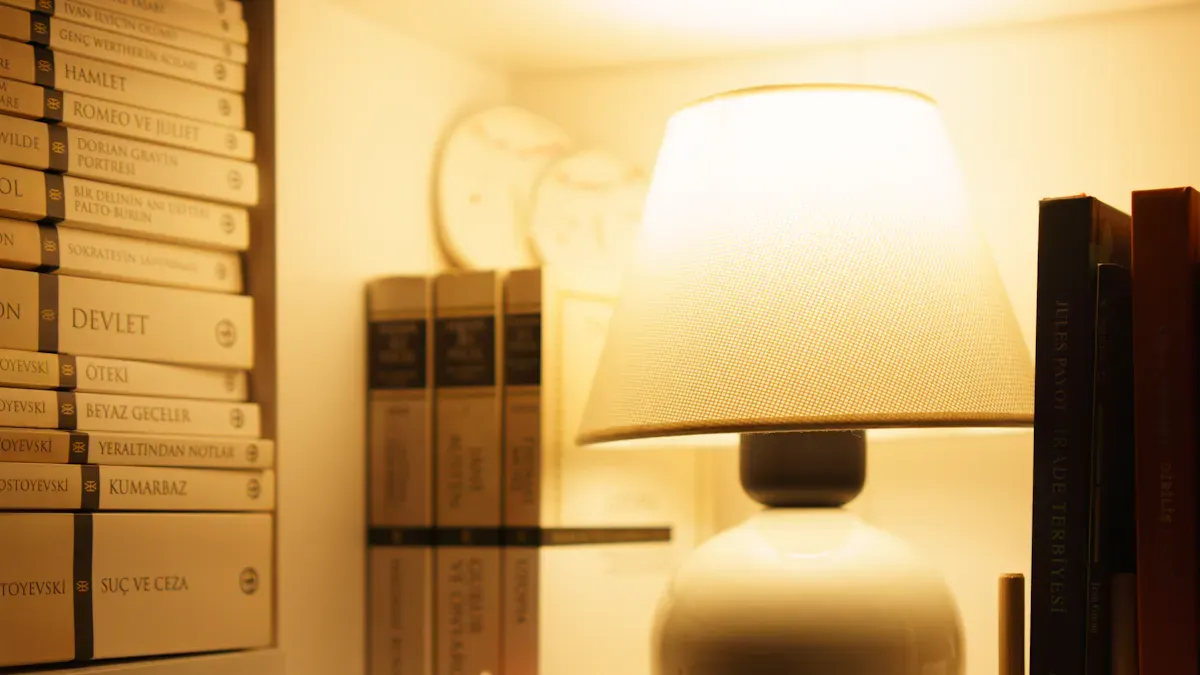
A desk reading lamp works great if you like to read or study at a table. You can place it right next to your book or notebook. Desk lamps give you focused light, which helps you see words clearly. You can find many designs, so it’s easy to match your lamp to your room. Most desk lamps use LED bulbs, so you save energy. You can also adjust the brightness to fit your mood.
For a flexible option, the Minimalist Adjustable Table Lamp features an adjustable arm and rotating head, allowing you to direct light precisely toward your book or workspace. Its opal acrylic diffuser also helps soften the light and reduce glare, making it suitable for reading, studying, and working.
Another option is the Modern Table Lamp – Wood Base & Amber Glass Shade, which combines a compact design with three color-temperature settings. The warm wood and amber glass create a softer atmosphere while providing practical illumination for a desk or study area.
Tip: Desk lamps help you relax and focus. They are perfect for homework, drawing, or reading at your desk.
Pros and Cons of Desk Reading Lamps:
-
Enhanced mood and focus for reading.
-
Many styles to match your space.
-
Easy to adjust for the best light.
-
Can cause clutter if you have a small desk.
-
Sometimes cords get in the way.
Featured Desk Reading Lamps


Floor Reading Lamp
A floor reading lamp stands tall and shines light over your chair or couch. You don’t need a table for this lamp. You can move it around your room if you want to change your reading spot. Floor lamps work well in living rooms or bedrooms. They light up a bigger area, so you can read or relax with friends and family.
The Zenno Modern Floor Lamp is a practical choice for a reading corner, with a curved wooden pole, fabric shade, and weighted metal base. Its fabric shade gently diffuses the light, while its 150 cm height provides comfortable coverage beside a chair or sofa.
For a more directional style, the Stellar Modern Floor Lamp features an adjustable hood that helps direct illumination where it is needed. Its tall, compact design works well beside seating areas while providing comfortable lighting for reading or relaxing.
Featured Floor Reading Lamps


Stellar Modern Floor Lamp - Black Metal Trumpet with Adjustable Hood for Bedroom
$619.99
View ProductWall-Mounted Reading Lamp
Wall-mounted lamps save space and look stylish. You can put them above your bed or next to your favorite chair. These lamps give you direct light for reading without taking up floor or table space. You can swing the arm to point the light where you need it. Wall-mounted lamps make your room look neat and modern. They work well in small rooms or cozy reading nooks.
The Arcato Minimalist Black Wall Lamp is designed with a 130 cm adjustable swing arm and dome shade, making it easier to direct light toward a book, chair, or bedside reading area. Its E26/E27 bulb compatibility also gives you flexibility when choosing a light source.
For a more streamlined look, the Arcato Minimalist Linear LED Wall Lamp provides warm white illumination in a slim vertical design. Available in multiple finishes and sizes, it can work as both a reading light and a decorative wall accent.
-
Wall-mounted lamps help you use your space better.
-
They add a nice touch to your room’s style.
-
You get focused light for comfortable reading.
Featured Wall-Mounted Reading Lamps

Arcato Minimalist Black Wall Lamp-Metal Long Swing Adjustable Arm Living Room/Bedroom
$369.99
View Product
Clip-On and Portable Lamps
Clip-on and portable lamps are perfect if you like to read in different places. You can clip them to a book, shelf, or headboard. These lamps are light and easy to carry. Many have adjustable brightness and color temperature, so you can set the light just how you like it. You can use them in bed, on the couch, or even when you travel. Rechargeable book lights are very popular because they are handy and work anywhere.
The Arcato Modern Rechargeable Table Lamp is a cordless option with touch dimming and three color temperatures—warm, neutral, and cool white. Its compact size makes it easy to move between desks, bedside tables, and reading areas.
For a more decorative portable option, the Modern Portable Table Lamp combines a compact glass globe with a functional metal handle. Its USB charging design allows flexible placement, while the diffused glass creates a soft glow for evening reading and relaxation.
|
Lamp Type |
Description |
|---|---|
|
Rechargeable Book Light |
Best-seller, shows high demand for portable and functional reading lights. |
|
Cordless Table Lamp |
Popular for being versatile and easy to move. |
|
Mini LED Table Lamp with Wireless Charger |
Combines lighting with smart features for modern reading needs. |
You can always find the right lamp for your reading style and space.
Featured Clip-On and Portable Lamps


Modern Portable Table Lamp – LED Glass Lantern Light with Handle in Gold, Black or White
$159.99
View ProductProtect Your Eyes While Reading
Glare Reduction
Glare can make reading tough. When light bounces off glossy pages or screens, your eyes work harder. You might feel tired or get headaches. You want your reading lamp to cut down on glare. Lamps with anti-glare features help you read longer without discomfort. Look for lamps with diffusers or shades. These parts spread the light and keep it soft. You can also place your lamp so the light shines from the side, not straight into your eyes. This simple trick helps you protect your eyes while reading.
Here’s a quick tip:
Try moving your lamp until you see no shiny spots on your book. If you still see glare, adjust the angle or use a lamp with a frosted cover.
Directed Light Placement
You need light right where you are reading. Task lighting focuses the beam on your book or magazine. This targeted light stops shadows from falling across your page. When you use a lamp that lets you direct the light, you read comfortably. Your eyes don’t have to strain to see the words. The lamp’s color temperature matches the room, so your eyes feel relaxed.
Bias lighting can also help. If you place a dim light behind your screen or near your reading spot, it boosts the ambient light. Your pupils stay steady, and you avoid discomfort. You can read for hours without feeling tired.
Here’s a table showing how directed light placement helps:
|
Feature |
How It Helps You Read |
|---|---|
|
Task lighting |
Focuses light on your book, reduces shadows |
|
Bias lighting |
Increases ambient light, prevents eye fatigue |
Multiple Brightness Settings
You don’t always need the same amount of light. Sometimes you read during the day, sometimes at night. A reading lamp with several brightness settings lets you pick what feels best. Even two or three brightness levels can make a big difference.
“Even two or three well-calibrated brightness settings can dramatically improve comfort over a fixed-output lamp.”
You can dim the lamp for bedtime stories or turn it up for studying. Dimming capability is essential for matching light intensity to your room. It helps you reduce eye strain and adapt to different times of day.
Here’s how you can use brightness settings:
-
Adjust brightness based on ambient light.
-
Create a brighter glow for daytime reading.
-
Adapt to different weather conditions for optimal lighting.
If you want to read comfortably, choose a lamp that lets you change the brightness. You’ll enjoy reading more and keep your eyes healthy.
Lamp Placement Tips
Living Room Reading Lamp Placement
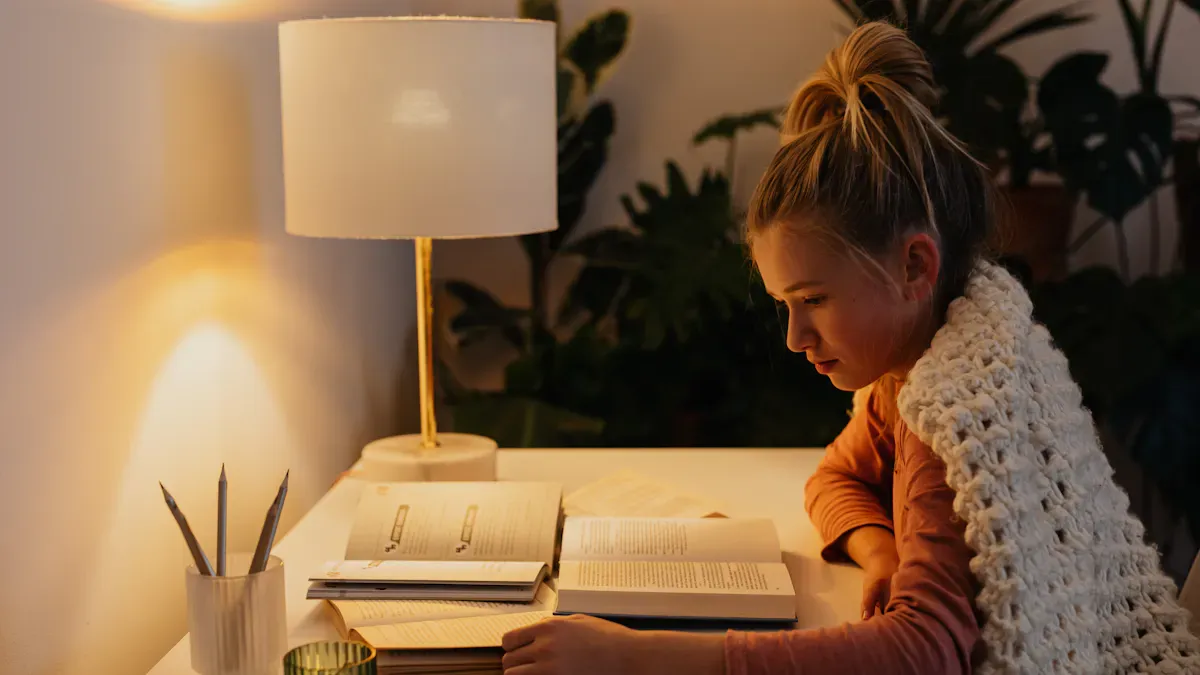
You want your living room to feel cozy and bright. A good spot for your reading lamp is next to your favorite chair or sofa. Place it close to your reading nook so the light falls right on your book or magazine. Try to keep the lamp at your shoulder level when you sit down. This helps the light shine over your shoulder and onto your reading material. If you have a floor lamp, set it behind or beside your seat. This way, you get enough light without harsh shadows.
Tip: Move your chair or lamp until you find the perfect angle. You want the light to cover your reading nook but not glare in your eyes.
A well-placed lamp can turn any corner into a relaxing reading nook.
Bedroom Reading Lamp Placement
Your bedroom should be a peaceful place for reading. When you set up a reading lamp for bedroom use, think about comfort and eye safety. Here are some quick tips:
-
Place the lamp so the light falls over your shoulder at a 30–45° angle.
-
Keep the base of the shade at eye level when you sit up in bed.
-
Make sure the lamp sits 18–24 inches from your book or e-reader.
-
Put the lamp on the side opposite your reading hand to avoid shadows.
-
Adjust the distance and angle to cut down on glare and reflections.
-
For bedside lamps, keep them about 16–20 inches from your book’s surface.
-
If you use a floor lamp, the bottom edge of the shade should be at or just below eye level.
These steps help you enjoy reading before sleep and keep your reading nook comfortable.
Study and Office Lamp Placement
You need good lighting for reading and working in your study or office. The right placement boosts focus and keeps your eyes happy. Check out this table for smart strategies:
|
Strategy |
Description |
|---|---|
|
Light Quality |
Use LED desk lamps with adjustable brightness and color temperatures (4000K–6500K). |
|
Brightness Levels |
Pick lamps with 450–850 lumens for clear, comfortable reading. |
|
Adjustability |
Choose lamps with flexible arms and heads (12–18 inches of movement). |
|
Placement |
Position lamps to light up your work area and avoid shadows or screen reflections. |
A well-placed reading lamp makes your reading nook in the office or study a great spot for learning and creativity.
Style and Design Choices
Matching Lamp to Home Decor
You want your reading lamp to look good in your space. Think about the colors and textures in your room. Many homeowners love brown lamps because they feel warm and cozy. Green lamps are also popular. They bring a calm feeling and work as a neutral color. If you like a bold look, try lamps with colorful simplicity. These lamps use rich colors and simple shapes. Crystal lighting is another trend. It adds sparkle and a modern touch to your room.
Here are some popular styles people choose for stylish reading lights:
-
Brown for warmth and comfort
-
Green for a calming vibe
-
Colorful simplicity for a fun look
-
Crystal lighting for a bit of shine
Pick a reading lamp that matches your style and makes your reading spot feel special.
Materials and Finishes
The material of your modern reading lamp matters a lot. Some lamps use coated metals or strong plastics. These materials last longer and handle changes in temperature or moisture. You will find them easy to clean, which is great if you use your lamp in busy areas. Some finishes need more care, so check if you want something low-maintenance. A lamp that is easy to wipe down will always look nice in your reading nook.
Modern vs. Classic Styles
You can choose between a modern reading lamp or a classic one. Modern lamps often have clean lines and simple shapes. They fit well in rooms with a fresh, updated look. Classic lamps have more details and may use traditional shapes. They work well if you like a timeless feel. Both styles can give you good light for reading. Think about what matches your furniture and what makes you happy when you sit down to read.
Tip: Try mixing styles! A modern reading lamp can look great in a classic room, and a classic lamp can add charm to a modern space.
Buying Tips for Best Reading Lamps
Setting a Budget
You want to find a good reading lamp that fits your budget. LED bulbs cost more at first, but they save you money over time. You pay $5 to $10 for an LED bulb, while regular bulbs cost less. When you use an LED bulb, you spend about $1.32 for 1,000 hours of light. Regular bulbs cost almost five times more. LED lights last up to 50,000 hours, so you replace them less often. You can save around $65 each year on your electric bill. If you want the best reading lamp, think about long-term savings, not just the price tag.
Reading Reviews
Before you buy a reading lamp, check what other people say. Reviews help you see how well a lamp works and how long it lasts. Many buyers like LED reading lamps because they use less energy and last longer. You get instant brightness and dimmable options. Some lamps show colors less accurately, but most users care more about comfort and savings. Look at reviews for lamps with adjustable arms, warm light, and easy controls. You want a lamp that makes reading easy and keeps your eyes happy.
|
Feature |
LED Reading Lamps |
Other Types |
|---|---|---|
|
Energy Efficiency |
Uses 80% less energy |
Less efficient |
|
Lifespan |
18 to 46 years |
Shorter lifespan |
|
Brightness |
Instant brightness |
Takes time to warm up |
|
Dimmability |
Many are dimmable |
Limited options |
Tip: Read reviews to learn about lamp durability and how well it lights up your reading spot.
Where to Buy Quality Lamps
You can buy a good reading lamp online or in stores. Look for brands that offer LED options and adjustable features. Choose lamps with warm color temperatures between 2700K and 3000K. Pick a lamp that matches your style and fits your space. Many stores let you try lamps before you buy. Online shops have lots of choices and reviews. If you want the best reading lamp, check brightness, energy efficiency, and adjustability. LED lamps last longer and save money, so they are a smart choice for reading.
-
Opt for LED floor lamps for energy savings and long life.
-
Choose warm light for comfort during reading.
-
Select a lamp design that fits your home.
You want the best reading lamp for your home. Look for adjustable brightness, natural light, and eye protection. Choose a lamp that fits your reading habits and matches your style. Try different settings to find what feels right. Good lighting makes reading comfortable and enjoyable. Remember, layering your lights and picking the right color temperature can help you avoid harsh shadows and discomfort.
Don’t settle for just any lamp—test a few options and see how each one improves your reading experience.
FAQ
What is the best color temperature for reading?
You want a warm light between 2700K and 3000K. This range feels cozy and helps your eyes relax. Warm light works well for nighttime reading and creates a comfortable space.
How many lumens do I need for a reading lamp?
Aim for 450 to 1000 lumens. If you read small print or do detailed work, go for the higher end. For bedtime stories or casual reading, 450 lumens is enough.
Are LED reading lamps better for your eyes?
Yes! LED lamps give steady, flicker-free light. You can adjust brightness and color temperature. This helps protect your eyes and saves energy at the same time.
Can I use a reading lamp for other tasks?
Absolutely! You can use your reading lamp for homework, drawing, or crafts. Adjustable lamps work great for any task that needs focused light.
What type of reading lamp is best for a bedroom?
A wall-mounted reading lamp or adjustable bedside lamp is often a practical choice for a bedroom. Wall-mounted models save space and can direct light toward your book without taking up a nightstand. For a more flexible setup, choose a lamp with adjustable brightness and positioning so you can create comfortable light for both nighttime reading and other activities.
Should a reading lamp be brighter than the room light?
A reading lamp does not always need to be much brighter than the rest of the room. The goal is to provide enough focused light on your reading material without creating strong contrast or glare. Adjustable brightness is useful because you can increase the light for small print or detailed work and lower it for relaxed evening reading.
Where should I place a reading lamp next to a chair or sofa?
Place the lamp beside or slightly behind your reading chair or sofa so the light falls onto the page without shining directly into your eyes. A floor reading lamp works especially well when its head or shade can be adjusted toward your book. The best position may vary depending on whether you read with your right or left hand, so adjust the lamp to minimize shadows on the page.
Share:
Incandescent vs LED Bulbs What’s the Key Difference
How to Light Up Each Bathroom Zone the Right Way