
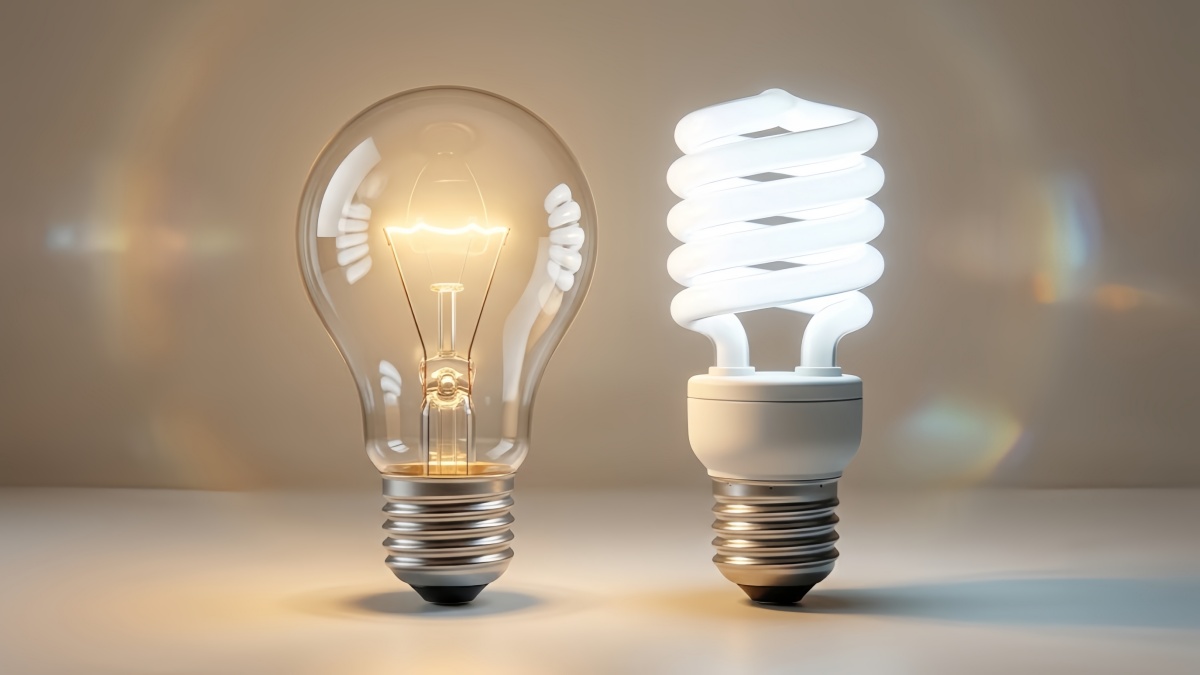
Fluorescent lighting generally uses less electricity than incandescent lighting to produce a similar amount of light. Incandescent bulbs convert much of their energy into heat, while fluorescent lamps use electrical energy more efficiently to produce visible light.
However, if you are choosing lighting for a new installation today, LED lighting is usually the most energy-efficient option. In this guide, we compare incandescent and fluorescent lighting based on energy use, operating cost, lifespan, light quality, heat output, and environmental impact, and explain how LED technology compares.
Key Takeaways
- Fluorescent lighting uses less electricity than incandescent lighting to produce a similar amount of light.
- Incandescent bulbs have a shorter lifespan and produce more heat, while fluorescent lamps generally last much longer and operate more efficiently.
- LED lighting is typically more energy-efficient than both incandescent and fluorescent lighting, making it a strong choice for most new lighting upgrades. ENERGY STAR notes that LEDs can use up to 90% less energy than incandescent lighting.
- When comparing bulbs, look at lumens rather than watts to compare brightness. Watts measure power consumption, while lumens measure visible light output.
Quick Comparison:Incandescent vs Fluorescent vs LED
| Feature | Incandescent | Fluorescent / CFL | LED |
|---|---|---|---|
| Energy efficiency | Low | Higher | Very high |
| Typical lifespan | About 1,000 hours | Generally several thousand hours or more | Often 15,000+ hours |
| Heat output | High | Lower | Low |
| Mercury | No | Yes | No |
| Light quality | Warm, familiar | Available in different color temperatures | Available in many color temperatures |
| Upfront cost | Usually low | Usually higher | Usually higher |
| Best use today | Decorative or specialty applications | Existing fluorescent fixtures | Most new residential and commercial lighting |
Lifespan and energy performance vary by bulb and product. Check the manufacturer's specifications before comparing specific products.
Incandescent vs Fluorescent: Which Uses Less Energy?
Incandescent light: how it works
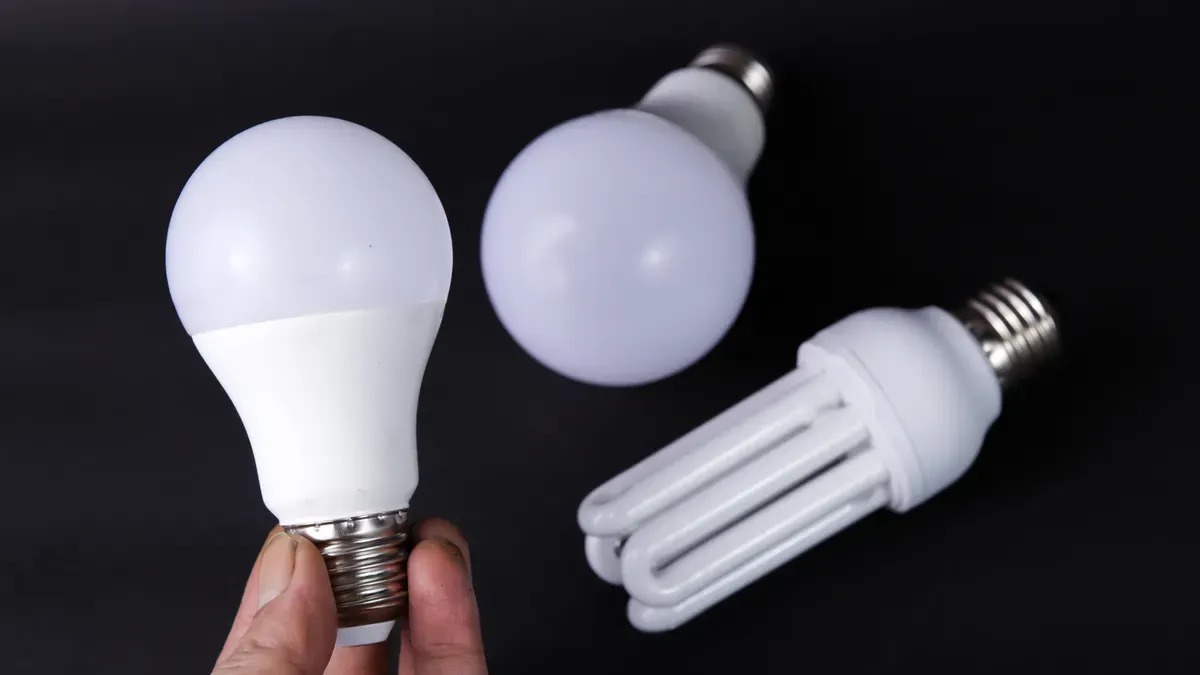
Incandescent bulbs have been used for a long time. They make light by sending electricity through a thin metal wire. The wire gets very hot and starts to glow. This glowing makes the light we see. Most of the energy is lost as heat. Scientists have measured that these bulbs waste lots of energy as heat. This makes them less efficient. Only a small bit of electricity turns into light. The rest becomes warmth. This can make rooms warmer and may raise cooling bills.
Fluorescent light: how it works
Fluorescent bulbs use a different way to make light. Their technology is more advanced and efficient. Here is how fluorescent light works:
-
Electricity goes into the tube.
-
Gas inside the tube gets energised.
-
Electrons hit atoms.
-
Molecules get excited.
-
Light comes out.
The gas inside the tube becomes ionised. This helps create light. Ballasts manage the flow of electricity and keep the bulb safe. Phosphor materials change ultraviolet light into visible light. This process makes much less heat than incandescent bulbs. Fluorescent bulbs use less electricity to make the same amount of light. So, they are more energy efficient.
Incandescent vs Fluorescent Energy Use
The exact energy savings depend on the bulb's wattage and light output. For a fair comparison, compare bulbs that produce similar lumens, rather than simply comparing wattage.
Energy use examples
Comparing incandescent and fluorescent bulbs shows big differences in energy use. Incandescent bulbs use more electricity and waste more energy as heat. Fluorescent bulbs use less electricity and make less heat. Here are some real-life examples:
-
Philips LED Frosted Non-Dimmable bulbs use 80% less energy than standard incandescent bulbs. They last up to 10 years. This means fewer replacements and lower costs over time.
-
Ultra-low energy LED GLS bulbs work at just 2.2W. They cost about £1.37 each year to run. These bulbs are good for places where lights stay on for a long time, like hallways or security lights.
The table below shows how energy costs compare for different bulbs in a typical home:
|
Bulb Type |
Energy Use vs Incandescent |
Annual Saving per Bulb* |
|---|---|---|
|
Incandescent |
Baseline (100%) |
- |
|
Halogen |
Slightly more efficient |
Small |
|
LED |
80–90% less energy |
£4–£6 per bulb per year |
*Based on typical household usage.
The main point from comparing incandescent and fluorescent bulbs is clear. Fluorescent bulbs use less energy, make less heat, and save money over time. Incandescent bulbs waste more energy and cost more to use. Choosing fluorescent bulbs helps lower energy bills and is better for the environment.
Watts vs Lumens: How to Compare Bulb Brightness
When comparing incandescent, fluorescent, and LED bulbs, do not use wattage alone to determine brightness.
Watts measure how much electricity a bulb uses. Lumens measure how much visible light it produces. A more efficient bulb can produce similar brightness using significantly less power.
For example, the U.S. Department of Energy lists approximately 800 lumens as the typical light output of a 60-watt incandescent bulb, while an LED producing similar light output may require only about 5.9 to 10.5 watts.
When replacing a bulb, look for the lumen rating first, then choose the wattage that provides the required brightness efficiently.
Cost and lifespan
Incandescent vs Fluorescent: Energy Cost
The cost of running a light depends on three main factors:
Energy cost = Power (kW) × Operating hours × Electricity rate
For example, a 60W incandescent bulb used for 3 hours per day consumes:
0.06 kW × 3 hours × 365 days = 65.7 kWh per year
To calculate your annual electricity cost, multiply the annual kWh consumption by your local electricity rate.
Because electricity prices and usage vary by location, there is no single annual cost that applies to every household. Use your own electricity rate and daily usage to calculate the most accurate savings.
The lower wattage required to produce the same amount of light is one of the main reasons efficient lighting can reduce electricity consumption.
Lifespan comparison
The incandescent bulb does not last as long as other types. It usually works for about 1,000 hours. A fluorescent or LED bulb can last much longer. Some can shine for up to 20,000 hours. This long lifetime means fewer trips to the shop and less waste. People who pick bulbs with a long lifetime spend less on replacements and enjoy more savings.
Practical considerations
Installation and maintenance
Incandescent bulbs are easy to put in. You just screw them into the socket. You do not need any tools. Fluorescent bulbs like the Osram 1449mm T5 tube fit into T5 fixtures. These fixtures are found in offices, schools, and homes. Some fluorescent lights need a ballast to manage electricity. The ballast is usually part of the fixture. Changing a fluorescent tube needs a bit more care. It is still not hard to do. Most adults can install both types of bulbs.
Maintenance is not the same for each bulb. Incandescent bulbs stop working quickly. They must be replaced often. Fluorescent bulbs last much longer. They need less attention. This saves time and cuts down on waste.
Light quality
Light quality is important in every room. Incandescent bulbs give a warm, soft light. Many people like this in bedrooms and living rooms. Fluorescent bulbs make a brighter, cooler light. This is good for kitchens, bathrooms, and work areas. Some new fluorescent bulbs can copy the warm tone of incandescent light.
Tip: Pick the best bulb for each room. This helps make your space comfortable.
Heat output
Incandescent bulbs get very hot when turned on. They can make a room warmer, especially in summer. Touching a hot bulb can burn your skin. Fluorescent bulbs stay much cooler. They waste less energy as heat. This keeps rooms safer and more comfortable. Cooler bulbs also help lower air conditioning costs when it is warm.
Environmental impact
Energy efficiency and carbon footprint
Energy efficiency is very important for the environment. Bulbs that use less electricity help power stations work less. This means fewer fossil fuels are burned. Less burning means less carbon dioxide goes into the air. Incandescent bulbs waste a lot of energy as heat. This makes more carbon emissions. Fluorescent bulbs use less power. They turn more electricity into light, not heat. This helps homes and businesses have a smaller carbon footprint. Picking energy-saving bulbs is an easy way to help stop climate change.
Disposal and recycling
Throwing away bulbs the right way is important for the environment. Incandescent bulbs do not have dangerous chemicals. You can put them in normal rubbish bins. Fluorescent bulbs need special care. They have a little mercury and phosphor powder inside. These things can hurt water and soil if not handled right.
-
Recycling fluorescent bulbs keeps mercury out of nature.
-
Special recycling centres take useful parts from old bulbs.
-
Keeping fluorescent tubes away from normal rubbish stops pollution.
-
Recycling also saves natural resources.
Note: Always check local rules for recycling bulbs. Many councils have safe places to drop off fluorescent tubes.
Safe disposal and recycling protect people and animals. They also help keep the planet clean for everyone in the future.
What About LED Lighting?
LED lighting is generally more energy-efficient than both incandescent and fluorescent lighting. ENERGY STAR states that LEDs can use up to 90% less energy than incandescent lighting and can last much longer.
This makes LED lighting a strong choice for most new residential and commercial lighting upgrades.
However, replacing fluorescent lighting with LED is not always as simple as changing the bulb. Some fluorescent fixtures use ballasts, and compatibility depends on the specific LED replacement product and fixture.
If you are upgrading an existing fluorescent fixture, check whether the LED product is designed for ballast-compatible installation or requires a different wiring configuration.
Which Lighting Technology Should You Choose?
Choose incandescent lighting if:
You specifically want its warm light quality, traditional appearance, or a particular decorative application.
Choose fluorescent lighting if:
You are maintaining an existing fluorescent system and the fixture is already designed for fluorescent lamps.
Choose LED lighting if:
You want low energy consumption, long service life, and a practical option for most new lighting installations.
For most new residential and commercial lighting projects, LED is the most energy-efficient choice of the three.
FAQ
Do fluorescent bulbs save more energy than incandescent bulbs?
Yes, fluorescent bulbs use a lot less electricity. They change more electricity into light and do not waste much as heat. This means you can save energy and money.
Are fluorescent bulbs safe to use at home?
Fluorescent bulbs are safe if you use them the right way. They have a tiny bit of mercury inside. Always take them to special recycling centres to keep the environment safe.
Tip: Be gentle with fluorescent bulbs. If one breaks, open a window and clean up with gloves on.
Can I use fluorescent bulbs in any light fitting?
Most fluorescent bulbs need a special fitting or a ballast. Look at your light fitting before you buy a bulb. Some compact fluorescent bulbs can go into normal sockets.
Which lasts longer: incandescent, fluorescent, or LED?
Incandescent bulbs generally have the shortest lifespan. Fluorescent and LED products typically last much longer, although actual lifespan varies by product.
Do fluorescent bulbs contain mercury?
Yes. Fluorescent lamps and CFLs contain a small amount of mercury, so they should be handled and disposed of according to local requirements.
Share:
Why clean lines and functional beauty never go out of style
How to Replace a Light Switch Step by Step