
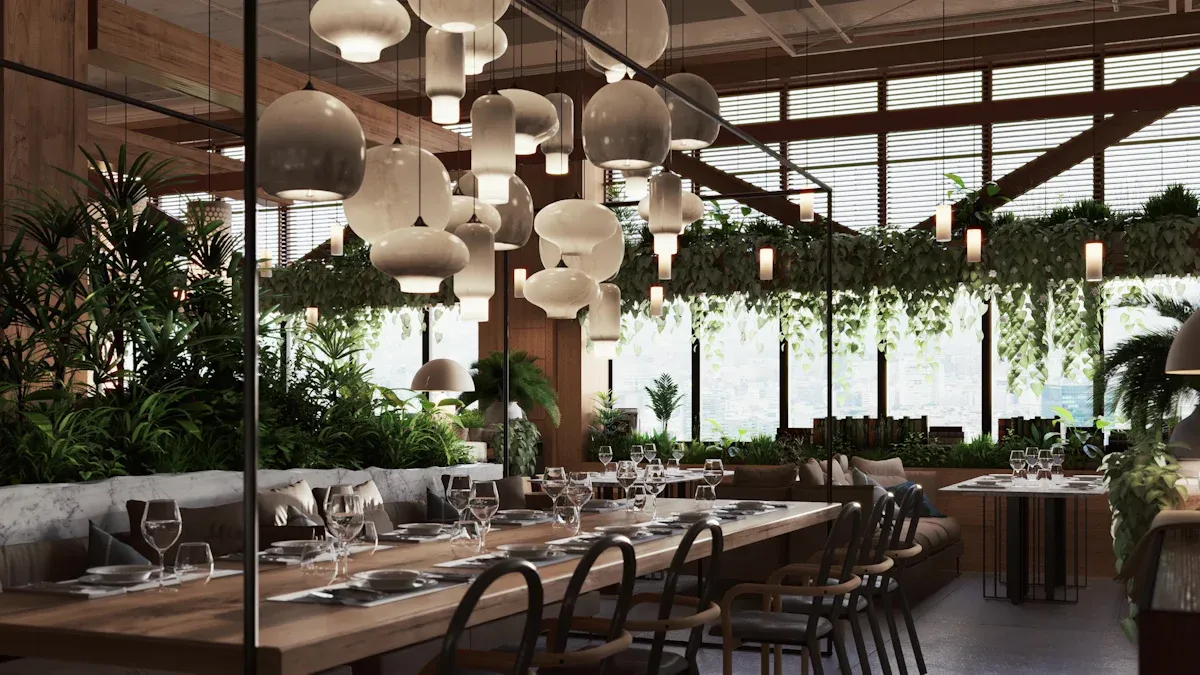
Descubra cómo las tendencias adecuadas de iluminación comercial para restaurantes pueden transformar su espacio y mejorar la experiencia del cliente. Desde ambientes cálidos y acogedores hasta soluciones ecológicas, explore los últimos estilos que hacen que la comida se vea irresistible y los clientes quieran quedarse más tiempo.
Usted sabe que una buena iluminación comercial para restaurantes puede cambiar rápidamente cómo se siente al comer. Las luces suaves y cálidas invitan a quedarse más tiempo y a disfrutar más de la comida. Las luces brillantes hacen que los lugares de comida rápida se sientan animados y divertidos. Seguir las tendencias de iluminación de 2025 le ayuda a que su restaurante se sienta acogedor. Los clientes recordarán su lugar. Si trabaja en el ambiente con una iluminación comercial eficaz para restaurantes, hará que los clientes estén más contentos. Esto hará que quieran volver. Una iluminación comercial inteligente ayuda a que su restaurante se destaque. Ayuda a la gente a recordar su lugar durante mucho tiempo.
Conclusiones Clave
Una buena iluminación ayuda a crear el ambiente. Las luces cálidas y suaves hacen que el lugar se sienta acogedor. Esto hace que los clientes quieran quedarse más tiempo. La iluminación adecuada puede realzar la comida. Una luz suave y dorada hace que la comida se vea mejor. También hace que comer sea más divertido. Los sistemas de iluminación inteligentes son útiles. Puede cambiar el brillo y el color fácilmente. Esto ahorra energía y crea el ambiente perfecto. La iluminación en capas es una buena idea. Use luces ambientales, de trabajo y de acento juntas. Esto añade profundidad y hace que cada área se destaque. Elija materiales sostenibles para sus luces. Las opciones ecológicas ayudan al planeta. También atraen a clientes que se preocupan por el medio ambiente.
El Papel de la Iluminación en Restaurantes
Creando Ambiente y Comportamiento
La iluminación puede cambiar la forma en que se sienten los clientes de inmediato. Una buena iluminación comercial para restaurantes hace más que solo iluminar un espacio. Ayuda a crear el ambiente. Las luces cálidas y suaves ayudan a la gente a sentirse tranquila y feliz. Las luces brillantes hacen que el lugar se sienta animado y divertido. Puede elegir la iluminación que coincida con el estilo de su restaurante.
Consejo: Baje las luces en la cena para crear un ambiente acogedor.
Los estudios dicen que la iluminación afecta cómo la gente actúa y se siente. Aquí hay algunos resultados de estudios:
Título del Estudio |
Hallazgos Clave |
|---|---|
En la oscuridad buscamos la luz: El impacto de los diseños de iluminación focal y general en las intenciones de acercamiento de los clientes hacia los restaurantes |
Diferentes diseños de iluminación cambian cómo los clientes sienten el ambiente de un restaurante, lo que afecta si quieren quedarse. |
Menos luz, mejor bocado: Cómo la iluminación ambiental influye en las percepciones del sabor |
La iluminación tenue hace que la comida sepa mejor a las personas. Una iluminación baja ayuda a los clientes a pensar que la comida sabe mejor. |
Estudio de la Universidad de Cornell |
Es más probable que las personas elijan alimentos saludables en restaurantes luminosos. Las luces brillantes hacen que las personas se sientan más despiertas, mientras que las luces tenues les ayudan a relajarse y disfrutar de su comida. |
Cuando utiliza la iluminación comercial para restaurantes de manera inteligente, los clientes se sienten como en casa. Puede ayudarles a tomar decisiones y a querer quedarse más tiempo.
Realzando la Presentación de Alimentos
Usted quiere que cada comida se vea genial. La iluminación comercial para restaurantes ayuda a que la comida se vea mejor. La luz suave y dorada hace que la comida se vea deliciosa y rica. Si la iluminación es demasiado dura o demasiado oscura, la comida no se ve tan bien. Una buena iluminación hace que cada plato se destaque y puede hacer que los clientes quieran tomar fotos.
Un plato bajo una luz suave se ve elegante.
Una buena iluminación hace que la comida se vea agradable y sabrosa.
La iluminación cálida y dorada hace que la comida se vea aún mejor.
Los lugares de alta cocina utilizan luces especiales para realzar la comida.
Cuando utiliza la iluminación comercial para restaurantes de la manera correcta, exhibe el trabajo del chef. Hace que cada comida sea especial. La iluminación adecuada ayuda a que su restaurante se vea y se sienta increíble.
Tendencias de Iluminación para Restaurantes 2025
Temperaturas de Color Más Cálidas
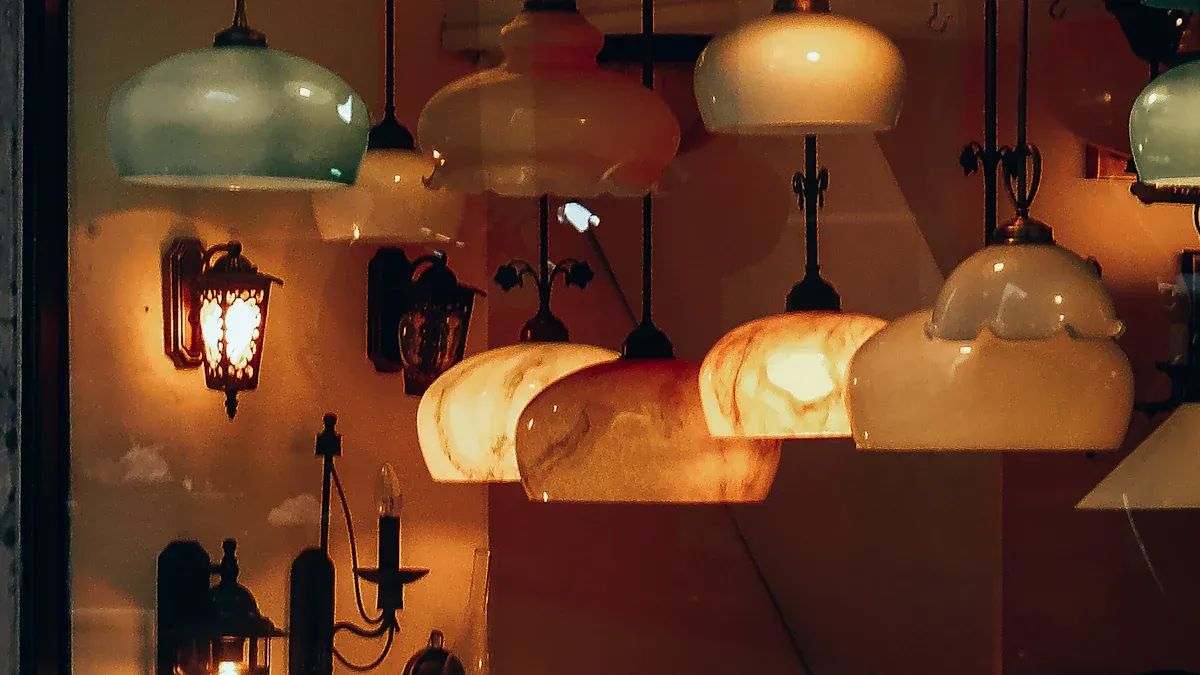
Usted quiere que los clientes se sientan tranquilos y felices. Las temperaturas de color más cálidas, como de 2700K a 3000K, ayudan a crear una sensación acogedora. Este tipo de iluminación para restaurantes hace que la comida se vea mejor. También ayuda a la gente a relajarse y disfrutar comiendo. La iluminación cálida puede hacer que los clientes se queden más tiempo y gasten más. Pruebe bombillas de tono cálido en el área del comedor. También puede usar atenuadores para cambiar el ambiente para la cena.
Consejo: Coloque iluminación cálida sobre las mesas. Esto hace que la comida se vea apetitosa y ayuda a que su restaurante se vea genial en las redes sociales.
Iluminación Centrada en el Ser Humano y Circadiana
La iluminación circadiana se ajusta al reloj natural del cuerpo. La iluminación centrada en el ser humano y circadiana ayuda a los huéspedes a sentirse bien y despiertos durante el día. Les ayuda a relajarse por la noche. La luz adecuada en el momento adecuado puede hacer que las personas se sientan mejor. Puede darles más energía y ayudarles a dormir más tarde. Los sistemas inteligentes pueden cambiar de luz fría por la mañana a luz cálida por la noche. Esto ayuda a los huéspedes a sentirse bien y hace que su restaurante sea especial.
Use luz natural o ventanas grandes para dejar entrar la luz del día.
Instale luces LED sintonizables que cambian de color durante el día.
Configure horarios para que su iluminación coincida con la hora y el ambiente.
Iluminación Inteligente y Conectada
La iluminación inteligente cambia la forma en que controla su espacio. Con los sistemas inteligentes, puede cambiar el brillo y el color. Puede encender o apagar las luces automáticamente. Los sensores saben cuándo hay gente en la habitación. Ahorran energía atenuando o apagando las luces cuando no se necesitan. Puede configurar escenas para el almuerzo, la cena o eventos con un solo toque. Esto hace que la iluminación de su restaurante sea fácil y ahorra energía.
Tipo de Tendencia |
Descripción |
|---|---|
Integrada con Tecnología e Inteligente |
Sistemas de iluminación inteligentes con integración IoT para ajustes automatizados basados en la ocupación y el tiempo. |
Iluminación Centrada en el Ser Humano (HCL) |
Se alinea con los ritmos circadianos; tonos más cálidos para la relajación y tonos más fríos para el estado de alerta. |
Revival Retro y Vintage |
Resurgimiento de diseños de mediados de siglo y Art Decó, añadiendo nostalgia y dramatismo a los espacios de restaurantes. |
Técnicas de Iluminación en Capas
La iluminación en capas significa usar diferentes luces juntas. Esto le ayuda a crear profundidad y a realzar cosas especiales. También establece el ambiente adecuado en cada parte de su restaurante. Puede usar luces ambientales suaves, luces de trabajo y luces de acento para el arte o la decoración. La iluminación en capas le da más control y opciones.
Zona de Iluminación |
Descripción |
|---|---|
Comedores |
Combine una iluminación ambiental cálida con luces de trabajo enfocadas sobre las mesas e iluminación de acento para la decoración. |
Bares y Lounges |
Utilice luz ambiental regulable con toques de acento divertidos como botellas retroiluminadas. |
Cocinas y Áreas de Servicio |
Priorice la iluminación de trabajo brillante y energéticamente eficiente para la seguridad y la productividad. |
Baños y Pasillos |
La iluminación de acento realza estos espacios y refuerza el tono de la marca. |
La iluminación puede cambiar durante el día para diferentes ambientes.
Los atenuadores y controles le ayudan a cambiar el brillo y el color.
Los sistemas automatizados ahorran energía y mantienen la sensación correcta.
Accesorios Indirectos y Lineales
Los accesorios de iluminación indirecta y lineal ayudan a crear un espacio moderno y amigable. Las luces colgantes pueden ser una característica principal y combinar con el estilo de su restaurante. La iluminación indirecta hace que el espacio se sienta acogedor. Los accesorios lineales dan un aspecto limpio y simple. Puede usar luces ajustables para exhibir alimentos o decoración. Elija la temperatura de color adecuada para su restaurante.
Las luces colgantes añaden estilo y atraen la atención a puntos importantes.
La iluminación indirecta ayuda a los clientes a sentirse relajados y felices.
Los accesorios lineales son buenos para espacios modernos o simples.
Las luces ajustables le permiten cambiar el ambiente para diferentes momentos.
Materiales Orgánicos y Sostenibles
Puede ayudar al planeta eligiendo iluminación hecha con materiales orgánicos y sostenibles. El bambú, el vidrio reciclado y las fibras naturales se ven bien y son buenos para la tierra. Estos materiales añaden calidez y textura a su restaurante. Hacen que el espacio se sienta especial y acogedor. Los clientes notan estas elecciones y les gusta su enfoque en el medio ambiente.
Nota: La iluminación sostenible puede ayudarle a ahorrar energía y atraer a clientes preocupados por el medio ambiente.
Estilos Vintage y Minimalistas
Los estilos vintage y minimalistas vuelven a ser populares en la iluminación de restaurantes. Las luces lineales minimalistas dan un aspecto limpio y moderno. Esto es genial para lugares casuales y elegantes. Mezclar bombillas vintage con atenuación inteligente o neón crea un estilo fresco y moderno. Las luces LED elegantes dan una sensación simple. Las bombillas de filamento expuesto añaden un toque industrial.
Las luces LED elegantes y lineales son excelentes para restaurantes modernos.
Las bombillas de filamento expuesto dan carácter a los espacios industriales.
La iluminación vintage y minimalista le ayuda a crear el ambiente adecuado y a hacer que su restaurante se vea mejor.
Iluminación como Arte y Piezas Destacadas
La iluminación puede ser más que solo para ver. Puede ser arte. Las piezas de iluminación destacadas muestran su marca y hacen que los clientes recuerden su lugar. Los candelabros personalizados, las grandes luces artísticas o los diseños especiales pueden ser la característica principal de su restaurante. Estas luces llamativas atraen la atención, inician conversaciones y hacen que su espacio se destaque.
Tipo de Ejemplo |
Descripción |
|---|---|
Candelabros Personalizados |
Un espectacular candelabro hecho de cientos de orbes de cristal que proporciona iluminación ambiental y un cautivador efecto visual. |
Instalaciones de Iluminación Escultórica |
Grandes luces colgantes de bronce con bombillas Edison cálidas que realzan el ambiente sofisticado de un asador de lujo. |
Diseños Artísticos |
Una instalación personalizada que simula bancos de peces utilizando luces LED, creando un ambiente inspirado en el mundo submarino para un restaurante de mariscos. |
Consejo: Use iluminación destacada para mostrar su marca y animar a los clientes a compartir fotos en línea.
Puede mezclar estas tendencias de iluminación para que coincidan con el estilo de su restaurante. Los lugares de alta cocina usan iluminación audaz para una sensación elegante. Los lugares casuales usan iluminación relajada para un ambiente amigable. Los restaurantes de comida rápida necesitan una iluminación brillante y limpia que aún se sienta acogedora.
Recuerde: No use demasiadas luces, no olvide cambiar la iluminación para diferentes momentos o omita las luces de acento. Siempre piense en cómo se ve y funciona su iluminación.
Principios de Diseño de Iluminación para Restaurantes
Iluminación Comercial para Restaurantes
Usted quiere que las luces de su restaurante hagan un buen trabajo. La iluminación comercial no es lo mismo que la iluminación doméstica. Necesita durar mucho tiempo. Debe ser brillante y fuerte. Debe soportar mucho uso. Mire esta tabla para ver cómo la iluminación comercial es diferente de la iluminación residencial:
Aspecto |
Iluminación Comercial |
Iluminación Residencial |
|---|---|---|
Propósito |
Personalizada para operaciones específicas de la instalación |
Uso general, requisitos menos específicos |
Durabilidad |
Diseñada para horas de funcionamiento casi infinitas |
Necesidades de durabilidad más simples y menos exigentes |
Intensidad del Brillo |
Mayor intensidad para funcionalidad y ambiente |
Menor intensidad, enfocada en la comodidad |
Mantenimiento |
Mayores requisitos de mantenimiento |
Menores expectativas de mantenimiento |
Necesita luces que ayuden a que su restaurante funcione bien. Elija accesorios que duren y puedan usarse mucho. El diseño de iluminación inteligente ayuda a crear el ambiente y mantiene a todos seguros.
Conceptos de Iluminación Orientados a la Experiencia
La luz orientada a la experiencia hace que los clientes se sientan bienvenidos. Puede usar la luz del sol y ventanas grandes para una apariencia brillante. Cambie las luces para el desayuno, el almuerzo o la cena. Ilumine el arte, las plantas o el lugar donde trabaja el chef. Elija luces que se adapten al estilo de su restaurante. Mezcle la iluminación con el edificio para un efecto fresco. Use luz ambiental para crear el ambiente. Añada luces de trabajo a las mesas para una mejor experiencia gastronómica.
Puede añadir plantas y elementos naturales para un diseño biofílico. Esto hace que su restaurante se sienta fresco y amigable.
Soluciones Sostenibles y Eficientes Energéticamente
Usted quiere que las luces de su restaurante ahorren energía y ayuden al planeta. Pruebe estas ideas:
La iluminación centrada en el ser humano ayuda a los clientes a sentirse bien.
Los accesorios hechos de materiales reciclados son mejores para el planeta.
La iluminación inteligente consume menos energía al trabajar con los sistemas del edificio.
Las luces LED cuestan menos y duran más.
Puede usar la captación de luz natural, la atenuación y los sensores. Estas opciones reducen las facturas y le ayudan a ser ecológico. Las luces LED ahorran dinero y duran más que las bombillas antiguas. Las luces de bajo consumo se amortizan rápidamente y atraen a más gente. El diseño biofílico con luz solar y plantas ayuda a mantener el espacio saludable.
Consejo: Use iluminación en capas, zonificación y controles flexibles para obtener los mejores resultados. Esto mantiene su restaurante equilibrado y fácil de cambiar.
Principio |
Descripción |
|---|---|
Iluminación en Capas |
Utiliza diferentes tipos de luces para hacer el espacio interesante y mejorar la experiencia gastronómica. |
Zonificación |
Divide el restaurante en zonas de iluminación para el ambiente y uso adecuados en cada área. |
Equilibrio y Armonía |
Se asegura de que el espacio se sienta uniforme al equilibrar el color y el brillo de la luz para que ningún punto sea demasiado brillante u oscuro. |
Flexibilidad y Adaptabilidad |
Le permite cambiar las luces para diferentes necesidades usando atenuadores y controles inteligentes. |
Iluminación para Diferentes Espacios de Restaurante
Ambiente del Comedor
Quieres que los clientes se sientan bien al sentarse. La luz cálida con tonos ámbar o amarillo hace que el espacio sea acogedor. Los candelabros y las lámparas colgantes ayudan a eliminar las esquinas oscuras. También evitan que la sala sea demasiado brillante. La iluminación de acento resalta obras de arte o diseños geniales. Las luces de techo y los apliques de pared hacen que la sala luzca elegante. También ayudan a que todos vean mejor. Los focos suaves o las lámparas de mesa crean un ambiente tranquilo y relajado.
Tipo de iluminación |
Descripción |
|---|---|
Candelabros y lámparas colgantes |
Estas luces eliminan las esquinas oscuras y el exceso de brillo. Ayudan a la gente a ver y a sentirse cómoda. |
Iluminación de acento |
Esta iluminación resalta el arte y el diseño. Hace que la habitación sea cálida y acogedora. |
Temperatura de color |
Las luces cálidas y suaves hacen que el ambiente sea acogedor. Las luces frías hacen que el espacio se sienta animado. |
Luminarias de techo |
Las luces colgantes y los apliques de pared aportan luz y estilo a la habitación. |
Consejo: Las luces de pared ahorran espacio y hacen que su local se vea bien.
Iluminación de Bar y Salón
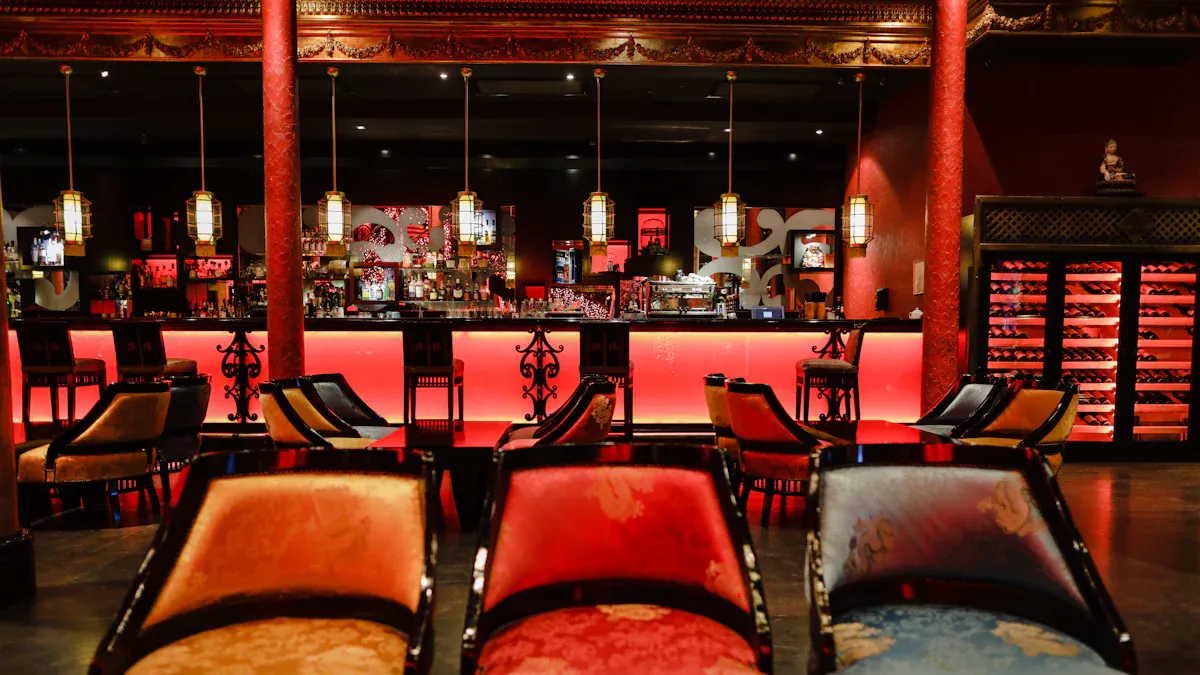
Las luces adecuadas ayudan a crear el ambiente en bares y salones. Las luces suaves y cálidas hacen que el espacio se sienta íntimo y propicio para conversar. Las luces más brillantes y frías hacen que la sala sea animada y divertida. La atenuación permite cambiar las luces a medida que avanza la noche. Utilice diferentes luces juntas para lograr el mejor aspecto. Las luces de colores como el azul o el morado dan un toque moderno. Las luces ámbar cálidas recuerdan el pasado.
Utiliza diferentes luces para un ambiente agradable.
Las luces tenues y los focos funcionan bien en los salones de cócteles.
Las luces brillantes son mejores para los bares deportivos.
Cambia las luces durante la noche para que coincidan con el ambiente.
Iluminación de Cocina y Preparación
Las luces brillantes ayudan a que la cocina se mantenga segura y rápida. El personal necesita suficiente luz para trabajar y ver los detalles. La preparación de alimentos y la cocción necesitan al menos 500 Lux. El lavado y la limpieza necesitan de 300 a 500 Lux. El almacenamiento y los pasillos necesitan menos, pero aún deben ser seguros. Los mostradores de servicio necesitan hasta 750 Lux para la revisión de alimentos.
Área |
Nivel de Lux |
Beneficios |
|---|---|---|
Áreas de preparación de alimentos |
500 Lux |
El personal ve mejor, trabaja de forma más segura y mantiene las cosas limpias. |
Zona de Cocción |
500 Lux |
La comida se cocina bien, los accidentes son menos probables y el trabajo es más rápido. |
Área de lavado y limpieza |
300–500 Lux |
El personal ve la suciedad, mantiene las cosas limpias y trabaja mejor. |
Área de almacenamiento y despensa |
200–300 Lux |
Fácil de encontrar cosas, menos desperdicio de comida y más seguro. |
Pasillos generales |
150–200 Lux |
Menos accidentes, caminata más segura y ahorro de energía. |
Mostrador de servicio |
500–750 Lux |
La comida se ve bien, los pedidos son correctos y las revisiones son fáciles. |

Iluminación de Exteriores y Patio
Las luces exteriores ayudan a atraer a los clientes y a mantenerlos seguros por la noche. Las guirnaldas de luces hacen que el espacio sea divertido y llamen la atención de la gente. Las velas sin llama hacen que las cosas sean acogedoras y seguras. La iluminación de acento resalta las plantas o las partes geniales del edificio. Las luces regulares proporcionan una iluminación constante para los lugares concurridos.
Opción de iluminación |
Descripción |
|---|---|
Accesorios tradicionales |
Estas luces proporcionan una iluminación constante y ayudan a la gente a ver en lugares concurridos. |
Velas sin llama |
Estas luces hacen que el ambiente sea acogedor y son seguras en noches ventosas. |
Luces de cuerda |
Estas luces hacen que el espacio sea divertido y ayudan a la gente a notar su patio. |
Iluminación de acento |
Estas luces resaltan partes especiales de su lugar y lo hacen lucir mejor. |
Usa luces suaves para la seguridad.
Las luces de trabajo ayudan a leer menús o a cocinar.
Las luces de acento hacen que tu patio luzca especial.
Consejo: Utiliza muchos tipos de luces para mantener a los clientes fuera por más tiempo y hacer que tu patio sea divertido.
Puedes transformar tu restaurante actualizando tu iluminación. Las nuevas tendencias te ayudan a crear un ambiente que los clientes adoran. Cuando usas iluminación moderna, resaltas áreas especiales y haces que la experiencia gastronómica sea más agradable. Muchos restaurantes ven clientes más felices que regresan más a menudo. Echa un vistazo a tu configuración actual. Prueba nuevas ideas y ve cómo se siente tu espacio. Un nuevo diseño de iluminación puede hacer que tu restaurante se destaque y que los clientes vuelvan.
Preguntas frecuentes
¿Qué temperatura de color de iluminación funciona mejor para restaurantes?
Se recomienda la luz blanca cálida, generalmente entre 2700K y 3000K. Estas hacen que tu espacio se sienta acogedor y atractivo. La luz cálida ayuda a que la comida se vea deliciosa y hace que los clientes quieran quedarse más tiempo.
¿Cómo puedo ahorrar energía con la iluminación del restaurante?
Puedes cambiar a bombillas LED. Agrega atenuadores y sensores de movimiento. Usa controles inteligentes para apagar las luces cuando no las necesites. Estos pasos reducen tus facturas y ayudan al planeta.
¿Necesito iluminación diferente para cada área del restaurante?
¡Sí! Cada espacio necesita su propio estilo de iluminación. Aquí tienes una guía rápida:
Área |
Tipo de iluminación |
|---|---|
Comedor |
Cálida, ambiental |
Bar |
Acento, regulable |
Cocina |
Brillante, de tarea |
Patio |
Guirnaldas, acento |
¿Puede la iluminación realmente cambiar el aspecto de la comida?
¡Absolutamente! Una buena iluminación hace que los colores resalten y las texturas se distingan. Una luz suave y dorada puede hacer que los platos luzcan más apetitosos. Una mala iluminación puede hacer que la comida se vea apagada o poco atractiva.
Consejo: Intenta tomar una foto de tu comida con diferentes luces. ¡Verás la diferencia!
Share:
Explorando el ahorro de Lux LED y los gastos de iluminación tradicional
Las mejores opciones de iluminación LED duradera para exteriores para ahorrar energía