

Quieres elegir una isla de cocina que se ajuste a tu espacio. También debe ayudar a que tu cocina funcione mejor. Muchas personas tienen problemas para planificar el diseño de su cocina. Les preocupa cometer errores costosos. Un plan inteligente puede ayudarte a evitar problemas comunes. Estos problemas incluyen pasillos estrechos o una isla demasiado grande. Consulta esta tabla para ver qué debes tener en cuenta al planificar el mejor tamaño para una isla de cocina:
|
Descripción del error |
Información clave |
|---|---|
|
Isla de tamaño excesivo que hace que la cocina se sienta estrecha |
Deja al menos de 42 a 48 pulgadas de espacio abierto alrededor de la isla. |
|
Interrupción del triángulo funcional de la cocina |
Coloca la isla para mantener el camino entre el fregadero, la estufa y el refrigerador. |
|
Tamaño insuficiente para la funcionalidad |
Comienza con al menos 4 pies de largo por 2 pies de ancho para que sea útil. |
|
Sobrecarga la barra de comedor con asientos |
Da 24 pulgadas por persona para mayor comodidad al comer. |
|
No incorporar un fregadero para la preparación de alimentos |
Agrega un fregadero si la isla es la principal área de preparación. |
Con pasos sencillos, puedes elegir una isla de cocina que se adapte a tu cocina. También satisfará tus necesidades.
Puntos clave
-
Mide tu cocina cuidadosamente antes de elegir una isla. Esto ayuda a que la isla encaje y te permite moverte con seguridad a su alrededor.
-
Asegúrate de que haya suficiente espacio alrededor de la isla. Intenta tener al menos 36 pulgadas de espacio. Esto mantiene tu cocina fácil de usar y cómoda.
-
Decide qué quieres que haga tu isla de cocina. ¿Cocinarás, te sentarás o guardarás cosas allí? Esto te ayuda a elegir el tamaño y las características adecuadas.
-
Elige la forma ideal para tu isla. Rectangular, en forma de L y en forma de U funcionan para diferentes cocinas y necesidades.
-
No cometas errores como elegir el tamaño incorrecto u olvidarte de los asientos. Una buena planificación hace que tu cocina funcione mejor y se sienta más agradable.
Medir el espacio de la cocina
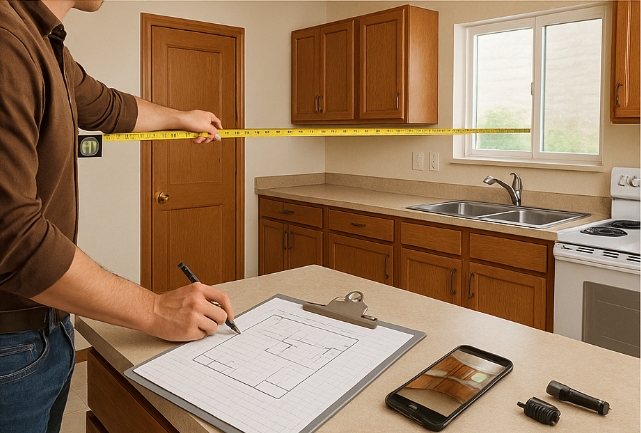
Medición para el tamaño de la isla
Comienza por tomar las medidas correctas antes de elegir una isla de cocina. Utiliza una cinta métrica de acero o una herramienta láser para obtener los mejores resultados. Dibuja tu cocina en papel cuadriculado o usa una aplicación. Marca dónde están todas las puertas, ventanas y servicios. Mide el largo y ancho de la cocina en pulgadas. Anota la superficie total en pies cuadrados. Observa cualquier columna, pared o cosa que pueda estorbar.
Aquí tienes los pasos para una buena medición:
-
Mide toda la habitación, moviéndote en círculo.
-
Anota las medidas de lado a lado y de arriba a abajo.
-
Marca dónde están las tomas de agua y electricidad.
-
Toma fotos para mostrar el aspecto actual de la cocina.
-
Usa un nivel para ver si las paredes están rectas y los suelos planos.
Hacer esto te ayuda a saber el espacio mínimo que necesita tu isla. También asegura que no te pierdas nada importante al elegir el tamaño.
Consejos sobre pasillos y holguras
Disponer de suficiente espacio para caminar es importante para la seguridad y la comodidad. Deja al menos 36 pulgadas de espacio libre alrededor de la isla de la cocina. Esto permite que la gente se mueva con seguridad. Para tener más espacio, intenta dejar de 42 a 48 pulgadas entre la isla y los gabinetes. Si tienes un horno que se abre hacia el pasillo, deja al menos 48 pulgadas de espacio.
Consejo: Suficiente espacio evita el hacinamiento y permite que la gente se mueva fácilmente. También facilita la limpieza y la cocina.
Consulta esta lista para asegurarte de que tienes suficiente espacio:
-
36 pulgadas es lo mínimo para moverse
-
42 pulgadas o más es mejor para la comodidad
-
48 pulgadas si los electrodomésticos se abren hacia el pasillo
Piensa en cuántas personas se sentarán en tu isla. Planifica al menos 24 pulgadas de espacio por cada asiento. Añade un voladizo de 15 pulgadas para el espacio para las piernas si quieres asientos.
Dimensiones estándar de la isla de cocina y pautas de tamaño
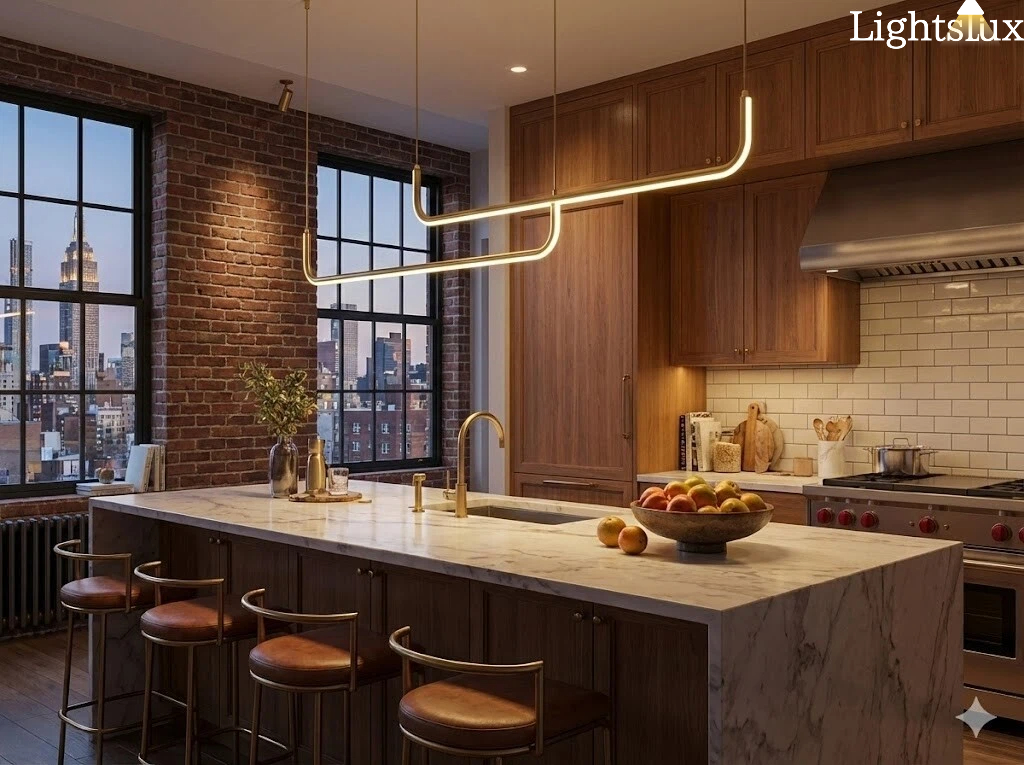
Lámpara colgante lineal minimalista Arcato – Metal/Acrílico negro/dorado para comedor
Guía de dimensiones e instalación del producto
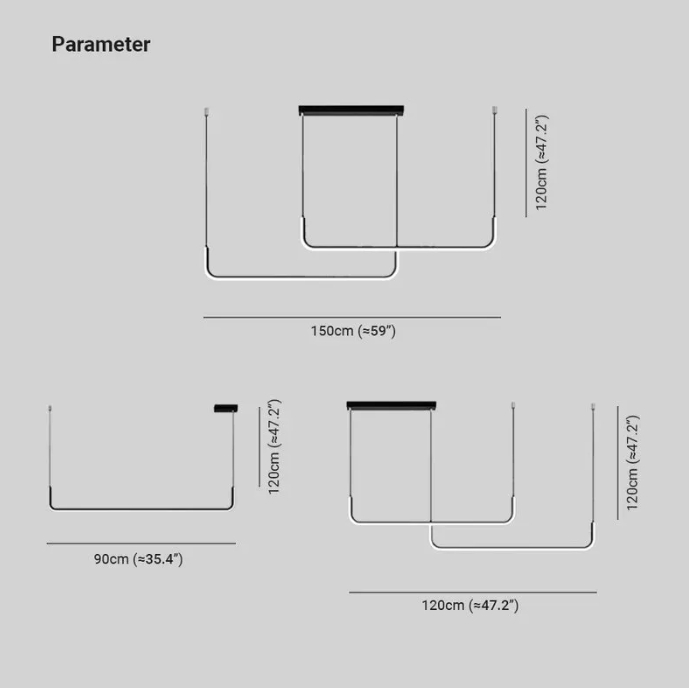
Este accesorio está diseñado con una estructura lineal limpia y moderna y múltiples opciones de configuración para adaptarse a diferentes diseños de islas de cocina. Las dimensiones a continuación reflejan el tamaño real de suspensión y los requisitos espaciales que se muestran en el dibujo técnico.
Dimensiones generales
|
Parámetro |
Medida |
|---|---|
|
Altura total |
120 cm (≈ 47.2") |
|
Ancho máximo (extendido) |
150 cm (≈ 59") |
|
Opción de ancho medio |
120 cm (≈ 47.2") |
|
Opción de ancho compacto |
90 cm (≈ 35.4") |
Estas dimensiones representan la huella visual completa del accesorio una vez instalado.
Opciones de configuración
Este diseño admite múltiples opciones de diseño horizontal, lo que le permite adaptarse a diferentes tamaños de islas y disposiciones de asientos.
-
Configuración de 150 cm
Ideal para islas de cocina largas o dobles, proporcionando una iluminación equilibrada en una superficie más amplia. -
Configuración de 120 cm
Una opción versátil de tamaño medio adecuada para islas de cocina estándar o mostradores de comedor. -
Configuración de 90 cm
Ideal para islas compactas, barras de desayuno o encimeras estrechas donde el espacio es limitado.
Cada configuración mantiene la misma altura vertical de suspensión para garantizar una distribución constante de la luz.
Altura y proporción de suspensión
Con una altura total de suspensión de 120 cm (47.2"), este accesorio está optimizado para su instalación sobre islas de cocina, mesas de comedor o encimeras.
Recomendaciones de diseño:
-
Adecuado para alturas de techo estándar (8 a 10 pies)
-
Mantiene el equilibrio visual sin obstruir las líneas de visión
-
Proporciona iluminación descendente enfocada mientras preserva el espacio abierto
Notas de instalación y planificación del espacio
Al seleccionar un tamaño, considere las siguientes pautas profesionales:
-
El ancho del accesorio debe ser típicamente del 60 al 75% de la longitud de la isla
-
Deje suficiente espacio libre entre el accesorio y los gabinetes circundantes
-
Asegúrese de que la altura de suspensión se alinee con el uso de los asientos y la superficie de trabajo
El tamaño adecuado mejora tanto el rendimiento funcional de la iluminación como la armonía visual general.
Resumen del diseño
Este accesorio colgante de múltiples configuraciones combina flexibilidad, proporción y estética moderna, lo que lo hace adecuado para una amplia gama de diseños de islas de cocina. Al elegir la opción de ancho adecuada, el accesorio puede integrarse sin problemas en cocinas pequeñas, medianas o grandes, manteniendo una presencia arquitectónica refinada.
Definir el propósito de la isla
Elegir la isla de cocina adecuada comienza por conocer su función principal. Debes pensar en cómo usarás la isla. Esta elección te ayuda a seleccionar el tamaño, la forma y las características.
Espacio para cocinar y preparar alimentos
Si quieres tu isla para cocinar o preparar comidas, céntrate en las cosas que facilitan el trabajo. Muchas personas ponen un fregadero o una placa de cocción en la isla para un lugar especial de preparación. Una encimera grande te da espacio para cortar, mezclar y emplatar alimentos. Poner los electrodomésticos en la isla puede ayudarte a cocinar más rápido. También te permite hablar con familiares o amigos mientras cocinas. Una isla doble es buena para mantener separadas las zonas de cocción y de diversión.
|
Característica |
Descripción |
|---|---|
|
Fregadero integrado |
Crea un lugar para limpiar y preparar alimentos. |
|
Placa de cocción |
Te permite cocinar y charlar al mismo tiempo. |
|
Te ofrece mucho espacio para preparar alimentos y otras tareas. |
Necesidades de asientos y sociales
Mucha gente usa su isla de cocina para sentarse y conversar. Puedes elegir taburetes de bar, taburetes de mostrador o bancos que combinen con tu estilo y espacio. Los asientos en forma de L o U ayudan a la gente a conversar y conectar. Si tu cocina es pequeña, los asientos en la esquina para dos funcionan bien. Poner asientos en diferentes lados ayuda a que todos participen.
-
Los taburetes de bar son buenos para islas altas y vienen en muchos estilos.
-
Los taburetes de mostrador ofrecen un lugar cómodo para comidas rápidas.
-
Los bancos ahorran espacio y funcionan mejor en cocinas grandes.
Almacenamiento y electrodomésticos
Una isla de cocina puede proporcionarte más almacenamiento y albergar electrodomésticos. Puedes añadir un lavavajillas, una nevera para vinos o un compactador de basura debajo de la isla. Los estantes extraíbles y los enchufes integrados mantienen las cosas ordenadas. Cambiar la altura de la isla crea diferentes zonas para cocinar y comer. Haz que la isla funcione con tu estufa, fregadero y nevera para que puedas moverte con facilidad.
|
Mejores prácticas |
Descripción |
|---|---|
|
Agregue electrodomésticos para aprovechar el espacio y facilitar las cosas. |
|
|
Usar estantes extraíbles |
Acceda a sus cosas rápidamente sin desorden. |
|
Tomacorrientes empotrados |
Oculte los cables y mantenga la isla con un aspecto limpio. |
|
Variar la altura de la isla |
Cree diferentes áreas para trabajar y sentarse. |
Consejo: Siempre adapte la función de la isla a sus necesidades. El uso correcto le ayuda a elegir el mejor tamaño y forma para su cocina.
Elija la distribución de la isla
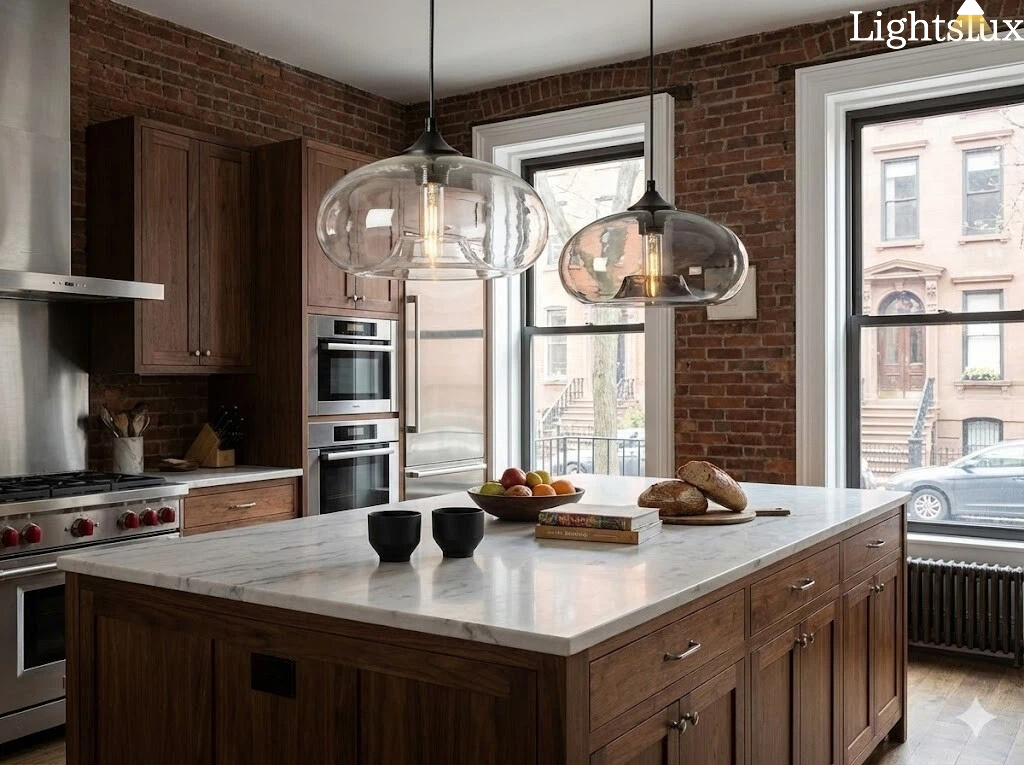
Lámpara colgante de cristal moderna Morandia - Lámpara de isla de cocina con forma de pan, 6 colores
Opciones de forma de isla
Hay diferentes formas para una isla de cocina. Cada forma funciona mejor para ciertas cocinas y estilos. Las formas más comunes son rectangular, en forma de L y en forma de U.
-
Rectangular: Esta forma es clásica y se adapta a muchas cocinas. Le brinda más espacio en el mostrador y de almacenamiento. Puede colocar asientos en un lado si agrega un voladizo. Las islas rectangulares son buenas para cocinas pequeñas y grandes.
-
En forma de L: Una isla en forma de L ayuda a las personas a conversar y pasar tiempo juntas. Combina la cocina y la comida en un solo lugar. Esta forma es ideal para cocinas medianas o grandes con espacio abierto.
-
En forma de U: Las islas en forma de U lucen bien y agregan valor a su cocina. Le brindan mucho espacio para trabajar y guardar cosas. Necesita una cocina grande para esta forma. Las islas en forma de U pueden costar más, especialmente si agrega piezas de fontanería o eléctricas.
Una isla de cocina puede cumplir muchas funciones. Le brinda más espacio para trabajar, guardar cosas y sentarse. Puede usarla para transformar una cocina de una sola pared en un estilo de pasillo. También puede convertir una cocina en forma de L en una forma de herradura. Esto hace que la isla sea una opción inteligente para muchas cocinas.
Adaptación del diseño a la cocina
Debe elegir un diseño de isla que se adapte al tamaño de su cocina y a cómo trabaja. El diseño correcto le ayuda a hacer las cosas más rápido y más fácil. Donde coloca el fregadero, la estufa y el refrigerador forma un triángulo de trabajo. Este triángulo es importante para moverse con facilidad.
Piense en estos tipos de diseño y lo que ofrecen:
|
Tipo de diseño |
Beneficios |
Tamaño de espacio ideal |
|---|---|---|
|
Cocina con isla |
Ofrece más espacio de trabajo, conecta con las áreas de estar, ayuda a la gente a hablar |
Grande o de planta abierta |
|
Cocina en forma de L |
Agrega espacio de trabajo, le permite hacer muchas cosas a la vez |
Mediana a grande |
|
Concepto abierto |
Hace que la cocina sea más brillante, usa menos luz artificial |
Varía, pero espaciosa |
Una cocina en forma de L le brinda más espacio en el mostrador y le ayuda a hacer más cosas a la vez. Las cocinas de concepto abierto permiten la entrada de luz y facilitan el movimiento. Elija un diseño que se adapte a su cocina y le ayude a cocinar y divertirse.
Consejo: Coloque la isla en un lugar inteligente para ayudarle a trabajar mejor. La isla se puede usar para cocinar, comer o hacer la tarea.
Flujo de trabajo y flujo de tráfico
Un buen flujo de trabajo y de tráfico son importantes para una isla de cocina. Necesita un camino claro entre el fregadero, la estufa y el refrigerador. La isla no debe bloquear estos puntos principales. Coloque el fregadero en un lugar donde la gente lo use mucho. Planifique la isla para que funcione con otras áreas de la cocina y no bloquee los pasillos.
-
Mantenga abierto el triángulo de trabajo para poder moverse con facilidad.
-
Coloque la isla para que no estorbe.
-
Asegúrese de que los asientos no bloqueen el paso de las personas.
-
Diseñe la isla para ayudarle a cocinar, comer y limpiar.
Nota: Un buen diseño de isla de cocina le ayuda a moverse y trabajar mejor. Mantiene su cocina ordenada y fácil de usar.
Si sigue estos consejos, tendrá una isla de cocina que se adapte a su espacio, tenga buen aspecto y le ayude todos los días. El tamaño y la distribución correctos harán que su cocina funcione bien y se sienta agradable.
Lista de verificación del tamaño ideal de una isla de cocina
Guía paso a paso
Puede seguir un proceso simple para seleccionar la isla de cocina adecuada para su hogar. Esta lista de verificación le ayudará a medir, planificar y confirmar el mejor ajuste para su cocina.
-
Mida el largo y el ancho de su cocina. Anote el tamaño total.
-
Marque las características importantes como electrodomésticos, puertas y pasillos en su plano.
-
Deje al menos 39 pulgadas de espacio libre alrededor de la isla para un movimiento seguro.
-
Piense en los voladizos para los asientos y cuánto espacio necesita para sillas o taburetes.
-
Dibuje su diseño en papel o use un planificador de cocina 3D para ver cómo encaja la isla.
-
Revise la siguiente tabla para verificar todas las piezas esenciales antes de comprar o instalar:
|
Elemento de la lista de verificación |
Descripción |
|---|---|
|
Marco de soporte |
Use montantes fuertes de madera o metal para una base sólida. |
|
Encimera |
Elija un material duradero que combine con el estilo y diseño de su cocina. |
|
Gabinetes y cajones |
Agregue almacenamiento que se adapte a sus necesidades y combine con el resto de su cocina. |
|
Herrajes |
Elija manijas y bisagras que funcionen bien y se vean bien. |
|
Tomacorrientes eléctricos |
Planifique tomas de corriente en lugares de fácil acceso para pequeños electrodomésticos. |
|
Fregadero |
Agregue un fregadero si desea espacio adicional para preparación o limpieza. |
Errores que evitar
Muchos propietarios cometen los mismos errores al elegir una isla de cocina. Puede evitar estos problemas revisando esta lista de errores a evitar al elegir una isla de cocina:
-
Elegir una isla demasiado grande o demasiado pequeña para su cocina. Esto puede bloquear el movimiento o limitar cómo usa el espacio.
-
Olvidar decidir el propósito principal de su isla. Esto puede desperdiciar espacio valioso y reducir la función.
-
No planificar suficientes asientos, lo que puede hacer que las comidas sean incómodas.
-
Dejar muy poco espacio libre alrededor de la isla. Esto puede dificultar el movimiento y el trabajo.
-
Omitir los tomacorrientes eléctricos, que son importantes para las necesidades modernas de la cocina.
-
Omitir gabinetes o cajones útiles, lo que puede dificultar la preparación y limpieza de las comidas.
Consejo: Siempre verifique sus medidas y diseño antes de comprar o construir. Una planificación cuidadosa le ayuda a crear una isla de cocina que se adapte a su espacio, combine con su estilo y mejore el diseño de su cocina.
Puede elegir la mejor isla de cocina si primero mide su espacio. Planifique su diseño y piense en su estilo. Una buena isla le brinda más espacio para trabajar, guardar cosas y sentarse. También hace de su cocina un lugar divertido para familiares y amigos. El tamaño y la apariencia correctos pueden ayudar a su hogar de muchas maneras:
|
Contribución al valor del hogar |
Impacto en la usabilidad |
|
|---|---|---|
|
Espacio de trabajo adicional |
Hace que su cocina funcione mejor |
Le ayuda a hacer las tareas de la cocina más rápido |
|
Opciones de almacenamiento |
Le da más espacio para cosas de cocina |
Mantiene su cocina ordenada y organizada |
|
Asientos |
Le permite comer comidas rápidas juntos |
Facilita la conversación con otros |
|
Punto focal |
Hace que su cocina luzca más bonita |
Hace que la cocina se sienta cálida y acogedora |
Siga estos pasos y siéntase seguro de su elección. Su nueva isla hará que su cocina funcione mejor y luzca excelente.
Preguntas frecuentes
¿Cómo sé si mi cocina es lo suficientemente grande para una isla?
Primero debe medir su cocina. Si tiene al menos 36 pulgadas de espacio alrededor de todos los lados, puede agregar una isla. Este espacio le ayuda a moverse y trabajar de forma segura.
¿Cuál es el mejor diseño de isla de cocina para un diseño de concepto abierto?
Debe elegir un diseño que conecte su cocina con la sala de estar. Una isla con asientos funciona bien. Le ayuda a cocinar, comer y conversar con otros en un diseño de concepto abierto.
¿Puedo agregar un fregadero o una estufa a mi isla de cocina?
Sí, puede agregar un fregadero o una estufa. Debe planificar la fontanería o el trabajo eléctrico. Esta característica hace que su isla sea más útil para cocinar y limpiar.
¿Cómo elijo un estilo de isla de cocina que combine con mi hogar?
Debe mirar sus gabinetes y encimeras. Elija un estilo que se adapte al aspecto de su cocina. Un estilo simple y limpio funciona en la mayoría de los hogares.
¿Cuál es la parte más importante del diseño de una isla de cocina?
Primero debe centrarse en la función. Un buen diseño le brinda espacio para trabajar, guardar cosas y sentarse. Siempre planifique su isla para que se adapte a sus necesidades diarias.
Share:
Ilumina tu salón con las ideas expertas de iluminación de LightsLux
Which Entryway Light Fixture Is Best for Your Home in 2026