
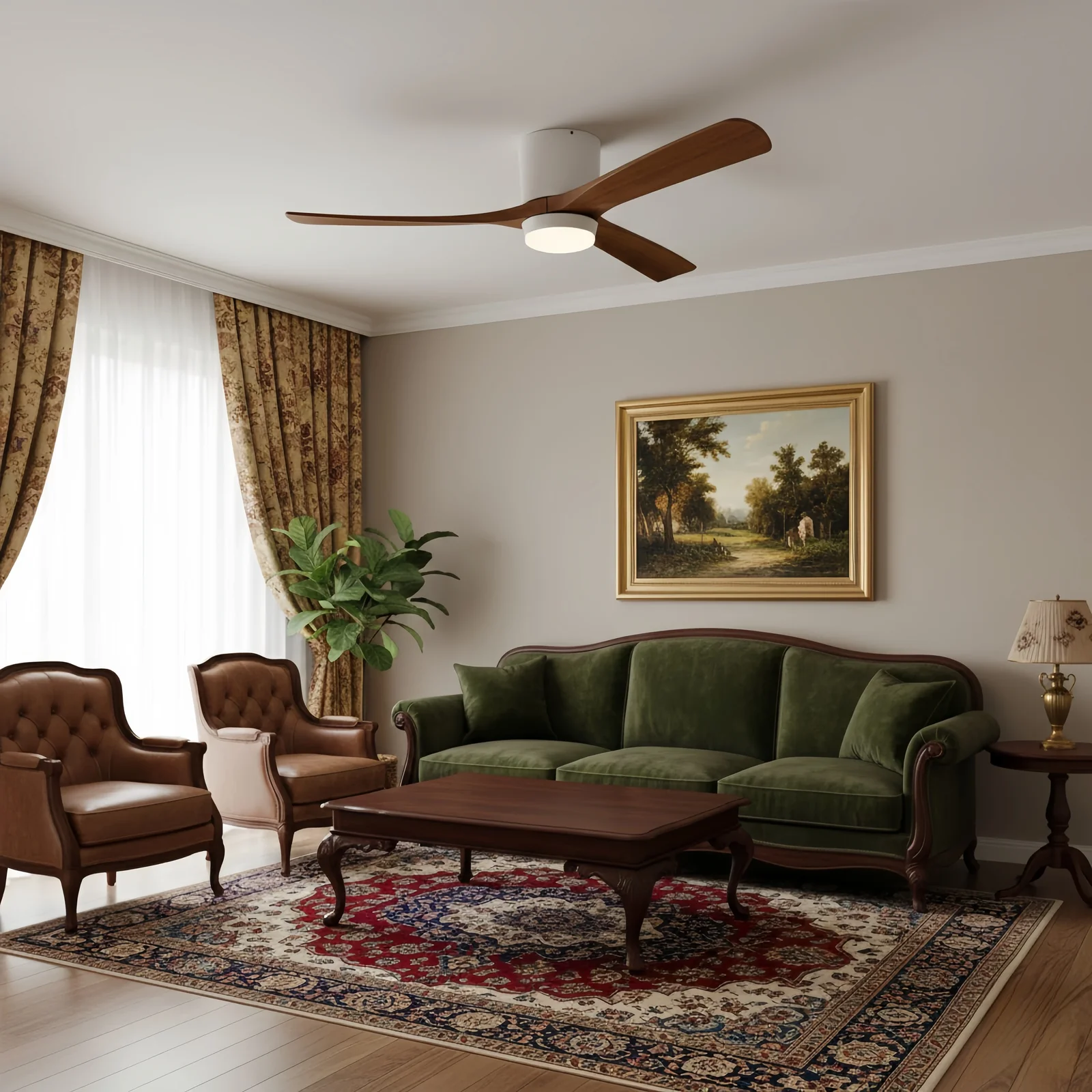
Image From: Lightslux
Which Way Should a Ceiling Fan Turn in the Summer?
If your room still feels warm even when your ceiling fan is running, the problem may not be the fan itself — it could be the direction it is spinning.
During summer, a ceiling fan should turn counterclockwise when viewed from directly below the fan. This rotation pushes air downward, creating a cooling breeze that helps sweat evaporate from your skin and makes the room feel more comfortable.
Many modern ceiling fans with light and remote include a reversible motor function, allowing homeowners to easily switch between summer and winter modes. With the correct direction setting, your ceiling fan can improve air circulation, increase comfort, and help reduce dependence on air conditioning.
Understanding the correct ceiling fan direction is especially important during hot months because a fan does not actually lower the room temperature. Instead, it improves how your body feels the temperature by creating a wind-chill effect.
In this guide, we will explain:
Which way should a ceiling fan turn in the summer?
Why counterclockwise rotation creates a cooling effect
How to check your ceiling fan direction
How to change ceiling fan direction with a remote control
Common ceiling fan direction mistakes
Whether running a ceiling fan all day saves energy
Frequently asked questions about ceiling fan rotation
Short Answer:
The correct summer setting for most ceiling fans is:
Counterclockwise rotation + higher speed = downward airflow + stronger cooling sensation
When you stand underneath a ceiling fan rotating counterclockwise, you should feel air moving directly downward onto your body. This airflow creates a gentle breeze that helps remove heat from your skin.
You can easily check the direction:
Stand directly underneath your ceiling fan.
Look upward at the blades.
Watch the direction the blades move.
If the blades move from right to left across the top of the fan, the fan is rotating counterclockwise.
Another simple method is to turn the fan on high speed and stand underneath it. If you feel a strong downward breeze, your fan is likely in the correct summer mode.
If you feel little or no airflow, the fan may be rotating in winter mode.
Why Should a Ceiling Fan Turn Counterclockwise in Summer?
Many homeowners assume a ceiling fan cools the room like an air conditioner, but this is not exactly true.
A ceiling fan does not reduce the actual temperature of the air. Instead, it improves comfort by moving air around your body. This airflow helps promote evaporation from the skin, creating a cooling sensation even though the actual room temperature remains unchanged.The cooling effect comes from increased air movement across the skin. Moving air helps accelerate sweat evaporation, which removes heat from the body and creates a lower perceived temperature.The effectiveness of this cooling sensation depends on environmental conditions, especially humidity. In dry environments, evaporation happens more efficiently, while high humidity can reduce the cooling effect because sweat evaporates more slowly.
When a ceiling fan rotates counterclockwise, the angled blades push air downward. This creates several benefits:
1. Creates a Cooling Wind-Chill Effect
The biggest benefit of counterclockwise rotation is the cooling sensation created by moving air.
When air moves across your skin, it helps moisture evaporate faster. Since evaporation removes heat from your body, you feel cooler even though the room temperature remains unchanged.
For example:
Room temperature: 78°F (26°C)
Ceiling fan running counterclockwise: feels cooler because of increased airflow
This is why ceiling fans are especially useful in bedrooms, living rooms, dining rooms, and home offices during warm weather.
2. Improves Air Circulation
Warm air naturally rises toward the ceiling while cooler air stays lower.
Without proper airflow, a room can develop uneven temperatures:
Hot air collects near the ceiling
Lower areas may feel warmer
Air conditioning works harder to maintain comfort
A ceiling fan running in summer mode helps distribute air more evenly throughout the room.
For homeowners using ceiling fans with light and remote, adjusting fan speed is easier because many models allow quick control from across the room without needing a wall switch.
3. Helps Reduce Air Conditioning Usage
A properly adjusted ceiling fan can make a room feel several degrees cooler without changing the thermostat.
Instead of lowering your air conditioner temperature significantly, you can:
Set the AC slightly higher
Turn on the ceiling fan
Enjoy similar comfort with improved airflow
This approach may help reduce cooling costs during summer months.
Cooling Method |
Thermostat Setting |
Comfort Effect |
|---|---|---|
Air conditioning only |
74°F |
Cooler air temperature |
Air conditioning + ceiling fan |
78°F |
Similar comfort through airflow |
Ceiling fan only |
Depends on room temperature |
Improves personal comfort |
However, remember that ceiling fans cool people, not empty rooms. Turn the fan off when leaving the room for maximum efficiency.
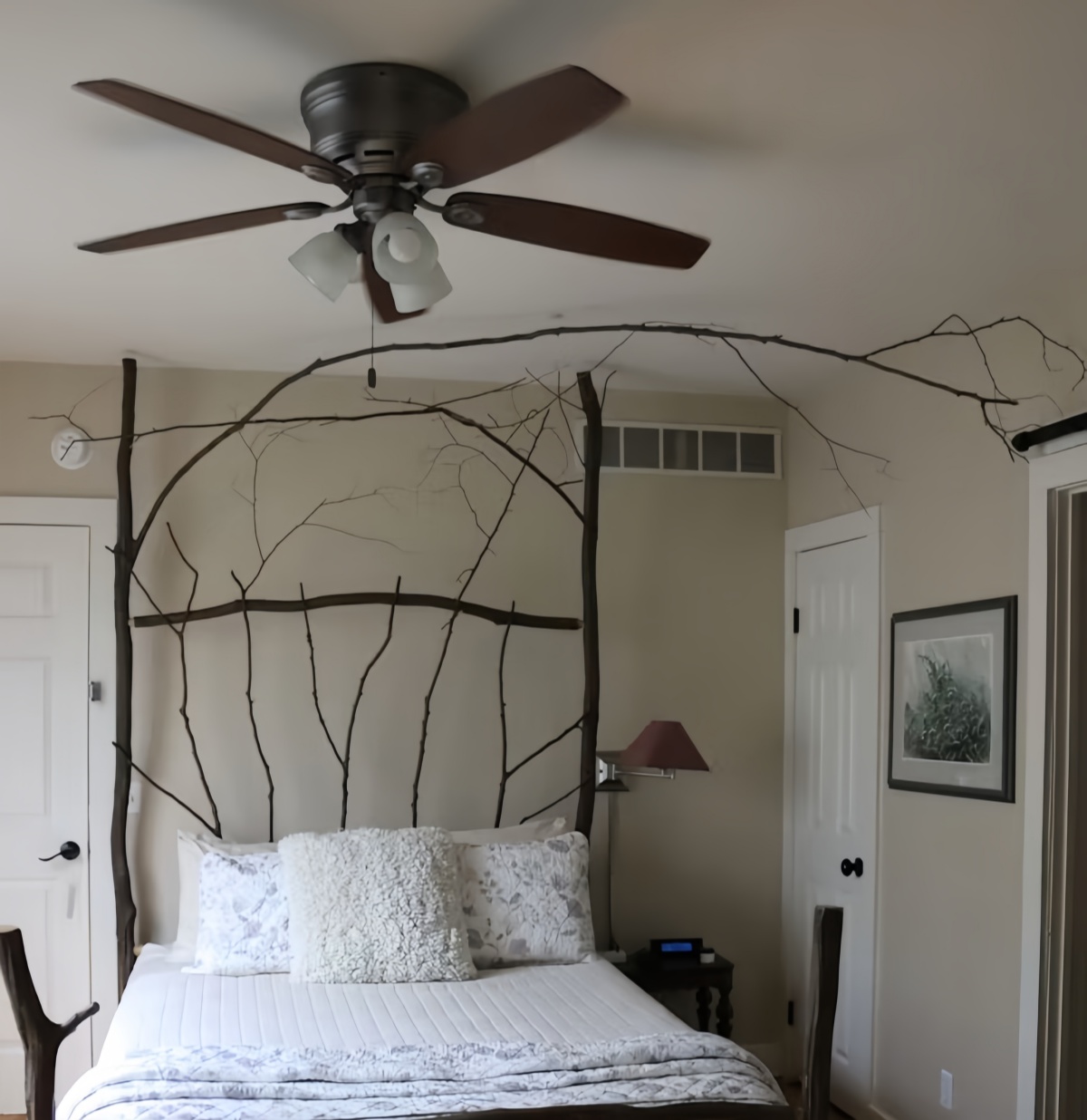
The direction of rotation is only one part of ceiling fan performance. The actual cooling sensation also depends on airflow volume, usually measured in cubic feet per minute (CFM).Higher CFM ratings indicate that a fan can move more air across the room. However, airflow efficiency also depends on blade pitch, motor type, room size, and installation height.Modern DC motor fans often provide more precise speed control and quieter operation compared with traditional AC motor models, while both motor types can provide effective summer cooling when configured for counterclockwise rotation.
Counterclockwise vs Clockwise Ceiling Fan Direction
Understanding the difference between summer and winter settings is important.
Ceiling Fan Direction |
Best Season |
Air Movement |
Purpose |
|---|---|---|---|
Counterclockwise |
Summer |
Pushes air downward |
Creates cooling breeze |
Clockwise |
Winter |
Pulls air upward and circulates warm air |
Redistributes heat |
The same ceiling fan can usually be used year-round by simply changing the rotation direction.
How to Change Ceiling Fan Direction in Summer
The method depends on your ceiling fan model.
Method 1: Using a Ceiling Fan Remote Control
Many modern ceiling fans with light and remote include a reverse button.
Follow these steps:
Turn the fan off completely.
Wait until the blades stop moving.
Press the “Reverse” or “Direction” button on your remote.
Turn the fan back on.
Check whether airflow is moving downward.
Some advanced ceiling fans allow direction changes directly from the remote, making seasonal adjustments much easier.
Method 2: Using a Wall Switch Control for Ceiling Fans With Light
Many ceiling fans with lights can also be operated through a wall control system, offering a convenient alternative to handheld remotes. However, the available functions depend on the type of wall control installed and the fan’s wiring configuration.
A standard wall switch usually provides basic on/off control, while a dedicated ceiling fan wall control can allow homeowners to adjust fan speed and operate the integrated light separately. These controls are often connected directly to the fan receiver or electrical wiring, providing a cleaner and more permanent control solution without needing to keep track of a remote.
A typical wall-mounted fan control may allow users to:
Turn the fan on or off from a fixed location
Adjust multiple fan speed settings for different comfort levels
Control the ceiling fan light independently
Keep the room setup cleaner by reducing remote clutter
For summer cooling, use the wall control to select a comfortable airflow speed after confirming that the fan blades are rotating counterclockwise. Changing the fan direction usually requires a reverse switch, compatible remote control, smart controller, or a wall control system specifically designed with a reverse function.
Method 3: Using the Switch on the Fan Motor
Traditional ceiling fans often include a small direction switch located on the motor housing.
Steps:
Turn off the fan.
Wait until the blades stop.
Locate the small toggle switch.
Move it to the opposite position.
Turn the fan on again.
The location varies depending on the fan design, but it is usually near the top or bottom of the motor casing.
Method 4: Using a Smart Ceiling Fan App
Smart ceiling fans connected through Wi-Fi or Bluetooth may allow users to control:
Fan speed
Lighting
Timer settings
Rotation direction
This option is becoming more common in modern homes because it allows complete control from a smartphone.
How to Tell If Your Ceiling Fan Is in Summer Mode
Not sure whether your ceiling fan direction is correct?
Look for these signs:
Your Fan Is in Summer Mode If:
✓ You feel air blowing directly downward
✓ The room feels cooler when standing underneath the fan
✓ The blades rotate counterclockwise
✓ Higher speeds create stronger airflow
Your Fan May Be in Winter Mode If:
✗ You feel air pulling upward
✗ There is little breeze below the fan
✗ The room still feels warm despite high fan speed
Does Ceiling Fan Direction Matter for Ceiling Fans With Lights?
Yes, ceiling fan direction matters even for models that include integrated lighting.
A ceiling fan with light and remote combines two functions:
Air circulation
The light function works independently from fan direction. Changing the fan rotation will not affect the brightness or color temperature of the light.
For example:
Summer: Counterclockwise fan direction + LED light on
Winter: Clockwise fan direction + LED light on
You can use the lighting feature throughout the year while adjusting airflow based on the season.
Common Ceiling Fan Direction Mistakes
Mistake 1: Running the Fan Clockwise During Hot Weather
A clockwise fan direction is generally designed for winter circulation.
If used during summer, it may pull air upward instead of creating the cooling breeze you need.
Mistake 2: Leaving the Fan On When Nobody Is Home
A ceiling fan does not lower the actual air temperature.
Leaving it running in an empty room wastes electricity because there is no person to benefit from the airflow.
The best practice is:
Turn the fan on when people are in the room
Turn it off when leaving
Mistake 3: Using the Wrong Fan Speed
During summer:
Low speed: gentle airflow
Medium speed: comfortable everyday cooling
High speed: maximum airflow for very hot days
Choose the speed based on room size and personal comfort.
Mistake 4: Ignoring Ceiling Height
Fan performance depends on installation height.
For best airflow:
Standard ceilings: install fan approximately 7–9 feet above the floor
High ceilings: consider an extension rod
Low ceilings: use low-profile ceiling fans
Ceiling Height |
Recommended Installation |
|---|---|
8 ft ceiling |
Low-profile mount recommended |
9–10 ft ceiling |
Standard downrod installation |
11–12+ ft ceiling |
Longer downrod may improve airflow |
Correct installation helps maximize the cooling effect.
How Fast Should a Ceiling Fan Run in Summer?
The ideal speed depends on:
Room size
Ceiling height
Fan blade design
Personal comfort preference
General recommendations:
Small Bedrooms
Use low to medium speed for quiet airflow.
Living Rooms
Medium to high speed provides better circulation.
Large Open Spaces
Higher speeds may be needed to distribute air effectively.
A larger ceiling fan with longer blades can move more air at lower speeds, often creating a more comfortable and quieter environment.
Can a Ceiling Fan Replace Air Conditioning?
A ceiling fan cannot replace an air conditioner because it does not remove heat from the air.
However, it can make air conditioning more effective by improving airflow.
The best combination is:
Air conditioner maintains room temperature
Ceiling fan improves comfort
Remote control allows easy adjustment
This combination helps create a comfortable indoor environment while potentially reducing cooling demand.
How to Choose a Ceiling Fan for Summer Comfort
When selecting a ceiling fan, consider:
Room Size
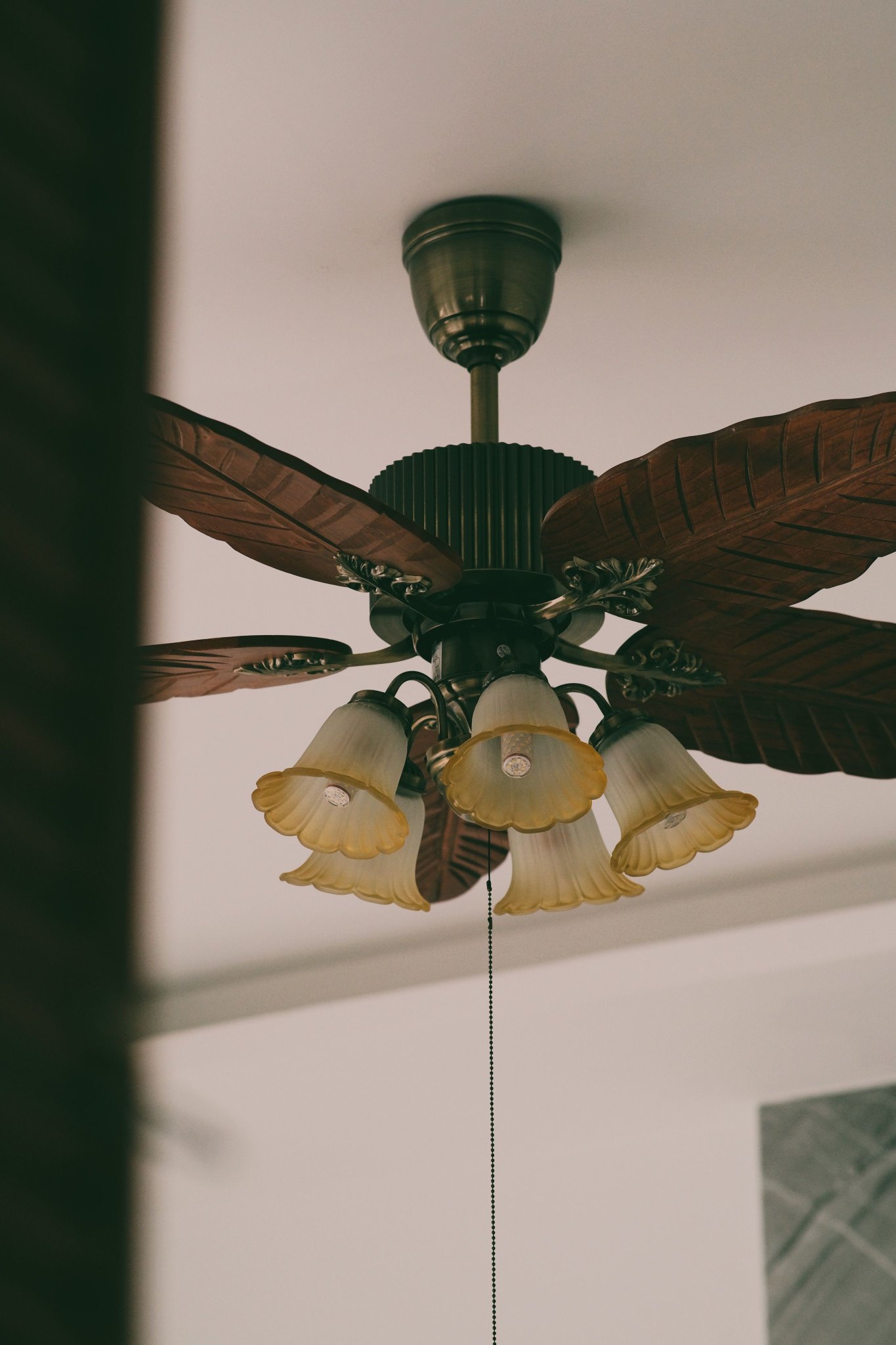
Small bedrooms usually need compact fans, while larger rooms benefit from wider blade spans. Since bedrooms are spaces for rest and relaxation, combining comfortable airflow with soft, relaxing lighting can help create a more inviting environment.
Expert Tip: Match Your Ceiling Fan Size to Your Room
A ceiling fan works best when its blade span matches the room size.
General recommendations:
Room Size |
Recommended Fan Size |
|---|---|
Small bedroom |
29–42 inches |
Medium room |
44–52 inches |
Large living room |
52–60 inches |
A properly sized fan can improve airflow efficiency and provide better comfort during hot weather.
Motor Quality
A high-quality motor provides:
Better airflow
Less noise
Longer lifespan
Remote Control Features
Modern ceiling fans with remote controls may include:
Multiple speed settings
Light adjustment
Timer functions
Reverse direction control
Lighting Options
When choosing a ceiling fan for summer comfort, focus on performance factors rather than appearance alone. Important considerations include airflow capacity, motor efficiency, blade design, noise level, and room size.
Feature |
Why It Matters |
|---|---|
CFM Rating |
Determines airflow volume |
Blade Pitch |
Influences air movement efficiency |
Motor Type |
Affects noise and energy use |
Noise Level |
Important for bedrooms |
Fan Size |
Determines room coverage |
Final Thoughts: Set Your Ceiling Fan Counterclockwise for Summer Comfort
The answer to “which way should a ceiling fan turn in the summer?” is simple:
Your ceiling fan should rotate counterclockwise when viewed from below.
This direction creates downward airflow, improves air circulation, and helps your body feel cooler during hot weather.
Whether you have a traditional ceiling fan or a modern ceiling fan with light and remote, checking the direction before summer begins is one of the easiest ways to improve indoor comfort.
A small adjustment in fan direction can make a noticeable difference in how comfortable your home feels throughout the warm season.
FAQ: Which Way Should a Ceiling Fan Turn in Summer?
1. Which way should a ceiling fan turn in the summer?
A ceiling fan should turn counterclockwise in summer when viewed from below. This direction pushes air downward and creates a cooling breeze that helps you feel more comfortable.
2. Why does my ceiling fan feel like it is not cooling?
Your ceiling fan may not feel effective if it is rotating in winter mode, installed incorrectly, running at a low speed, or too small for the room size.
3. How do I change the direction of a ceiling fan with a remote?
Turn the fan off, wait until the blades stop completely, then press the reverse or direction button on the remote. Turn the fan back on and confirm that air moves downward.
4. Should a ceiling fan run clockwise or counterclockwise in Summer?
During hot summer months, a ceiling fan should normally run counterclockwise to create downward airflow and improve comfort.
5. Does a ceiling fan make a room colder?
No. A ceiling fan does not lower room temperature. It makes people feel cooler by increasing airflow and helping sweat evaporate from the skin.
6.Should I leave my ceiling fan on all day during summer?
No. Ceiling fans cool people, not rooms. Turn the fan off when nobody is using the space to save energy.
7.Do ceiling fans with lights work differently in summer?
No. The lighting function works separately from fan rotation. You can use the LED light while adjusting the fan direction for summer cooling.
8.Can a wall switch control a ceiling fan with light?
Yes, many ceiling fans with lights can be controlled by a wall switch, especially models designed with separate fan and light wiring. A dedicated wall control can adjust fan speed and lighting independently, while some models may require a remote or smart controller to change the fan direction.
Share:
How to Choose the Right G9 LED Bulb for Every Room
Best Ceiling Fan with Light Styles for Modern Homes: How to Choose the Right Design for Your Space