
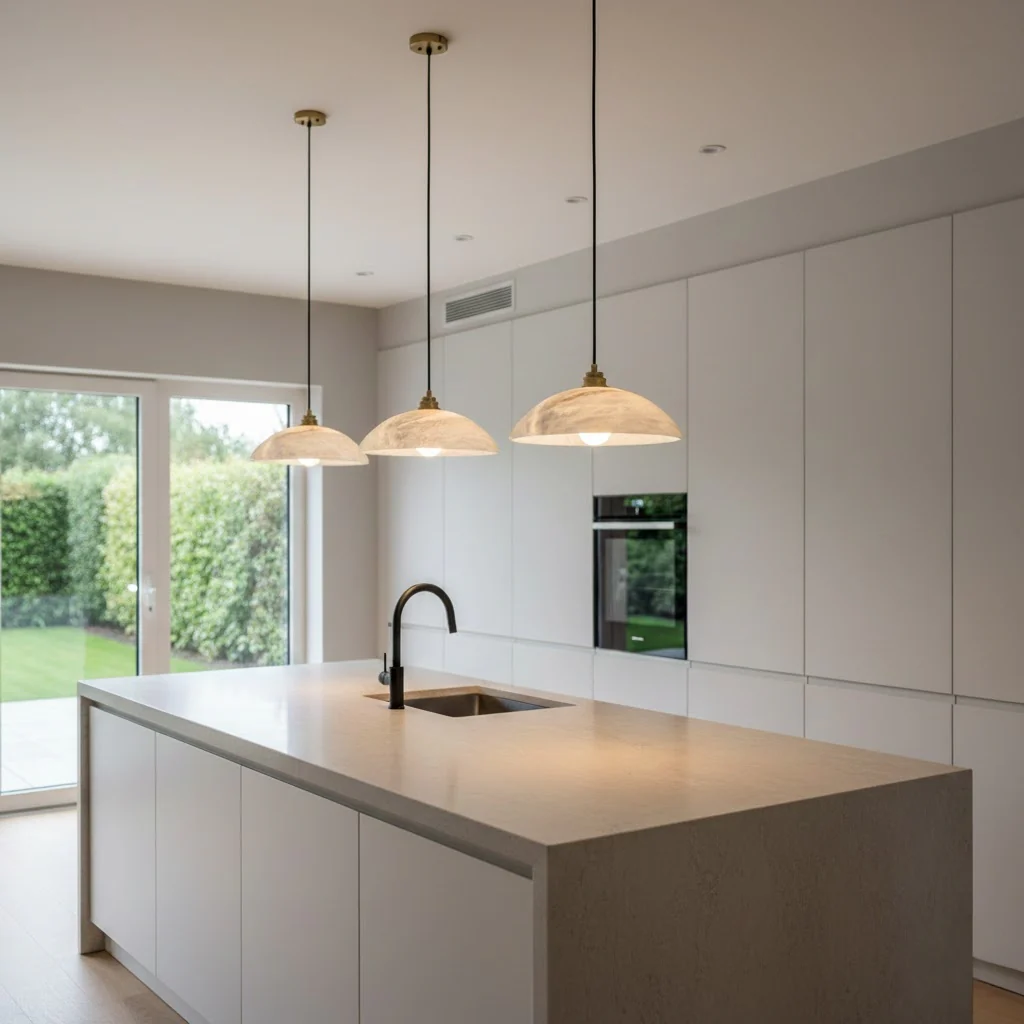
According to industry surveys by the National Kitchen & Bath Association (NKBA), over 70% of homeowners now consider the kitchen island the primary gathering and multitasking spot in their home. It is no longer just for food prep; it is where we dine, work, and entertain. This shift in behavior makes a strategic lighting plan more critical than ever.
Because it serves so many distinct purposes, getting the lighting right is crucial. According to interior design ergonomics, dedicated task areas require 300 to 500 lumens per square meter for optimal safety and visibility. By choosing the right lighting, you not only prevent accidents with sharp knives and hot pans, but you also transform the atmosphere of your kitchen from a sterile workspace into a warm, inviting gathering place.
Key Takeaways
Good kitchen island lighting helps you see better when cooking. It also keeps you safe. Try to get 300 to 500 lumens for each square meter. This gives you the right amount of brightness.
Use different kinds of lighting in your kitchen. Task, ambient, accent, and decorative lights make your kitchen work well and look nice.
Measure your kitchen island before picking lights. This helps you choose the right size and number of fixtures. Use two pendants for islands up to 6 feet. Use three pendants for bigger islands.
Hang lights 30 to 36 inches above the countertop. This gives you good light and helps you see well. Change the height if someone in your family is tall.
Clean your fixtures often to keep them looking new. This also makes sure your kitchen gets the best light.
Why Kitchen Island Lighting Matters
Function and Ambiance
You use your kitchen island for many things. You chop vegetables, read recipes, and share meals with family. Good kitchen island lighting helps you see every detail. It keeps you safe when you handle sharp knives or hot pans. You avoid slips, cuts, and spills because every corner is bright.
Kitchen island lighting does more than help you cook. It makes your kitchen feel warm and welcoming. You can enjoy a cozy breakfast or a fun evening with friends. The right lights create a mood that fits your style.
Here are some ways lighting improves your kitchen island:
Under-cabinet lighting brightens your workspace.
Spotlights focus on important areas.
Drawer and internal cabinet lights help you find what you need.
Pendant lights add beauty and make the island stand out.
A mix of ambient, task, and accent lighting gives you both function and style. You get a space that works for cooking and feels good for relaxing.
Impact on Kitchen Design
Kitchen island lighting changes how your kitchen looks and feels. The fixtures you choose can match your cabinets and countertops. You create a look that feels complete and stylish. Pendant lights or other unique fixtures can become the main feature in your kitchen. They draw attention and show off your taste.
Kitchen lighting design trends now focus on blending beauty with function. You can pick lights that fit your needs and show your personality. When you choose the right lighting, you make your kitchen island a place for cooking, eating, and gathering. The right lighting brings everything together and makes your kitchen a favorite spot in your home.
Types of Kitchen Island Lighting
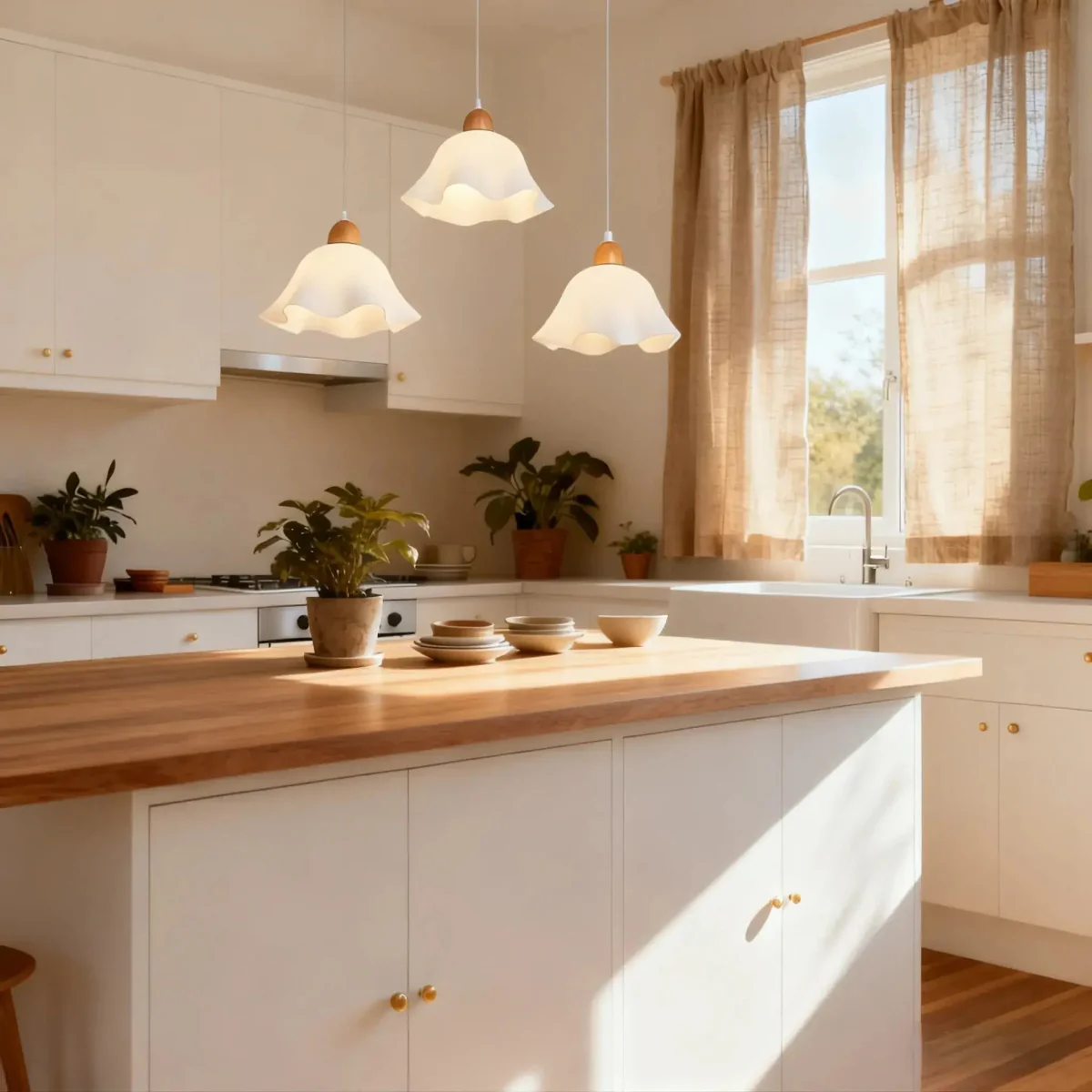
Picking the right lighting for your kitchen island helps you use the space better. Each lighting type has its own job. You can use one kind or mix a few together. Think about how you use your kitchen island most. Do you cook, eat, or hang out there? That should help you decide.
Here is a quick look at the most common types of kitchen island lighting and their main purposes:
Type of Lighting |
Primary Purpose |
|---|---|
Task Lighting |
Helps you see clearly when you work in certain spots. |
Ambient Lighting |
Makes the whole room bright and soft, with fewer shadows. |
Accent Lighting |
Shows off cool things, like art or special textures. |
Decorative Lighting |
Makes your kitchen look nice and adds your style. |
Task Lighting
Task lighting gives you bright light right where you need it. You use it for cutting, cooking, and reading recipes. Under-cabinet lights and pendant lights help you see better. This lighting keeps your work area safe. You can use sharp knives and hot pans without worry.
Under-cabinet lighting shines on your counter.
Pendant lights give bright light for making food.
Task lighting helps you see details and stay safe.
Ambient Lighting
Ambient lighting fills your kitchen with soft, even light. It makes the room feel cozy and nice. You use this lighting to move around safely. It also helps make the kitchen bright enough.
Ambient lighting makes the kitchen feel warm.
It gives enough light for daily things and parties.
This lighting helps stop shadows and keeps the kitchen friendly.
Accent Lighting
Accent lighting draws eyes to special things on your kitchen island. You can use it to show off a pretty counter or art. This lighting makes your kitchen look more fun.
Accent lighting shows off cool textures and decorations.
Spotlights can make things stand out.
It makes your kitchen island look special.
Decorative Lighting
Decorative lighting adds style and shows your taste. You can pick lights that match what you like. This lighting can help with tasks and make the kitchen feel cozy.
Tip: Decorative lighting can have smart features, like changing color or brightness, for any event.
When you choose kitchen island lighting, think about how you use the island most. The right mix of lights helps you cook, relax, and enjoy time with others.
How to Choose the Right Lights
Choosing the right lighting for your kitchen island starts with careful planning. You want your space to look good and work well. Follow these steps to make smart lighting choices for your home.
Measure Your Island
Start by measuring your kitchen island. You need to know the length, width, and height of both the island and the ceiling above it. This helps you pick fixtures that fit your space.
Use a tape measure to find the length and width of your kitchen island.
Measure the height from the floor to the ceiling.
Write down these numbers. You will use them to decide on fixture size and placement.
Think about how much light you need. If you cook a lot, you may want brighter lights.
Look at your kitchen’s style. Choose fixtures that match your cabinets, counters, and colors.
Check if your ceiling can support the fixtures you like.
Set a budget before you shop. This helps you narrow down your options.
Tip: Trust your taste. Pick lights that make you happy and fit your kitchen’s look.
Fixture Size and Number
The size and number of fixtures you need depend entirely on your kitchen island’s length and whether you choose a single statement piece or multiple pendants. Relying on a single, generalized mathematical rule for all lighting types is a common pitfall that can ruin your kitchen's proportions.
To ensure your lighting looks perfectly balanced—whether you are hanging a sleek modern brass linear light or a series of natural woven rattan pendants—use the distinct guidelines below to determine the correct size and quantity.
Use this table to help you decide:
Layout Type |
Recommended Size / Diameter |
Usage & Notes |
|---|---|---|
Single Large Fixture / Linear Light |
1/2 to 2/3 of the island's total length |
Best for creating a strong, minimalist focal point. Ensures balanced light without overpowering the space. |
Multi-Pendant Setup (2 to 3 Lights) |
8 to 12 inches per pendant |
Prevents physical collision and visual crowding. Ideal for standard-sized islands and natural, clean aesthetics. |
Mini Pendant Setup (4+ Lights) |
Under 6 inches per pendant |
Best for extra-long islands (9 feet or longer), providing a modern, starry look. |
To properly position a multi-pendant setup, measure your island in inches and map out the center point for each fixture. Keep in mind that the fixtures should visually match the scale of your kitchen island. Large islands naturally accommodate a grand linear fixture, while standard islands look incredible with a clean, two-to-three pendant arrangement.
Placement and Spacing
Good placement and spacing make your kitchen island lighting look balanced. You want even light across the whole island.
Place pendant lights at least 6 inches from each edge of the island.
Space each fixture 24 to 30 inches apart, measured from the center of each light.
For three or more pendants, keep the widest parts at least 30 inches apart.
Make sure the first and last pendant are 6 to 12 inches from the ends of the island.
For large islands, space fixtures about 2 feet apart for even light.
Note: Even spacing helps your kitchen island look neat and bright.
Installation Height
Hang your kitchen island lighting at the right height for safety and comfort. The best height for most homes is 30 to 36 inches above the countertop. This gives you enough light without blocking your view.
Measure from the top of the island to the bottom of the fixture.
Keep the bottom of each pendant 30 to 36 inches above the surface.
Adjust the height if your family is very tall or if you want a different look.
This height works well for task lighting and keeps the kitchen feeling open. You can see across the island and talk to others easily.
Tip: Use adjustable cords or rods if you want to change the height later.
When you choose the right lights for your kitchen island, you make your space safer, brighter, and more beautiful. Careful measuring and smart placement help you get the best results from your lighting choices.
Light Quality: Lumens, CRI, and Color Temperature
Good lighting is more than just the fixture; it is about the quality of the light itself.
Lighting research shows that our perception of food is heavily influenced by lighting quality. A Color Rendering Index (CRI) of 90 or higher is crucial in the kitchen. High-CRI lighting accurately reflects the true colors of your fresh produce and cooked meals, which psychological studies suggest directly enhances our appetite and overall dining experience.
When selecting bulbs or integrated LED fixtures for your island, focus on these three metrics:
Brightness (Lumens): Aim for 3000 to 5000 lumens in total across the island (roughly 300 to 500 lumens per square meter) to ensure safe food preparation.
Color Temperature (Kelvin): The ideal color temperature for a kitchen island is 3000K (Warm White). This provides perfect clarity for chopping and cooking, while maintaining a warm, inviting ambiance that transitions beautifully into evening dining.
Color Rendering Index (CRI): Look for a CRI of 90 or higher. This ensures the true colors of your food, countertops, and cabinetry are accurately represented.
Popular Kitchen Island Lighting Options
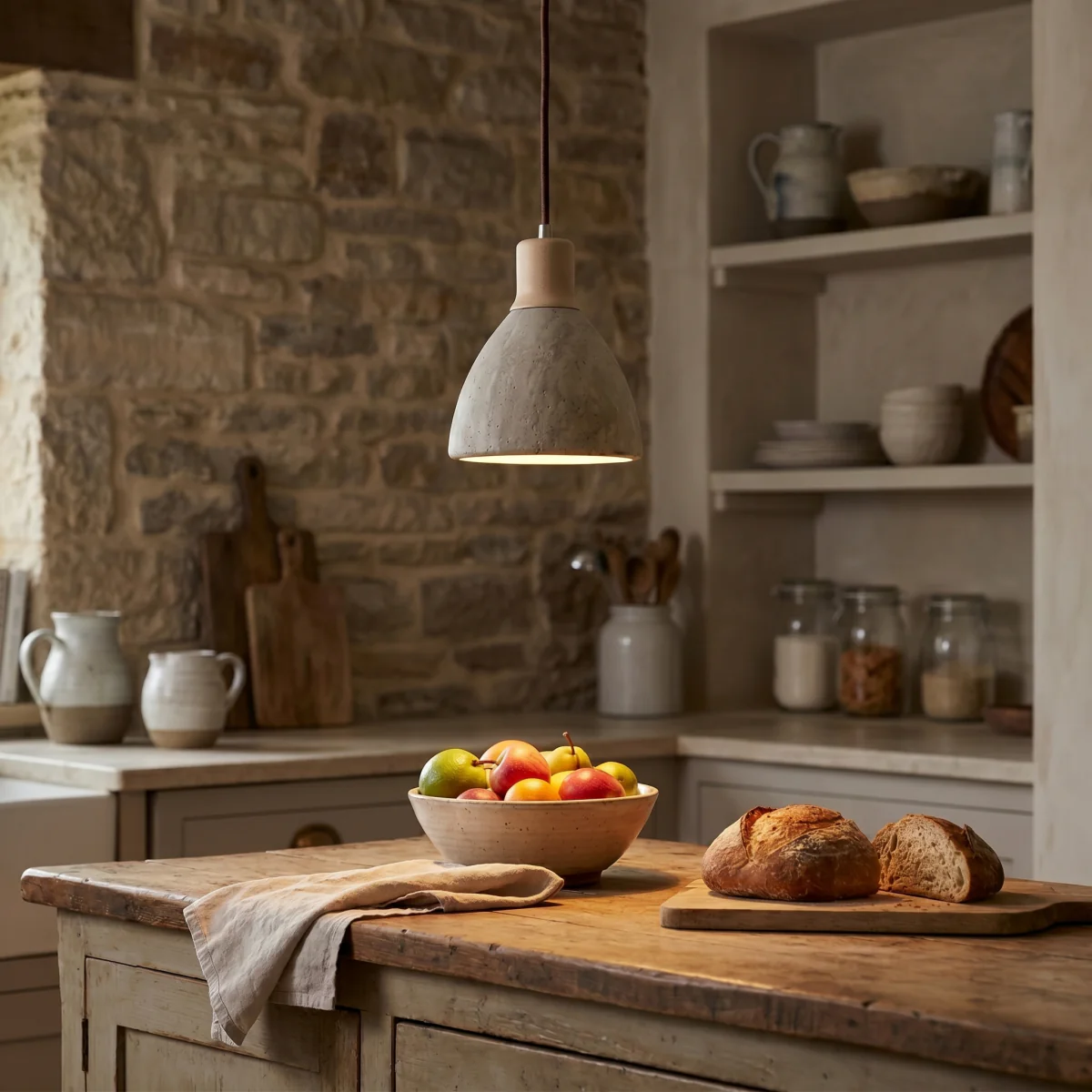
Pendant Lights
Pendant lights are seen in lots of kitchens now. Many homeowners like them because they fit most styles. They give bright light right where you need it. Pendant lights come in many shapes and colors. You can pick small or big ones. They work for task lighting, accent lighting, or as decorative pendant lights to show your style.
Advantages of pendant lights:
Bring style and personality to your kitchen island.
Give direct light for cooking or reading.
Save space since they hang from the ceiling.
You can change the height to fit your needs.
Work well with energy-saving LED bulbs.
Disadvantages:
Might not light up big areas alone.
Need to be placed right to stop glare.
Can be hard to clean if they hang high.
Tip: Use two or three pendants for even light on your kitchen island.
For instance, Sarah, a customer from California, recently upgraded her kitchen island with a set of our minimalist walnut wood and heavy-duty metal pendants. She shared:
"Finding the perfect lighting was a challenge until I discovered this independent brand. The 3000K warm white light instantly elevated the entire atmosphere of my kitchen, making it feel both cozy and high-end. You can genuinely feel the quality in the weight of the metal fixtures and the natural grain of the walnut wood. It’s a level of craftsmanship and design detail that completely transformed my daily cooking space, far exceeding anything I had seen on mass-market retail sites."
Real feedback like this highlights why paying attention to material authenticity—like choosing real wood over veneers and opting for the correct color temperature—is just as important as the design itself.
Chandeliers and Linear Fixtures
Chandeliers and linear fixtures stand out above your kitchen island. Chandeliers spread light over a wide area and look fancy. Linear fixtures give focused light down and look modern.
Fixture Type |
Light Distribution |
Style |
|---|---|---|
Chandeliers |
Ambient illumination, decorative |
|
Linear Fixtures |
Focused, downward light |
Modern, streamlined appearance |
Chandeliers are good for eating and hanging out. Linear fixtures help with tasks like chopping or mixing. Pick a fixture that matches your kitchen’s style and gives the light you want.
Materials and Bulb Types
You want your kitchen island lighting to last and save power. Many people pick metal, glass, or wood for fixtures. These materials are strong and easy to clean. For bulbs, LED options use less energy and last longer than old bulbs.
Fixture Type |
Benefits |
Bulb Type |
|---|---|---|
Pendant Lights |
Many designs, adjustable height, great for task lighting |
LED, Incandescent |
Chandelier |
Looks nice, can give ambient lighting |
LED, Incandescent |
Smart LED Bulbs |
Programmable, saves energy, changes brightness and color temperature |
Smart LED |
Note: Use dimmers or smart bulbs to change brightness and save energy.
Matching Your Kitchen Style
You can match your lighting to your kitchen’s look in many ways: Pick lights that match your cabinets, counters, or hardware. Try mixing finishes, like black with brass, for a modern look. Choose wood or metal if your kitchen uses those materials. Use white or shiny pendants for a clean look with white cabinets. Make sure your lights fit your kitchen island and ceiling height.
When your lighting matches your kitchen, your space feels finished and welcoming.
Avoiding Mistakes and Maintenance Tips
Common Sizing and Placement Errors
You want your kitchen island lighting to look flawless and function perfectly. Unfortunately, many homeowners make identical sizing, placement, or technical errors that disrupt the harmony of their space. Watch out for these major pitfalls:
Lacking a Comprehensive Strategy: Relying on one fixture to light the whole kitchen island. You need a layered lighting plan for the best results.
Poor Spacing and Quantity: Using too few lights or spacing them poorly. Some areas of your island may stay dark.
Misapplying Sizing Rules: Using the "1/2 to 2/3" rule for multiple pendants. This will result in oversized lampshades that physically collide and crowd the room.
Ignoring the Edge Buffer: Measuring your spacing from the center of the light bulb instead of the lampshade's edge. This often causes the fixtures to hang awkwardly past the ends of the island countertop.
Choosing the Wrong Light Quality: Overlooking the importance of color temperature and color rendering. Selecting stark, cold light ruins the natural atmosphere and makes food look unappealing.
Here is a table to help you avoid sizing and placement errors:
Common Error |
Professional Solution |
|---|---|
Pendants Too Large for Multi-Setup |
Limit individual pendants to 8 to 12 inches in diameter when hanging 2 or 3 lights to maintain elegant breathing room between fixtures. |
Single Fixture Too Small |
Ensure your single statement piece spans 1/2 to 2/3 of the island's length so it doesn't look lost or visually insignificant. |
Incorrect Edge Spacing |
Measure from the outermost edge of the lampshade—it must hang at least 6 inches inward from the counter's end to prevent bumped heads. |
Improper Spacing Between Pendants |
Space pendants 24 to 30 inches apart, measured straight from the center of one fixture to the center of the next. |
Harsh or Unnatural Lighting |
Exclusively use 3000K warm white, High-CRI LED bulbs. This specific specification beautifully highlights natural textures like travertine or walnut wood, prevents eye strain, and displays food accurately. |
Cleaning and Upkeep
You can keep your kitchen island lighting looking new with simple care. Regular cleaning and maintenance help your lights last longer and shine brighter.
Dust your fixtures often. Use a soft cloth and mild detergent for wiping.
Clean glass shades in warm, soapy water. Handle them gently to avoid breaking.
Replace flickering bulbs right away. Use the correct wattage and try LED bulbs for longer life.
Check your fixtures for loose screws or worn parts. Tighten and fix as needed.
Keep lights away from grease by using a range hood and placing them away from the stove.
Use a gentle polish for metal finishes. Apply a protective coating to prevent tarnish.
Schedule a yearly check-up with an electrician to inspect wiring and safety.
Note: Glass lights show dust and fingerprints more than metal ones. Clean them more often for a sparkling look.
Taking care of your kitchen island lighting keeps your kitchen bright, safe, and stylish for years.
You can make your kitchen island bright and cool by doing these things: First, measure your kitchen island to know what size and how many lights you need. Next, pick lights that look good with your kitchen and help you see well. Then, get an expert to put the lights up at the right height.
Status |
Notes |
|
|---|---|---|
Kitchen floor plan measured |
☐ |
Add ceiling height too |
Lighting style picked |
☐ |
Match with cabinets and handles |
Installation planned |
☐ |
Make sure wiring and spots are safe |
Start now and get new kitchen island lighting that makes your space look great!
FAQ
How many pendant lights should you use over a kitchen island?
You should use two pendants for islands up to 6 feet long. For islands 7 to 8 feet, use three. For longer islands, use three or more. Always space them evenly for the best look.
What is the best height to hang kitchen island lights?
Hang your lights 30 to 36 inches above the island countertop. This height gives you enough light and keeps your view clear. Use adjustable cords if you want to change the height later.
Can you mix different lighting styles over your kitchen island?
Yes! You can mix pendant lights with recessed or accent lights. Mixing styles adds interest and helps you get both task and ambient lighting. Just make sure the fixtures match your kitchen’s look.
What type of bulb works best for kitchen island lighting?
LED bulbs work best. They save energy, last longer, and come in many brightness levels. Choose bulbs with a high color rendering index (CRI) to see true colors when you cook and eat.
Share:
Which Is Better Incandescent vs LED Bulbs for Your Home
Easy Steps to Keep Your Exterior Wall Lights Shining Bright