


Sie möchten eine Kücheninsel wählen, die in Ihren Raum passt. Sie sollte auch dazu beitragen, dass Ihre Küche besser funktioniert. Viele Menschen haben Schwierigkeiten bei der Planung ihrer Kücheneinrichtung. Sie befürchten, teure Fehler zu machen. Ein kluger Plan kann Ihnen helfen, häufige Probleme zu vermeiden. Zu diesen Problemen gehören zu enge Durchgänge oder eine zu große Insel. Werfen Sie einen Blick auf diese Tabelle, um zu sehen, worauf Sie achten sollten, wenn Sie die beste Größe für eine Kücheninsel planen:
|
Fehlerbeschreibung |
Wichtige Erkenntnis |
|---|---|
|
Übergroße Insel, die die Küche beengt wirken lässt |
Lassen Sie mindestens 42 bis 48 Zoll Freiraum um die Insel. |
|
Einschneidung in das funktionale Küchendreieck |
Platzieren Sie die Insel so, dass der Weg zwischen Spüle, Herd und Kühlschrank erhalten bleibt. |
|
Unzureichende Größe für Funktionalität |
Beginnen Sie für die Nützlichkeit mit mindestens 4 Fuß Länge und 2 Fuß Breite. |
|
Überfüllung der Essbar mit Sitzplätzen |
Geben Sie 24 Zoll pro Person für Bequemlichkeit beim Essen. |
|
Keine Spüle für die Essenszubereitung integriert |
Fügen Sie eine Spüle hinzu, wenn die Insel der Hauptzubereitungsbereich ist. |
Mit einfachen Schritten können Sie eine Kücheninsel auswählen, die zu Ihrer Küche passt. Sie wird auch Ihren Bedürfnissen entsprechen.
Wichtige Erkenntnisse
-
Messen Sie Ihre Küche sorgfältig aus, bevor Sie eine Insel auswählen. Dies hilft, dass die Insel passt und Sie sich sicher um sie herum bewegen können.
-
Stellen Sie sicher, dass genügend Platz um die Insel herum vorhanden ist. Versuchen Sie, mindestens 36 Zoll Freiraum zu haben. Dies hält Ihre Küche einfach zu bedienen und komfortabel.
-
Entscheiden Sie, was Ihre Kücheninsel tun soll. Werden Sie dort kochen, sitzen oder Dinge aufbewahren? Dies hilft Ihnen, die richtige Größe und die richtigen Funktionen zu wählen.
-
Wählen Sie die beste Form für Ihre Insel. Rechteckige, L-förmige und U-förmige Formen eignen sich für verschiedene Küchen und Bedürfnisse.
-
Machen Sie keine Fehler wie die Wahl der falschen Größe oder das Vergessen von Sitzgelegenheiten. Eine gute Planung verbessert die Funktionalität Ihrer Küche und macht sie angenehmer.
Küchenraum messen
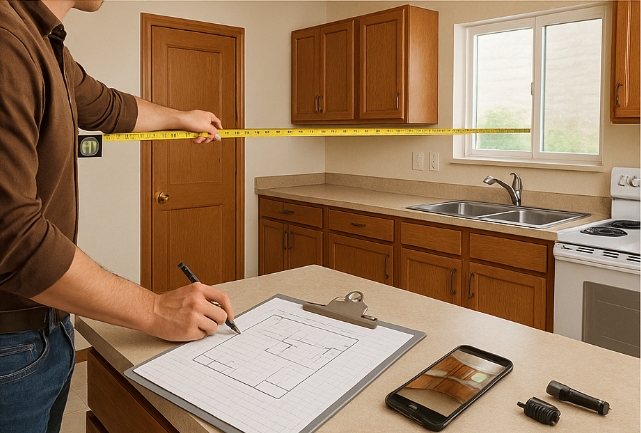
Messen für die Inselgröße
Beginnen Sie damit, die richtigen Maße zu nehmen, bevor Sie eine Kücheninsel auswählen. Verwenden Sie ein Stahlbandmaß oder ein Lasergerät für die besten Ergebnisse. Zeichnen Sie Ihre Küche auf Karopapier oder verwenden Sie eine App. Markieren Sie alle Türen, Fenster und Anschlüsse. Messen Sie die Länge und Breite der Küche in Zoll. Notieren Sie die Gesamtquadratmeterzahl. Achten Sie auf Säulen, Wände oder Dinge, die im Weg sein könnten.
Hier sind die Schritte für gutes Messen:
-
Messen Sie den gesamten Raum, indem Sie sich im Kreis bewegen.
-
Notieren Sie sowohl die Breiten- als auch die Höhenmaße.
-
Markieren Sie, wo sich Sanitär- und Stromanschlüsse befinden.
-
Machen Sie Fotos, um zu zeigen, wie die Küche jetzt aussieht.
-
Verwenden Sie eine Wasserwaage, um zu sehen, ob Wände gerade und Böden eben sind.
Dies hilft Ihnen, den kleinsten Platz zu kennen, den Ihre Insel benötigt. Es stellt auch sicher, dass Sie nichts Wichtiges vergessen, wenn Sie die Größe auswählen.
Tipps für Gehwege und Freiräume
Ausreichend Platz für Gehwege ist wichtig für Sicherheit und Komfort. Lassen Sie mindestens 36 Zoll Freiraum um die Kücheninsel herum. Dies ermöglicht es Personen, sich sicher zu bewegen. Für mehr Platz versuchen Sie, 42 bis 48 Zoll zwischen der Insel und den Schränken zu haben. Wenn Sie einen Ofen haben, der sich in den Gang öffnet, lassen Sie mindestens 48 Zoll Platz.
Tipp: Genügend Platz verhindert Gedränge und ermöglicht eine einfache Bewegung. Es vereinfacht auch das Reinigen und Kochen.
Überprüfen Sie diese Liste, um sicherzustellen, dass Sie genügend Platz haben:
-
36 Zoll sind das Minimum für die Bewegung
-
42 Zoll oder mehr sind besser für den Komfort
-
48 Zoll, wenn Geräte in den Gang geöffnet werden
Denken Sie darüber nach, wie viele Personen an Ihrer Insel sitzen werden. Planen Sie mindestens 24 Zoll Platz pro Sitz ein. Fügen Sie einen 15-Zoll-Überhang für Beinfreiheit hinzu, wenn Sie Sitzgelegenheiten wünschen.
Standardabmessungen und Größenrichtlinien für Kücheninseln
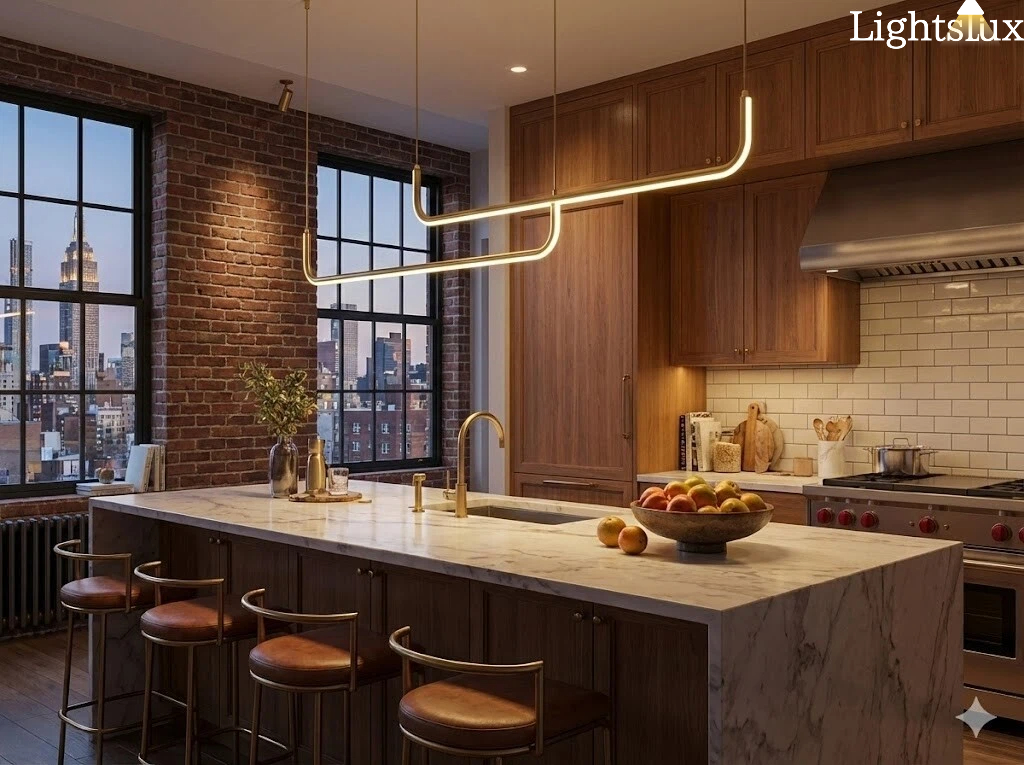
Arcato minimalistische lineare Pendelleuchte – Schwarz/Gold Metall/Acryl für Esszimmer
Produktabmessungen & Installationsanleitung
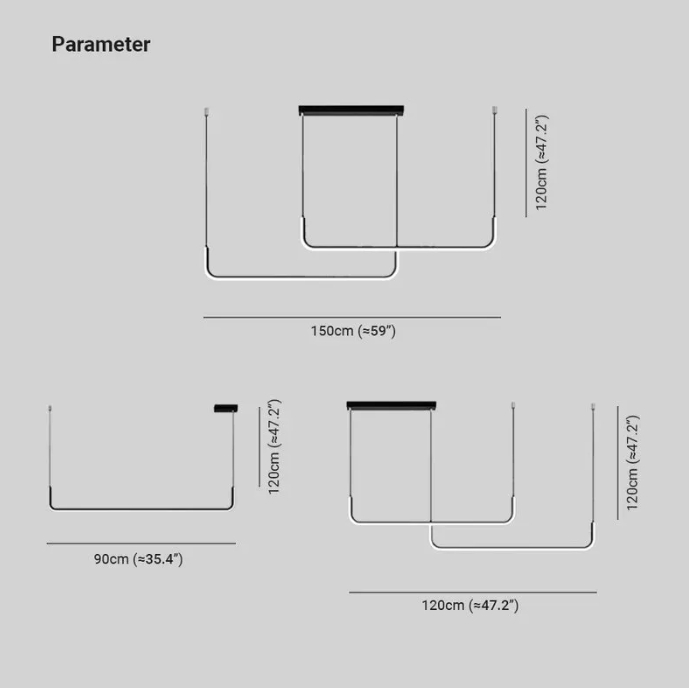
Diese Leuchte zeichnet sich durch eine klare, moderne lineare Struktur und mehrere Konfigurationsmöglichkeiten aus, um sich an verschiedene Kücheninsel-Layouts anzupassen. Die untenstehenden Abmessungen entsprechen der tatsächlichen Hängegröße und den räumlichen Anforderungen, die in der technischen Zeichnung dargestellt sind.
Gesamtabmessungen
|
Parameter |
Messung |
|---|---|
|
Gesamthöhe |
120 cm (≈ 47.2") |
|
Maximale Breite (ausgezogen) |
150 cm (≈ 59") |
|
Mittlere Breitenoption |
120 cm (≈ 47.2") |
|
Kompakte Breitenoption |
90 cm (≈ 35.4") |
Diese Abmessungen stellen den vollständigen optischen Fußabdruck der Leuchte im installierten Zustand dar.
Konfigurationsmöglichkeiten
Dieses Design unterstützt mehrere horizontale Layout-Optionen, wodurch es sich an verschiedene Inselgrößen und Sitzanordnungen anpassen lässt.
-
150 cm Konfiguration
Ideal für lange oder doppelte Kücheninseln, bietet eine ausgewogene Beleuchtung über eine breitere Fläche. -
120 cm Konfiguration
Eine vielseitige Mittelgröße, geeignet für Standard-Kücheninseln oder Esstheken. -
90 cm Konfiguration
Am besten für kompakte Inseln, Frühstückstheken oder schmale Arbeitsplatten, wo der Platz begrenzt ist.
Jede Konfiguration behält die gleiche vertikale Hängehöhe bei, um eine gleichmäßige Lichtverteilung zu gewährleisten.
Höhe & Hängeproportion
Mit einer Gesamthöhe von 120 cm (47.2") ist diese Leuchte optimal für die Installation über Kücheninseln, Esstischen oder Arbeitsplatten.
Designempfehlungen:
-
Geeignet für Standarddeckenhöhen (2,4–3 m)
-
Bewahrt das visuelle Gleichgewicht ohne Sichtlinien zu behindern
-
Bietet fokussierte Abwärtsbeleuchtung bei gleichzeitig offenem Raumgefühl
Installations- & Raumplanungshinweise
Bei der Auswahl einer Größe sollten die folgenden professionellen Richtlinien beachtet werden:
-
Die Leuchtenbreite sollte typischerweise 60–75 % der Insellänge betragen
-
Sorgen Sie für ausreichenden Abstand zwischen der Leuchte und den umliegenden Schränken
-
Stellen Sie sicher, dass die Hängehöhe mit der Nutzung von Sitz- und Arbeitsflächen übereinstimmt
Die richtige Dimensionierung verbessert sowohl die funktionale Lichtleistung als auch die allgemeine visuelle Harmonie.
Zusammenfassung des Designs
Diese mehrkonfigurierbare Pendelleuchte kombiniert Flexibilität, Proportion und moderne Ästhetik und eignet sich daher für eine Vielzahl von Kücheninsel-Layouts. Durch die Wahl der entsprechenden Breitenoption kann die Leuchte nahtlos in kleine, mittlere oder große Küchenräume integriert werden, während sie eine raffinierte architektonische Präsenz beibehält.
Zweck der Insel definieren
Die Wahl der richtigen Kücheninsel beginnt damit, ihre Hauptaufgabe zu kennen. Sie müssen darüber nachdenken, wie Sie die Insel nutzen werden. Diese Wahl hilft Ihnen, Größe, Form und Ausstattung zu bestimmen.
Koch- und Zubereitungsbereich
Wenn Sie Ihre Insel zum Kochen oder für die Essenszubereitung nutzen möchten, konzentrieren Sie sich auf Dinge, die die Arbeit erleichtern. Viele Leute installieren eine Spüle oder ein Kochfeld in der Insel, um einen speziellen Zubereitungsbereich zu schaffen. Eine große Arbeitsplatte bietet Platz zum Schneiden, Mischen und Anrichten von Speisen. Die Platzierung von Geräten auf der Insel kann Ihnen helfen, schneller zu kochen. Sie ermöglicht es Ihnen auch, sich während des Kochens mit Familie oder Freunden zu unterhalten. Eine Doppelinsel ist gut, um Koch- und Unterhaltungsbereiche getrennt zu halten.
|
Funktion |
Beschreibung |
|---|---|
|
Integrierte Spüle |
Schafft einen Ort zum Reinigen und Zubereiten von Speisen. |
|
Kochfeld |
Ermöglicht Kochen und Chatten gleichzeitig. |
|
Bietet viel Platz für die Essenszubereitung und andere Aufgaben. |
Sitzgelegenheiten und soziale Bedürfnisse
Viele Menschen nutzen ihre Kücheninsel zum Sitzen und Unterhalten. Sie können Barhocker, Thekenhocker oder Bänke wählen, die zu Ihrem Stil und Raum passen. L-förmige oder U-förmige Sitzgelegenheiten fördern die Kommunikation und den Austausch. Wenn Ihre Küche klein ist, funktionieren Sitzgelegenheiten um die Ecke für zwei Personen gut. Die Platzierung von Sitzgelegenheiten auf verschiedenen Seiten hilft allen, teilzunehmen.
-
Barhocker eignen sich gut für hohe Inseln und sind in vielen Designs erhältlich.
-
Thekenhocker bieten einen bequemen Platz für schnelle Mahlzeiten.
-
Bänke sparen Platz und eignen sich am besten für große Küchen.
Stauraum und Geräte
Eine Kücheninsel kann Ihnen mehr Stauraum bieten und Geräte aufnehmen. Sie können eine Spülmaschine, einen Weinkühlschrank oder einen Müllverdichter unter der Insel hinzufügen. Ausziehbare Regale und integrierte Steckdosen sorgen für Ordnung. Das Ändern der Inselhöhe schafft verschiedene Bereiche zum Kochen und Essen. Passen Sie die Insel an Ihren Herd, Ihre Spüle und Ihren Kühlschrank an, damit Sie sich leicht bewegen können.
|
Bewährte Methode |
Beschreibung |
|---|---|
|
Fügen Sie Geräte hinzu, um Platz zu nutzen und die Dinge zu vereinfachen. |
|
|
Auszugregale verwenden |
Greifen Sie schnell und ohne Durcheinander auf Ihre Sachen zu. |
|
Eingebaute Steckdosen |
Verstecken Sie Kabel und halten Sie die Insel sauber. |
|
Inselhöhe variieren |
Schaffen Sie verschiedene Bereiche zum Arbeiten und Sitzen. |
Tipp: Stimmen Sie immer die Funktion der Insel mit Ihren Bedürfnissen ab. Die richtige Nutzung hilft Ihnen, die beste Größe und Form für Ihre Küche zu wählen.
Inselanordnung wählen
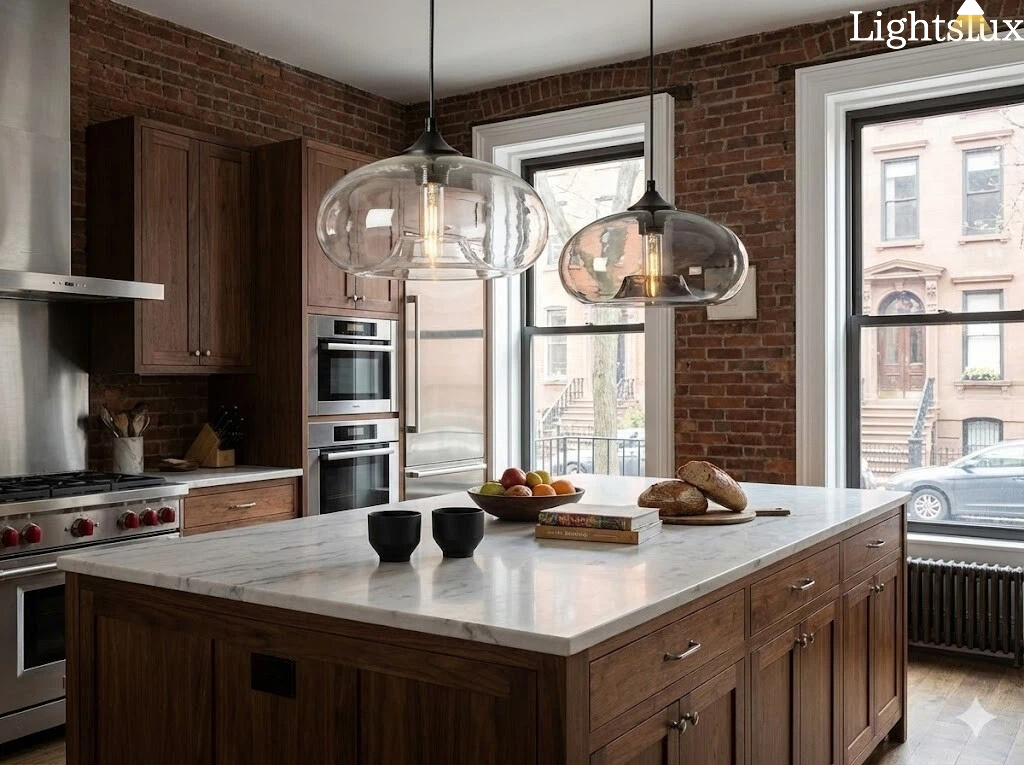
Morandia moderne Glaspendelleuchte – Brot-förmige Kücheninsel-Lampe, 6 Farben
Optionen für die Inselform
Es gibt verschiedene Formen für eine Kücheninsel. Jede Form passt am besten zu bestimmten Küchen und Stilen. Die gängigsten Formen sind rechteckig, L-förmig und U-förmig.
-
Rechteck: Diese Form ist klassisch und passt in viele Küchen. Sie bietet mehr Arbeits- und Stauraum. Bei Überstand können Sie auf einer Seite Sitzplätze einplanen. Rechteckige Inseln eignen sich gut für kleine und große Küchen.
-
L-Form: Eine L-förmige Insel fördert die Kommunikation und das Zusammensein. Sie verbindet Kochen und Essen an einem Ort. Diese Form ist am besten für mittlere oder große Küchen mit offenem Raum geeignet.
-
U-Form: U-förmige Inseln sehen gut aus und steigern den Wert Ihrer Küche. Sie bieten viel Arbeits- und Stauraum. Für diese Form benötigen Sie eine große Küche. U-förmige Inseln können teurer sein, besonders wenn Sie Sanitär- oder Elektroteile hinzufügen.
Eine Kücheninsel kann viele Aufgaben erfüllen. Sie bietet mehr Platz zum Arbeiten, Verstauen und Sitzen. Sie können sie nutzen, um eine einzeilige Küche in eine Galeerenküche umzuwandeln. Sie kann auch eine L-förmige Küche in eine Hufeisenform verwandeln. Das macht die Insel zu einer cleveren Wahl für viele Küchen.
Anordnung an die Küche anpassen
Sie sollten eine Inselanordnung wählen, die zur Größe Ihrer Küche und Ihrer Arbeitsweise passt. Die richtige Anordnung hilft Ihnen, Dinge schneller und einfacher zu erledigen. Die Position von Spüle, Herd und Kühlschrank bildet ein Arbeitsdreieck. Dieses Dreieck ist wichtig für einfache Bewegungsabläufe.
Berücksichtigen Sie diese Layout-Typen und ihre Vorteile:
|
Layout-Typ |
Vorteile |
Ideale Raumgröße |
|---|---|---|
|
Inselküche |
Bietet mehr Arbeitsfläche, verbindet mit Wohnbereichen, fördert Gespräche |
Groß oder offen gestaltet |
|
L-förmige Küche |
Erweitert die Arbeitsfläche, ermöglicht Multitasking |
Mittel bis groß |
|
Offenes Konzept |
Macht die Küche heller, benötigt weniger künstliches Licht |
Variiert, aber geräumig |
Eine L-förmige Küche bietet Ihnen mehr Arbeitsfläche und hilft Ihnen, mehr auf einmal zu erledigen. Offene Küchen lassen Licht herein und erleichtern die Bewegung. Wählen Sie eine Anordnung, die zu Ihrer Küche passt und Ihnen hilft, zu kochen und Spaß zu haben.
Tipp: Platzieren Sie die Insel an einer intelligenten Stelle, um Ihre Arbeit zu optimieren. Die Insel kann zum Kochen, Essen oder für Hausaufgaben genutzt werden.
Arbeits- und Verkehrsfluss
Ein guter Arbeits- und Verkehrsfluss ist wichtig für eine Kücheninsel. Sie benötigen einen klaren Weg zwischen Spüle, Herd und Kühlschrank. Die Insel sollte diese Hauptpunkte nicht blockieren. Platzieren Sie die Spüle dort, wo sie oft genutzt wird. Planen Sie die Insel so, dass sie mit anderen Küchenbereichen harmoniert und keine Durchgänge blockiert.
-
Halten Sie das Arbeitsdreieck offen, damit Sie sich leicht bewegen können.
-
Platzieren Sie die Insel so, dass sie nicht im Weg ist.
-
Stellen Sie sicher, dass Sitzgelegenheiten die Gehwege nicht blockieren.
-
Gestalten Sie die Insel so, dass sie Ihnen beim Kochen, Essen und Reinigen hilft.
Hinweis: Eine gute Anordnung der Kücheninsel hilft Ihnen, sich besser zu bewegen und zu arbeiten. Sie hält Ihre Küche ordentlich und benutzerfreundlich.
Wenn Sie diese Tipps befolgen, haben Sie eine Kücheninsel, die zu Ihrem Raum passt, gut aussieht und Ihnen im Alltag hilft. Die richtige Größe und Anordnung lassen Ihre Küche gut funktionieren und sich angenehm anfühlen.
Checkliste für die ideale Größe einer Kücheninsel
Schritt-für-Schritt-Anleitung
Sie können einen einfachen Prozess befolgen, um die richtige Kücheninsel für Ihr Zuhause auszuwählen. Diese Checkliste hilft Ihnen, die beste Passform für Ihre Küche zu messen, zu planen und zu bestätigen.
-
Messen Sie Länge und Breite Ihrer Küche. Notieren Sie die Gesamtgröße.
-
Markieren Sie wichtige Merkmale wie Geräte, Türen und Durchgänge in Ihrem Plan.
-
Halten Sie mindestens 39 Zoll Freiraum um die Insel ein, um eine sichere Bewegung zu gewährleisten.
-
Denken Sie an Überstände für Sitzgelegenheiten und wie viel Platz Sie für Stühle oder Hocker benötigen.
-
Skizzieren Sie Ihr Layout auf Papier oder verwenden Sie einen 3D-Küchenplaner, um zu sehen, wie die Insel passt.
-
Überprüfen Sie die folgende Tabelle, um alle wesentlichen Teile zu prüfen, bevor Sie kaufen oder installieren:
|
Checklistenpunkt |
Beschreibung |
|---|---|
|
Tragrahmen |
Verwenden Sie starke Holz- oder Metallständer für eine solide Basis. |
|
Arbeitsplatte |
Wählen Sie ein strapazierfähiges Material, das zu Ihrem Küchenstil und Design passt. |
|
Schränke und Schubladen |
Fügen Sie Stauraum hinzu, der Ihren Bedürfnissen entspricht und zum Rest Ihrer Küche passt. |
|
Beschläge |
Wählen Sie Griffe und Scharniere, die gut funktionieren und gut aussehen. |
|
Steckdosen |
Planen Sie Steckdosen an leicht erreichbaren Stellen für kleine Geräte ein. |
|
Spüle |
Fügen Sie eine Spüle hinzu, wenn Sie zusätzlichen Vorbereitungs- oder Reinigungsbereich wünschen. |
Fehler vermeiden
Viele Hausbesitzer machen die gleichen Fehler bei der Auswahl einer Kücheninsel. Sie können diese Probleme vermeiden, indem Sie diese Liste der zu vermeidenden Fehler bei der Auswahl einer Kücheninsel überprüfen:
-
Eine Insel wählen, die zu groß oder zu klein für Ihre Küche ist. Dies kann die Bewegung blockieren oder die Raumnutzung einschränken.
-
Vergessen, den Hauptzweck Ihrer Insel zu bestimmen. Dies kann wertvollen Platz verschwenden und die Funktion beeinträchtigen.
-
Nicht genügend Sitzplätze einplanen, was Mahlzeiten unbequem machen kann.
-
Zu wenig Freiraum um die Insel lassen. Dies kann die Bewegung und Arbeit erschweren.
-
Elektrische Steckdosen weglassen, die für moderne Küchenbedürfnisse wichtig sind.
-
Nützliche Schränke oder Schubladen weglassen, was die Essenszubereitung und das Aufräumen erschweren kann.
Tipp: Überprüfen Sie immer Ihre Maße und Ihr Layout doppelt, bevor Sie kaufen oder bauen. Sorgfältige Planung hilft Ihnen, eine Kücheninsel zu schaffen, die zu Ihrem Raum passt, Ihrem Stil entspricht und das Design Ihrer Küche verbessert.
Sie können die beste Kücheninsel auswählen, wenn Sie zuerst Ihren Raum ausmessen. Planen Sie Ihr Layout und denken Sie über Ihren Stil nach. Eine gute Insel bietet Ihnen mehr Platz zum Arbeiten, Verstauen und Sitzen. Sie macht Ihre Küche auch zu einem unterhaltsamen Ort für Familie und Freunde. Die richtige Größe und das richtige Aussehen können Ihr Zuhause auf viele Arten verbessern:
|
Beitrag zum Immobilienwert |
Auswirkung auf die Nutzbarkeit |
|
|---|---|---|
|
Zusätzliche Arbeitsfläche |
Verbessert die Küchenfunktionalität |
Hilft Ihnen, Küchenaufgaben schneller zu erledigen |
|
Stauraumoptionen |
Bietet Ihnen mehr Platz für Küchenutensilien |
Hält Ihre Küche ordentlich und aufgeräumt |
|
Sitzgelegenheiten |
Ermöglicht gemeinsame schnelle Mahlzeiten |
Erleichtert die Kommunikation mit anderen |
|
Blickfang |
Lässt Ihre Küche schöner aussehen |
Sorgt für eine warme und freundliche Atmosphäre in der Küche |
Befolgen Sie diese Schritte und seien Sie sicher in Ihrer Wahl. Ihre neue Insel wird Ihre Küche besser funktionieren lassen und toll aussehen.
FAQ
Woher weiß ich, ob meine Küche groß genug für eine Insel ist?
Sie sollten zuerst Ihre Küche ausmessen. Wenn Sie auf allen Seiten mindestens 36 Zoll Platz haben, können Sie eine Insel hinzufügen. Dieser Platz hilft Ihnen, sich sicher zu bewegen und zu arbeiten.
Was ist das beste Kücheninseldesign für eine offene Gestaltung?
Sie sollten ein Design wählen, das Ihre Küche mit dem Wohnbereich verbindet. Eine Insel mit Sitzgelegenheiten funktioniert gut. Sie hilft Ihnen, in einer offenen Gestaltung zu kochen, zu essen und sich mit anderen zu unterhalten.
Kann ich eine Spüle oder ein Kochfeld in meine Kücheninsel integrieren?
Ja, Sie können eine Spüle oder ein Kochfeld hinzufügen. Sie müssen die Installation von Sanitär- oder Elektroarbeiten planen. Diese Funktion macht Ihre Insel nützlicher zum Kochen und Reinigen.
Wie wähle ich einen Kücheninselstil, der zu meinem Zuhause passt?
Sie sollten sich Ihre Schränke und Arbeitsplatten ansehen. Wählen Sie einen Stil, der zum Aussehen Ihrer Küche passt. Ein einfacher, klarer Stil passt in die meisten Haushalte.
Was ist der wichtigste Aspekt des Kücheninseldesigns?
Sie müssen sich zuerst auf die Funktion konzentrieren. Gutes Design bietet Ihnen Platz zum Arbeiten, Verstauen und Sitzen. Planen Sie Ihre Insel immer so, dass sie Ihren täglichen Bedürfnissen entspricht.


