
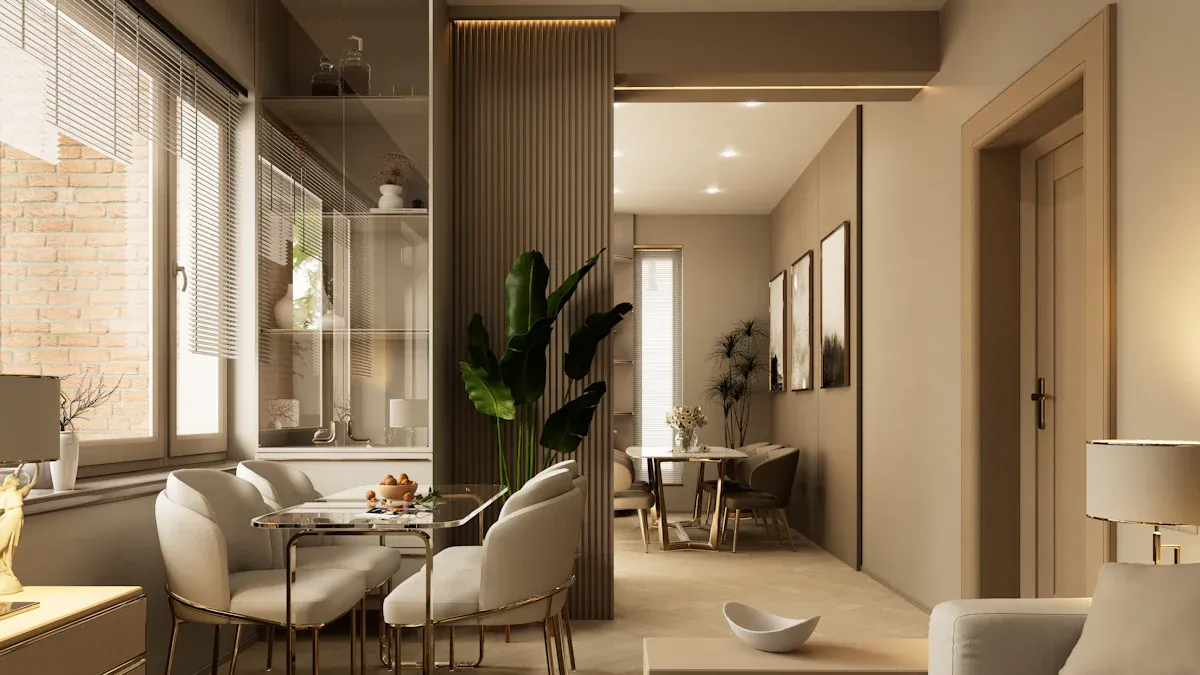
Wondering how to choose the right lighting for your new house? Start by thinking about how lighting changes the way you feel in your home. Brighter lighting can lift your mood, while softer lighting helps you relax. The right home lighting sets the perfect atmosphere for every room and highlights your style. Natural light boosts your energy and keeps your body clock in sync. You need to layer lighting to create the best atmosphere and comfort in each room. Use home lighting tips to match each space with the right options. Try different lighting tips until you find the New House Light Best Choice for your home. Good lighting brings out the best in your home and creates the perfect atmosphere. Get ready for simple tips that will help you create the perfect home atmosphere with the best home lighting.
Key Takeaways
Look at the natural light in your house. Watch how sunlight moves in each room during the day. This helps you know where you need more lights.
Make a lighting plan by writing down what each room needs. Think about what you do in each room, like cooking, reading, or relaxing. This helps you pick the best lighting for each activity.
Use different kinds of lighting like ambient, task, and accent. This makes every room feel balanced and work well for its use.
Pick LED bulbs because they last a long time and save money. They use less energy and lower your electric bills.
You can hire a lighting expert for tricky rooms. Their help can stop mistakes and make your house look better.
New House Light Best Choice: Where to Start
Assessing Natural Light
Before you pick out any fixtures, take a good look at the natural light in your new home. Every house has its own unique features, and understanding them helps you make the new house light best choice for each space. Walk through your home at different times of the day. Notice how sunlight moves from room to room. Some rooms might feel bright and cheerful in the morning, while others get more natural light in the afternoon.
Think about these things as you assess natural lighting:
Check every room to see how much natural light it gets.
Watch how the sun’s position changes the lighting throughout the day.
Look at the size and placement of windows. Bigger windows let in more natural light.
Notice if any rooms face south. South-facing rooms usually get the most sunlight.
Pay attention to wall colors and furniture. Light colors reflect natural light, making rooms feel brighter.
See if any rooms feel dark or shaded, even during the day.
You want to use as much natural lighting as possible. Natural light makes your home feel open and welcoming. It also helps you save energy. If you have rooms with little natural lighting, plan to add extra fixtures there. This step is key for your whole home lighting plan.
Tip: Place your most-used rooms, like the kitchen or living room, where they get the best natural light. This makes your home more comfortable and inviting.
Listing Lighting Needs
Once you know how natural lighting works in your home, it’s time to make a list of what you need. Start by sketching a simple floor plan. Mark where the windows, doors, and big furniture pieces are. This helps you see where you need extra lighting and where natural light already does the job.
Here’s how you can create a smart lighting plan for your new house:
Draw your floor plan. Include all the rooms, windows, and doors.
Mark where you have big furniture or built-in features. This shows you where shadows might fall.
Write down what you do in each room. Is it for relaxing, working, cooking, or sleeping?
Decide what kind of lighting each space needs. Some rooms need bright task lighting, while others need soft, cozy light.
Make a list of fixtures for every room. Don’t forget small spaces like closets or hallways.
For your whole home lighting plan, think about these needs:
Dining rooms: Use a mix of overhead and portable lights. Aim for enough light to see your food and enjoy meals together.
Bedrooms: Choose indirect lighting for a calm feel. Add reading lights near the bed.
Studies or home offices: Use bright task lighting for desks. Add softer lights to reduce glare.
Kitchens: Make sure work surfaces are well-lit. Under-cabinet lights help you see what you’re doing.
Many new homeowners make the mistake of using just one light in a room. This can leave dark corners and make the space feel flat. The new house light best choice always includes layers of lighting. Use a mix of ceiling lights, lamps, and accent lights for a balanced look. Don’t forget about small spaces. Even closets and hallways need good lighting to feel safe and comfortable.
A whole home lighting plan helps you avoid common mistakes. You won’t end up with rooms that feel too dark or too bright. You’ll also make sure every space in your new home feels just right. When you take the time to plan, you get the new house light best choice for every room.
Note: A good lighting plan makes your home look great and work better for your daily life. It also helps you enjoy the natural beauty of your space.
Room Lighting Guide by Function
Kitchen & Dining Lighting
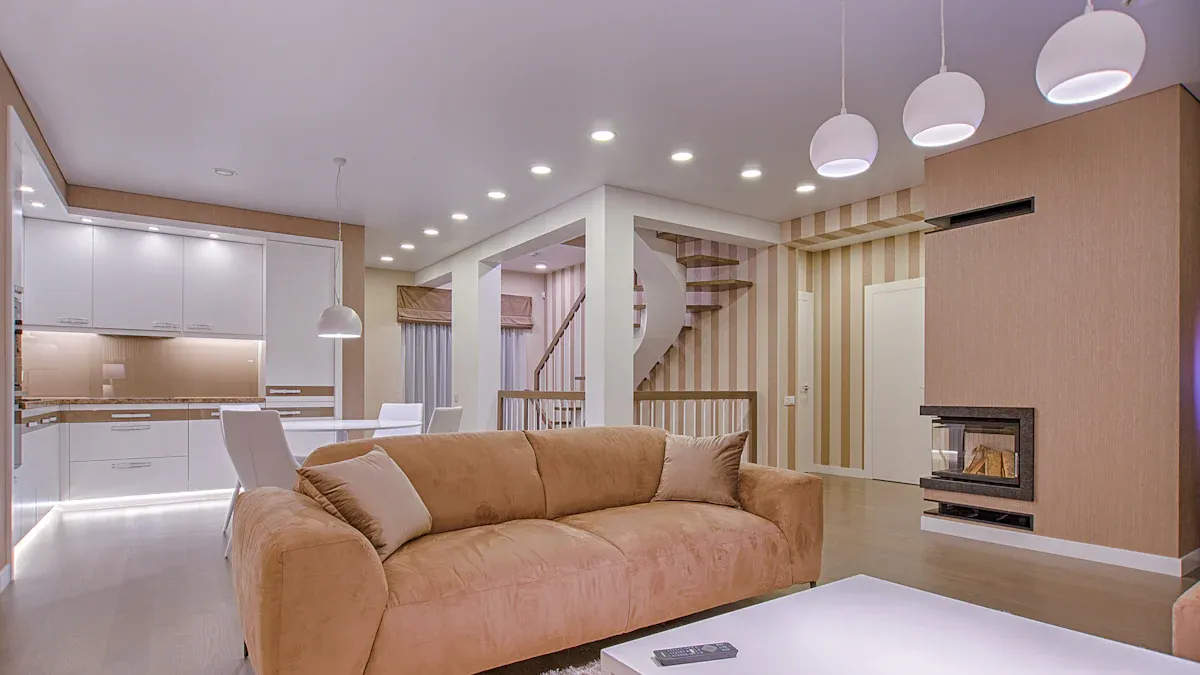
You spend a lot of time in your kitchen, so you want it to feel bright and welcoming. Good lighting helps you cook safely and enjoy meals with your family. Start with ambient lighting to fill the room with a soft, even glow. Add task lighting above your countertops and island. Pendant lamps work great for this and help you see what you’re doing. Accent lighting brings out the best features in your kitchen and adds personality.
Use ambient lighting to remove harsh shadows.
Add task lighting for food prep and cooking.
Try accent lighting to highlight cabinets or artwork.
Hang long pendant lights above the island for focused task lighting.
Place a candelabra-style fixture over the dining table for a formal touch.
Use different fixtures in each zone to define spaces without walls.
Lighting shapes the mood and function of your kitchen. A well-lit kitchen feels open and makes every meal special.
Kitchen&Dining Lighting
Living Room Lighting
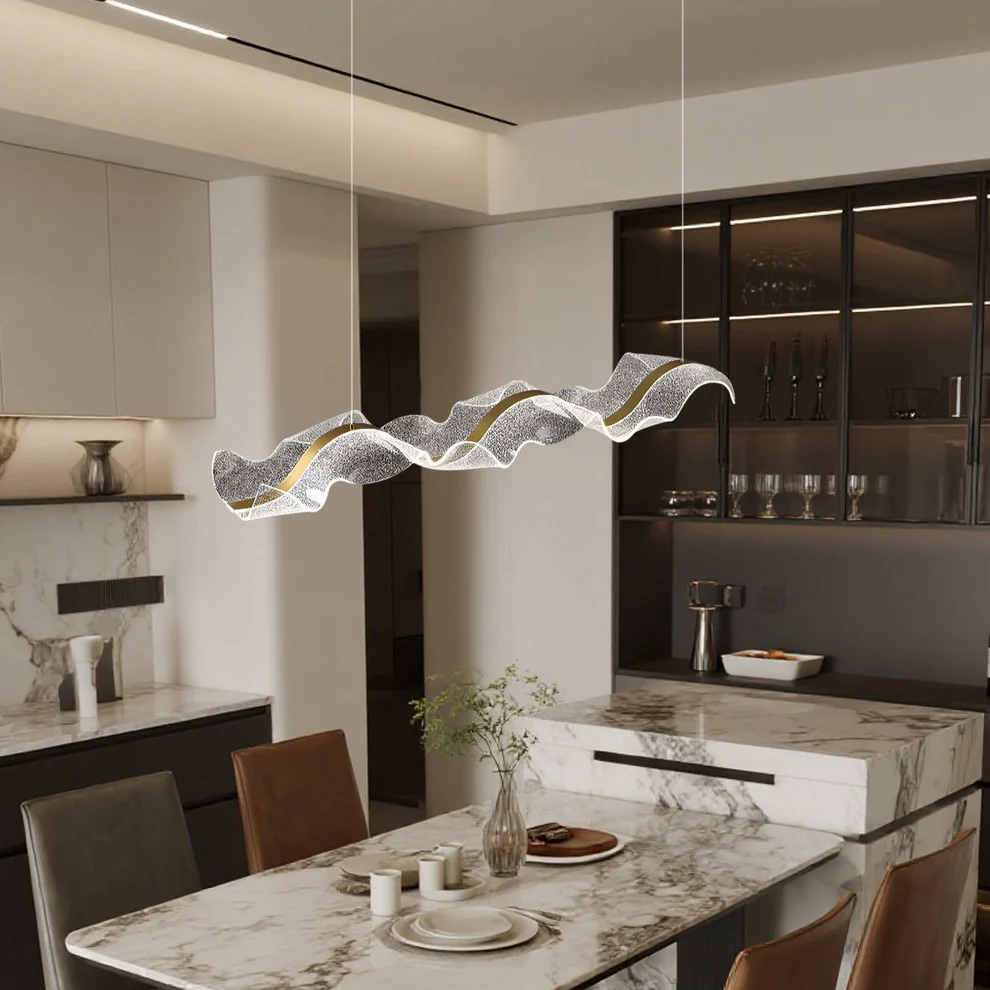
Your living room is where you relax, watch TV, or spend time with friends. Layer your lighting to match every activity. Place perimeter recessed lights around the edges for soft, even light. Mix in task lighting like floor lamps for reading or hobbies. Accent lighting, such as wall lights, can show off art or special features.
Space recessed lights about 4 feet apart if your ceiling is 8 feet high.
Combine ambient, task, and accent lighting for a cozy, flexible space.

Living Room Lighting
Bedroom Lighting
You want your bedroom to feel calm and restful. Skip the big ceiling fixture. Use wall sconces and table lamps instead. Place bedside sconces 60-66 inches from the floor. Make sure table lamps are at eye level when you sit in bed. This setup gives you soft, natural light for reading or relaxing.
Bathroom Lighting
Safety and comfort matter most in your bathroom. Layer your lighting with ambient, task, and accent lights. Pick fixtures made for bathrooms and check their safety ratings. Place lights where they won’t get wet. Use GFCI protection for all circuits. Always ask a licensed electrician to install bathroom lighting.
Layer your lighting for balance.
Choose fixtures with the right safety ratings.
Place lights away from water.
Use GFCI protection.
Hire a pro for installation.
Entry & Hallway Lighting
First impressions count. Good lighting in your entry and hallways makes your home feel warm and safe. Pendants can make ceilings look taller and add modern style. Wall sconces work well in small spaces and keep surfaces clear. Try different wall light fixtures for a personal touch.
Lighting Type |
Description |
|---|---|
Pendants |
Modern, eye-catching, make ceilings look taller. |
Wall Sconces |
Great for small spaces, create a warm feel, don’t take up space. |
Wall Light Fixtures |
Many styles, like flush-mounted or swing-arm, let you show your own style. |
Outdoor Lighting
Outdoor lighting keeps your home safe and looks great. Light up pathways and entrances to prevent accidents and keep intruders away. Pick lights that match your home’s style and boost curb appeal. Use LED or solar-powered lights to save energy. Choose weather-resistant fixtures for long-lasting use.
Safety: Light up walkways and doors.
Aesthetics: Match your home’s style and create a nice outdoor mood.
Energy Efficiency: Use LED or solar lights.
Practicality: Pick strong, weatherproof fixtures.
Tip: A smart lighting plan uses natural and artificial lighting together for the best results in every part of your home.
Types of Lighting: Ambient, Task, Accent
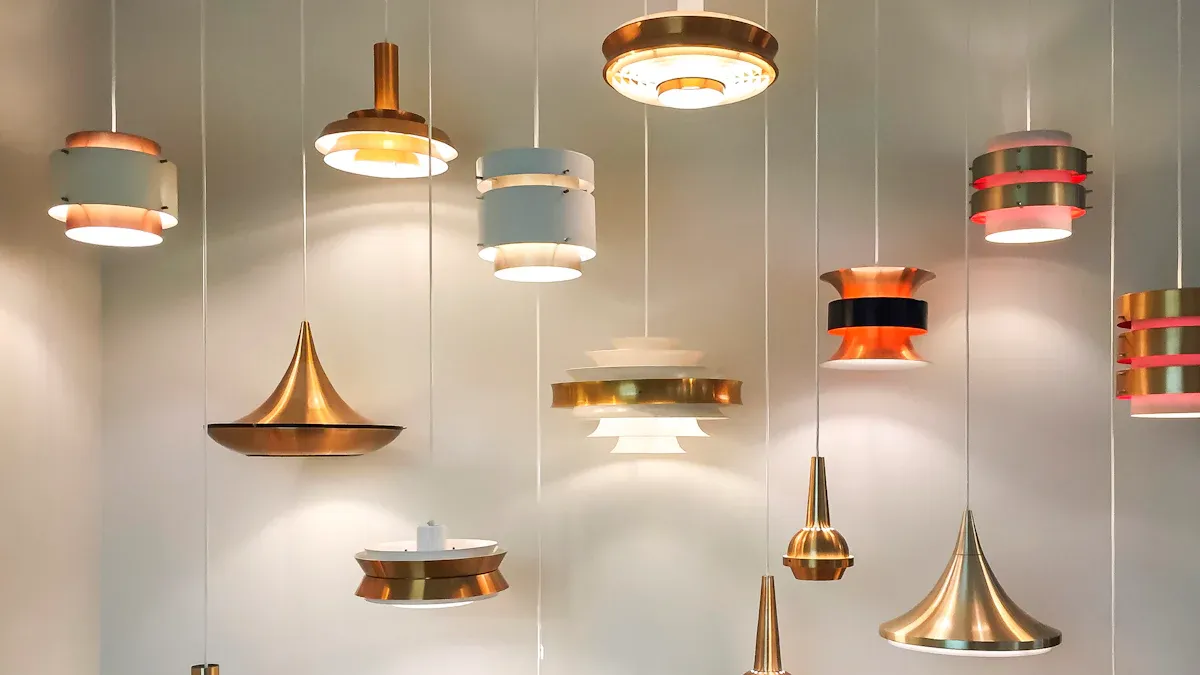
When you make a lighting plan for your new house, you should use different types of lighting. Each type does something special. Mixing them makes your home bright, cozy, and interesting. Let’s look at the three main types of lighting you will use.
Definition |
Color Temperature (K) |
Ideal Use Cases |
|
|---|---|---|---|
Ambient Lighting |
The main light in a room. It helps you see and move around. |
2700–3000 |
Living rooms, bedrooms, dining areas |
Accent Lighting |
This lighting shows off special things or spots in a room. |
2700–5000 |
Artwork, architectural elements |
Task Lighting |
This lighting is bright and helps you do things like read or cook. |
3500–4500 |
Home offices, kitchens, reading nooks |
You should use more than one kind of lighting in a room. This is called layering. Layering makes your home look nice and helps you do things every day.
Tip: Using ambient, task, and accent lighting together helps you work, relax, and show off your favorite things. It also makes your home feel friendly and balanced.
Ambient Lighting Basics
Ambient lighting is the first layer in every room. It fills the room with soft, even light. This helps you walk around safely. Ambient lighting sets the mood and makes your home feel comfy. It works best when you want a gentle, natural glow.
Some good fixtures for ambient lighting are:
Wall sconces
Recessed lighting
Solar lights
You can use ambient lighting in living rooms, bedrooms, and dining rooms. Pick warm color temperatures (2700–3000K) for a cozy feeling. If you want your home to feel open and welcoming, start with good ambient lighting.
Task Lighting Essentials
Task lighting helps you see better when you need to focus. You use it for reading, cooking, or working at a desk. Task lighting is brighter than ambient lighting. It shines right where you need it.
Here are some good choices for task lighting in kitchens and workspaces:
Task Lighting Option |
Description |
Ideal Use Cases |
|---|---|---|
Undercabinet lighting |
Shines light on work areas so you can see better. |
Chopping, reading recipes, cooking |
Pendant lights |
Gives focused light and looks nice above kitchen islands. |
Over kitchen islands or peninsulas |
Recessed lighting |
Lights up the whole area and works over sinks and in pantries. |
General kitchen tasks and storage areas |
Use under-cabinet lights for main work spots.
Pick pendants that give clear light and match your style.
Use 3000K–3500K bulbs for detailed work.
Put recessed lighting over sinks and in pantries.
Put task lighting where you do important things. In a home office, use a desk lamp. In the kitchen, try under-cabinet lights. Task lighting makes work easier and keeps your eyes from getting tired.
Accent Lighting Tips
Accent lighting adds style and makes your home look cool. You use it to show off artwork, textured walls, or neat features. Accent lighting draws attention to things you like most.
Here are some tips for accent lighting:
Try LED strip lights in ceilings or baseboards to highlight features without mess.
Use picture lights above art to make colors stand out.
Shine accent lighting at an angle on stone or brick walls to show their texture.
Pick warmer lights (under 3,500K) for a cozy look.
Accent lighting is great for showing off something special. You can use it in living rooms, hallways, or outside to light up your garden or front door.
Note: The right mix of ambient, task, and accent lighting makes your space lively and comfy. Your home will work for everything you do and show off your style.
Why Layering Lighting Matters
When you use all three types of lighting, your space feels just right. Ambient lighting gives you the base. Task lighting helps you get things done. Accent lighting adds depth and style.
Lighting Type |
Purpose |
|---|---|
Ambient Lighting |
Makes the main light for the room |
Task Lighting |
Helps you do special activities |
Accent Lighting |
Adds depth and style to the room |
Layering these types of lighting helps you work and play. It makes your home look pretty and feel balanced. You can change the mood by turning different lights on or off.
Using ambient, task, and accent lighting together makes your home feel fun and welcoming. For example, ambient lighting softly fills your living room. Task lighting brightens your reading spot. Accent lighting shows off your favorite painting. This mix helps you see better and adds personality to your home.
Tip: When you plan your lighting, always think about how you can use ambient, task, and accent lighting together. This is one of the best tips for any new house.
Fixture & Bulb Selection
Sizing Fixtures for Your Space
When you start selecting light fixtures, size matters. You want your lighting to fit the room, not overwhelm it or look too small. Use this simple table to help you pick the right size for each space:
Room Type |
Sizing Guidelines |
|---|---|
General Ceiling Lights |
Add the length and width of the room (in feet) and convert to inches for ideal fixture diameter. |
Dining Table |
Chandelier should be ½ to ⅔ the width of the table, with 30–36 inches clearance from the table. |
Kitchen Islands |
Leave 6 inches from the edge of the island to the first and last light, with 30–36 inches clearance. |
Ceiling Height Considerations |
For 8-foot ceilings, use flush mount; for 9-foot+ ceilings, use adjustable fixtures. |
General Advice |
When in doubt, choose a slightly larger fixture for a bold look. |
If you follow these guidelines, your lighting will look balanced and feel comfortable. You can make your lighting plan work for every room.
Matching Style & Function
Selecting light fixtures is not just about size. You want your lighting to match your home’s style and work well for each space. Try these tips when you pick fixtures:
Establish a common theme for your lighting. This helps your rooms feel connected.
Focus on a consistent color palette. Your light fixtures should complement each other.
Use a unifying element like a matching finish or color across fixtures.
Vary the scale of your light fixtures to create rhythm and flow.
Stick to a uniform color scheme. This blends different styles together.
You can mix modern and classic lighting, but keep one element the same. Maybe you use black finishes or warm brass. Your lighting should look good and work for your daily life.
Tip: When selecting light fixtures, always think about how they fit with your furniture and wall colors. This makes your lighting feel like part of your home.
Energy-Efficient Bulbs
Choosing the right bulbs for your light fixtures saves money and energy. LED bulbs are the best choice for most homes. They use less energy and last much longer than old incandescent bulbs. Here’s a quick look at your options:
Bulb Type |
Energy Savings |
Lifespan |
Estimated Lifetime Savings |
|---|---|---|---|
LED |
85% less than incandescent |
Up to 25 years |
$80 per bulb |
CFL |
75% less than incandescent |
Up to 10 years |
$30 per bulb |
LED bulbs give you bright, clear lighting and help lower your bills. CFL bulbs also save energy, but LEDs last longer and work better for most light fixtures. You can use LEDs in almost every room. They fit with your lighting plan and help you create a comfortable, eco-friendly home.
Note: When selecting light fixtures, always check if they work with LED bulbs. This makes your lighting more efficient and future-proof.
Lighting Guide: Color Temperature & Dimmers
Choosing Warm or Cool Light
Picking the right color temperature can change how your home feels. You might wonder if you should go for warm or cool lighting. This lighting guide helps you match the mood and function of each room with the best option. Warm lighting feels cozy and inviting. Cool lighting looks bright and helps you focus. Check out this table to see how different color temperatures work in your lighting plan:
Color Temperature Range |
Mood/Functionality |
Recommended Rooms |
|---|---|---|
2000 to 3000K |
Cozy and inviting |
Living rooms, dining nooks, bedrooms |
3100 to 4500K |
Neutral to bright |
Kitchens, workspaces |
4600 to 5500K |
Task-oriented |
Hospitals, commercial spaces |
If you want a relaxing bedroom, pick bulbs in the 2000 to 3000K range. For your kitchen or workspace, try 3100 to 4500K. This lighting guide makes it easy to set the right mood. You can mix warm and cool lighting in your home for different activities. Always think about how you use each room before you choose your bulbs.
Tip: Use warm lighting for places where you relax. Choose cooler lighting for spots where you need to see clearly and get things done.
Installing Dimmers
Dimmers give you more control over your lighting. You can change the brightness to fit your mood or activity. This simple upgrade makes your home feel more comfortable and flexible. Here’s why you should add dimmers to your lighting guide:
Dimmers let you personalize your lighting for movie nights or family dinners.
You can relax more easily by lowering the lights in the evening.
Dimming your lights saves electricity and helps your bulbs last longer.
You get precise control over brightness, which helps reduce glare.
Dimmers make it easy to switch from a bright workspace to a cozy hangout.
You can create the perfect atmosphere for any event or gathering.
Adding dimmers to your lighting plan helps you save money and enjoy your home more. You can use them in living rooms, bedrooms, and even kitchens. Dimmers work with many types of bulbs, especially LEDs. When you install dimmers, you make your lighting guide even more useful.
Note: Always check if your bulbs and fixtures work with dimmers before you buy them.
Cohesive Lighting Design
Coordinating Finishes
You want your home to feel pulled together, not random. When you start coordinating light fixtures, think about how each one fits into your overall style. You do not need every fixture to match exactly. Instead, try these strategies to create unity and interest:
Pick a few shared elements. You might repeat a finish, shape, or material in different rooms. This trick helps your lighting feel connected.
Avoid using the same collection everywhere. If you repeat the exact same fixture, your home can look flat. Mix things up for more personality.
Try a little contrast. You can use different finishes, forms, or textures. This adds depth and keeps your lighting from feeling boring.
When you follow these steps, your lighting will look thoughtful and stylish. You get a home that feels both coordinated and unique.
Tip: If you love a certain finish, like matte black or brushed brass, use it in a few places. Then add a different finish for variety. This keeps your lighting plan interesting.
Creating a Unified Look
You want your rooms to flow together. A unified look makes your home feel bigger and more welcoming. Here are some easy ways to tie your lighting together:
Layer different types of lighting. Use ambient, task, and accent lighting in every room.
Start with ambient lighting. This gives you even light all over.
Add task lighting for things like reading or cooking. You can adjust these lights for what you need.
Use accent lighting to show off cool features, like art or a special wall.
When you layer your lighting, you make every space work better. You also help your home look its best. Good lighting connects your rooms and shows off your style.
Note: A smart lighting plan uses coordinating light fixtures and layers of light to create a home that feels just right.
When to Consult a Lighting Pro
Benefits of Professional Advice
Sometimes, you might feel stuck when planning your home lighting. Maybe you want your rooms to look amazing, but you are not sure how to make it happen. This is when a lighting pro can help you. A professional brings years of experience and knows how to make every space shine. Here are some reasons you might want to call in an expert:
They know how to create layered lighting. You get the right mix of ambient, task, and accent lighting.
They help you solve tricky lighting problems, like dark corners or odd-shaped rooms.
They make sure your lighting plan follows all the rules and codes.
They can boost your home’s value and make it work better for your family.
You might wonder if hiring a pro is worth it. Take a look at this table to see how a professional compares to doing it yourself:
Factor |
DIY Lighting Approach |
Hiring a Professional Consultant |
|---|---|---|
Cost |
Lower upfront cost, but more mistakes and wasted energy |
Pays off over time with energy savings and fewer errors |
Expertise |
Limited, focused on quick fixes |
Deep knowledge and creative design ideas |
Final Result |
Works, but may not look or feel great |
Beautiful, functional spaces that lift your mood and style |
Tip: If you want your lighting to look amazing and work perfectly, a professional can make a big difference.
What to Expect
When you meet with a lighting professional, you get more than just advice. The expert will talk with you about your needs and what you like. You will walk through your home together and look at how lighting fits with your rooms and style. The pro will help you pick the best fixtures and build a plan that makes your home both beautiful and practical.
You can expect the lighting expert to:
Ask about your daily routines and favorite activities.
Look at your home’s design and suggest ways to use lighting for the best effect.
Show you different fixture options and explain how each one works.
Create a lighting plan that matches your taste and budget.
A good lighting pro listens to you and helps you feel confident about your choices. You will see your home in a whole new light!
Choosing the best lighting for your new house starts with a few simple steps:
Assess your current lighting and spot areas that need improvement.
Match your lighting choices to your goals, like saving money or making your home look great.
Pick LED lighting for better energy efficiency and lower bills.
A good lighting guide helps you plan each room with the right lighting for every activity. Think about how lighting changes the mood, highlights your style, and keeps your home flexible. Make sure your lighting fits the space, controls glare, and shows colors well.
Take a moment to sit in each room and imagine how lighting can make it feel at different times of day.
If you want custom lighting or have a tricky space, a lighting professional can help you avoid mistakes and boost your home’s value. Well-planned lighting brings comfort, safety, and savings for years to come.
Benefit |
Description |
|---|---|
Energy Efficiency |
LED lighting uses less power and saves money. |
Improved Safety |
Good lighting keeps your home safe and easy to navigate. |
Enhanced Ambiance |
Layered lighting creates a cozy, inviting atmosphere. |
Increased Value |
Modern lighting makes your home more appealing. |
FAQ
What is the best way to start planning lighting for a new house?
Begin by looking at each room during the day. Notice where sunlight comes in. Make a list of spaces that need extra lighting. This helps you choose the right fixtures and avoid dark spots.
How many types of lighting should I use in each room?
You should use at least two types of lighting in every room. Try mixing ambient and task lighting. Add accent lighting if you want to highlight art or special features. Layering makes your space feel balanced.
Can I use the same lighting fixtures in every room?
You can, but your home will look more interesting if you mix things up. Choose different lighting styles for each space. Try to keep one element, like color or finish, the same for a unified look.
How do I pick the right bulb for my lighting?
Check the fixture’s label for bulb type. LED bulbs work for most lighting needs. Pick warm bulbs for bedrooms and living rooms. Use cooler bulbs in kitchens or work areas. Always match the bulb to the room’s purpose.
Do I need a professional for my home lighting plan?
You can plan basic lighting yourself. If you want custom designs or have tricky spaces, a lighting professional can help. They know how to solve problems and make your home look its best.
Share:
Best Kitchen Lighting Fixtures for a Modern Look
Light Troubleshooting Steps: What to Do When It Fails