


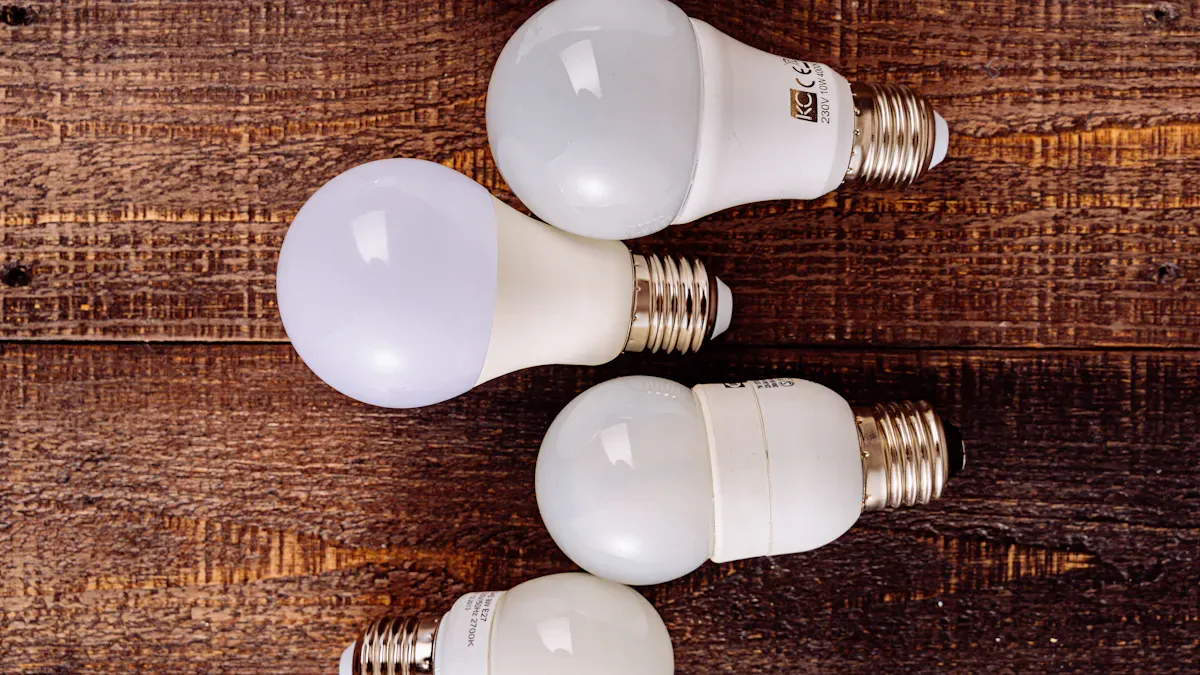
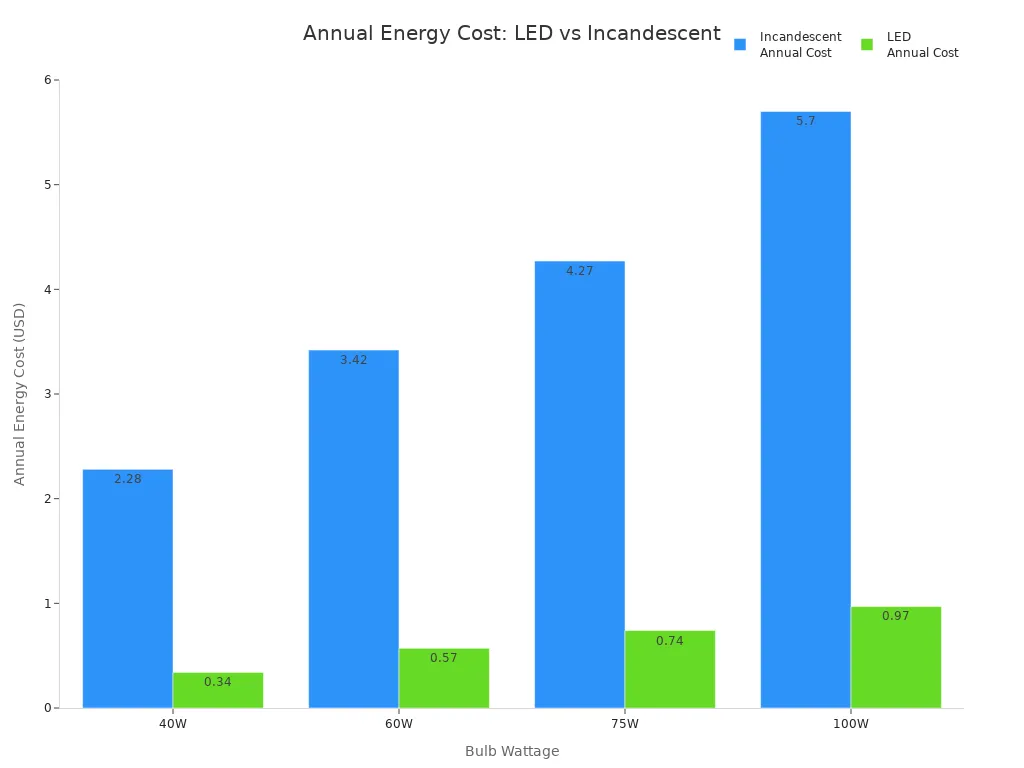
You have a simple choice when picking a light bulb for your house or office. LED bulbs use less energy and last much longer than incandescent bulbs. Incandescent bulbs give off a warm and cozy light, but LED bulbs help you save money and energy. Look at the facts: LED bulbs turn 75% of their energy into light, but incandescent bulbs only use about 10%. The table below shows how much money you can save each year by using LED bulbs instead.
Incandescent Wattage |
LED Equivalent |
Lumens |
Annual Energy Cost* |
|---|---|---|---|
40W |
5-6W |
~450 |
$2.28 vs $0.34 |
60W |
8-10W |
~800 |
$3.42 vs $0.57 |
75W |
11-13W |
~1,100 |
$4.27 vs $0.74 |
100W |
14-17W |
~1,600 |
$5.70 vs $0.97 |
The incandescent vs led question is about cost, how well they work, and what kind of light you want in your room.
Key Takeaways
LED bulbs use 75% less energy than incandescent bulbs. This means you can save a lot of money on your electricity bill.
LED bulbs last much longer. They can work for 15,000 to 50,000 hours. Incandescent bulbs only last about 1,000 hours.
Using LED bulbs makes less heat. This helps keep your home safer and more comfortable.
LED bulbs come in many color temperatures. You can pick the lighting that fits your mood or what you are doing.
LED bulbs cost more at first. But they save you money later because you pay less for energy and do not need to replace them as often.
Incandescent vs LED: Technology Overview
Difference Between LED and Incandescent
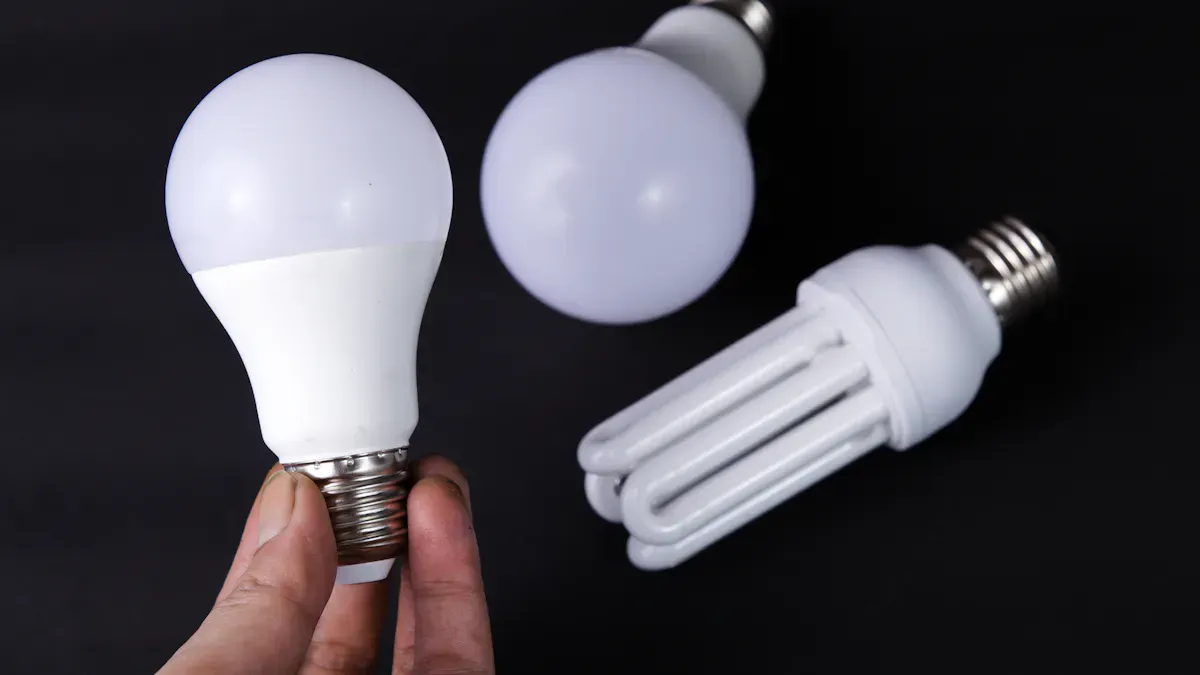
There are two main types of light bulbs. One is incandescent, and the other is LED. They make light in different ways and use energy differently. Incandescent bulbs heat a thin wire called a filament. The wire gets hot and glows to make light. Most energy is lost as heat. LED bulbs use a microchip. The chip lets electricity flow and makes light with less heat. LED bulbs are more efficient and last longer. Incandescent bulbs give a warm light but need to be replaced often. LED bulbs cost more at first, but you save money later.
Bulb Type |
Mechanism of Light Production |
Energy Efficiency |
Lifespan |
|---|---|---|---|
Incandescent |
Makes light by heating a tungsten filament until it glows. |
~5% |
750-2,000 hours |
LED |
Turns electricity into light using electroluminescence. |
Uses up to 80% less energy |
LED bulbs save energy and last longer than incandescent bulbs. Incandescent bulbs are cheaper at first but need to be changed more often. LED bulbs cost more when you buy them, but you spend less over time.
How Each Bulb Works
Incandescent bulbs send electricity through a filament. The filament heats up and makes light. Most energy becomes heat, not light. The bulb gets hot fast. LED bulbs use a microchip. The chip makes light directly and keeps the bulb cool. LED bulbs are more efficient.
Bulb Type |
Energy Consumption (Wattage) |
Heat Generation |
Cost Comparison |
|---|---|---|---|
Incandescent |
60 |
Makes more heat |
Costs less at first |
LED |
10 |
Makes less heat |
Costs more at first, but saves money later |
LED bulbs have special features. You can pick different colors for your rooms. LEDs help the planet by using less energy and making less waste. LED bulbs last much longer than incandescent bulbs.
LEDs let you change the lighting for your mood.
LEDs help you pay less for electricity.
LEDs are better for the environment.
Choosing LED bulbs is a smart idea for most places.
Energy Efficiency Comparison
Power Usage
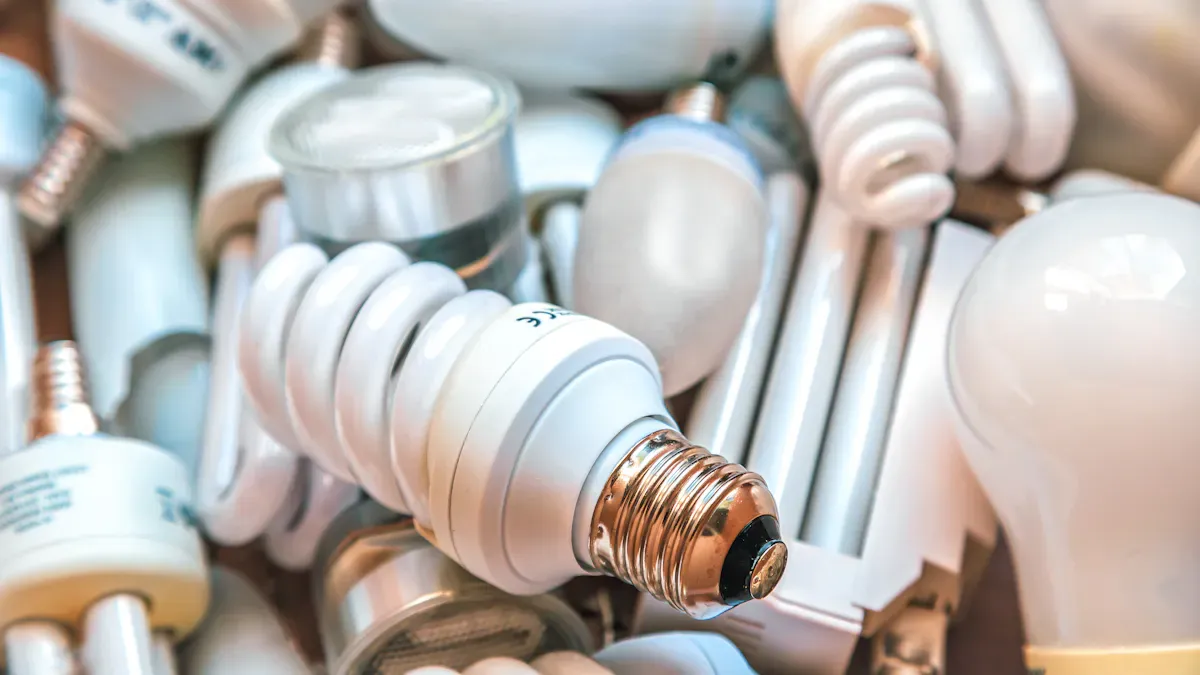
You want a light bulb that saves you money and uses less electricity. When you compare an LED to an incandescent, you see a big difference in power usage. An LED uses much less energy to produce the same amount of light as an incandescent. For example, if you need a bulb that gives off about 800 lumens, an incandescent light bulb will use 60 watts. An LED bulb only needs 8 to 12 watts for the same brightness. This means you use about 80-85% less electricity with an LED.
Bulb Type |
Wattage Consumption |
|---|---|
LED |
4 to 28 watts |
Incandescent |
60 watts (for 800 lumens) |
LEDs consume about 80-85% less electricity than incandescent bulbs.
To replace a 60-watt incandescent, choose an LED rated 8-12 watts.
You will notice the savings on your energy bill. Using LED bulbs in your home or office makes your space more energy efficient. You also help the environment by using less power. The high energy efficiency of LEDs means you get more light for every watt you use. This makes LEDs the best choice for anyone who wants to lower their energy costs and reduce waste.
Heat Output
When you touch an incandescent bulb, you feel the heat right away. Incandescent bulbs waste most of their energy as heat. Only about 10-20% of the energy turns into light. The rest becomes heat, which can make a room warmer and even cause safety problems. The surface of an incandescent can reach 200 to 260 degrees Celsius. This high heat can pose a fire risk, especially in closed fixtures.
LED bulbs work differently. They use most of their energy to make light, not heat. LEDs operate at an efficiency of 80-90%, so they stay cool to the touch. The surface temperature of an LED bulb usually stays under 60 degrees Celsius. This lower heat output makes LEDs much safer. You do not have to worry about burns or fire hazards. You also reduce the load on your air conditioning during hot months.
LED bulbs produce much less heat than incandescent bulbs, making your home safer.
LEDs are more energy efficient, using over 75% less energy than incandescent bulbs.
The longer lifespan of LEDs means you change bulbs less often, which lowers the risk of accidents.
Choosing LED bulbs gives you better energy efficiency, lower power usage, and a safer home or office. You get bright, steady light without the extra heat. LEDs help you save money, protect your family, and make your space more comfortable.
Lifespan and Durability
Average Lifespan
When you choose a light bulb, you want it to last as long as possible. The lifespan of a bulb tells you how many hours it will shine before you need a new one. Incandescent bulbs have a short lifespan. Most incandescent bulbs last about 1,000 hours. If you use an incandescent light bulb for three hours each day, you will need to replace it every year. LED bulbs last much longer. Many budget LED bulbs work for 15,000 to 25,000 hours. Some commercial-grade LED bulbs can reach over 50,000 hours. You will not need to change an LED bulb for many years.
Bulb Type |
|
|---|---|
Incandescent |
~1,000 hours |
Budget LED |
15,000-25,000 hours |
Commercial-Grade LED |
50,000+ hours (L70) |
You save time and money when you pick an LED bulb. You do not have to buy new bulbs often, and you spend less on replacements.
Durability Factors
You want a bulb that can handle daily use and last through bumps or changes in temperature. LED bulbs stand out for their strong durability. They resist shocks and work well in cold or hot places. You will find that LEDs need less maintenance and rarely break. Incandescent bulbs are fragile. The thin filament inside an incandescent can break easily. You will need to replace these bulbs more often, which means more work and higher costs.
LED bulbs last 25,000 to 50,000 hours, so you replace them less often than incandescent bulbs.
LEDs resist low temperatures and do not break easily, which lowers the risk of damage or fire.
Incandescent bulbs break more often and need frequent replacement.
LEDs use less energy and last longer, so fewer bulbs end up in landfills.
LEDs do not contain mercury and help reduce carbon emissions over time.
Tip: If you want a light bulb that saves you time, money, and effort, choose an LED. You will enjoy a longer lifespan and better durability in every room.
Cost Breakdown
Upfront Cost
When you buy a light bulb, you notice the price right away. Incandescent bulbs cost less at the store. You pay about $1 for a basic incandescent bulb. LED bulbs cost more, usually between $3 and $8 for each bulb. You might wonder why you should pay extra for an LED bulb. The answer comes from how long the bulb lasts and how much energy it uses. You replace incandescent bulbs often because they burn out quickly. LED bulbs last much longer, so you buy fewer bulbs over time. You spend more at first, but you save money later.
Tip: If you want to save money in the long run, consider the total cost of each bulb, not just the price at checkout.
Long-Term Savings
You see the biggest difference in your monthly bills. LED bulbs use much less energy than incandescent bulbs. This means you pay less for electricity. Over time, the savings add up. Look at the table below to compare monthly costs for different brightness levels:
Brightness (Lumens) |
Incandescent cost/month |
LED cost/month |
Savings/month with LED |
|---|---|---|---|
400-500 |
$1.54 |
$0.25 |
$1.29 |
650-850 |
$2.30 |
$0.33 |
$1.97 |
1000-1400 |
$2.88 |
$0.49 |
$2.39 |
1450-1700+ |
$3.84 |
$0.66 |
$3.18 |
2700+ |
$5.76 |
$1.03 |
$4.73 |
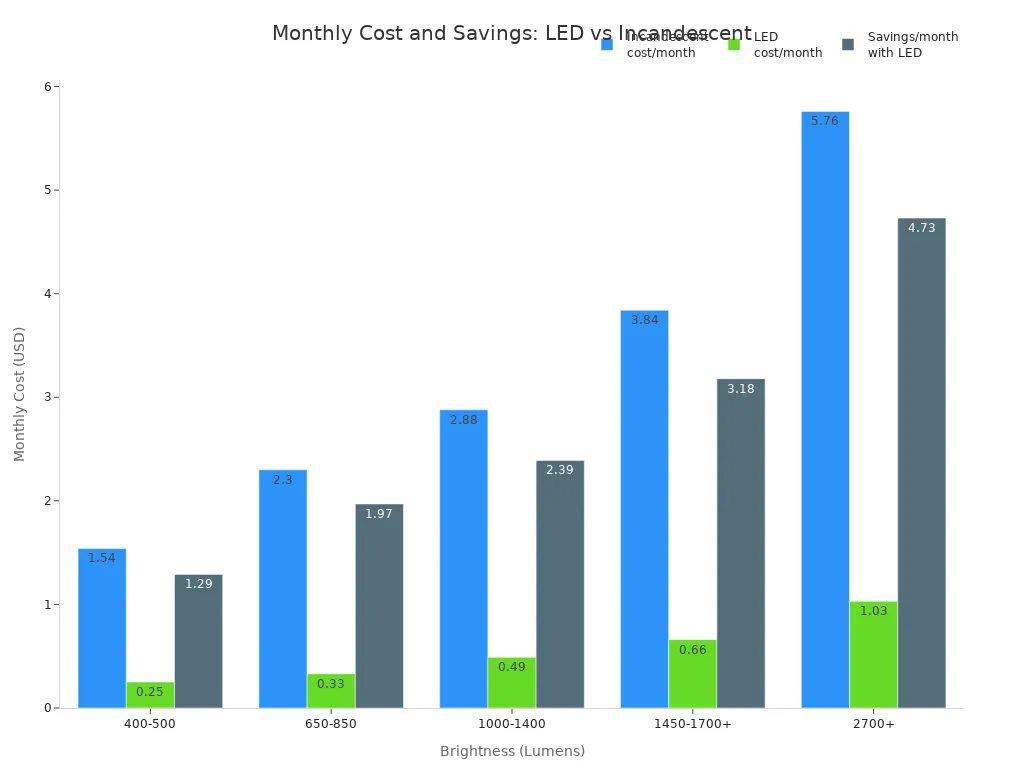
If you use ten bulbs for three hours each day, you can save about $60 every year by switching to LED bulbs. You also spend less on replacements because LED bulbs last much longer than incandescent bulbs. You get more light for your money and help the environment by using less energy. Choosing LED bulbs gives you steady light, lower bills, and fewer trips to the store for new bulbs.
Light Quality
Brightness and Color
When you choose a light bulb, you want the right brightness and color for your space. Both led and incandescent bulbs can give you enough light, but they do it in different ways. A 60-watt incandescent bulb produces about 900 lumens. An 8-watt led bulb can give you the same amount of light. You get the same brightness with much less energy.
You also have more choices with led bulbs when it comes to color temperature. Incandescent bulbs usually give off a warm yellow light, around 2500K. Led bulbs offer a range of color temperatures. You can pick warm white (2700K-3000K) for a cozy feel, neutral white (3500K-4000K) for everyday use, or cool white/daylight (5000K+) for tasks that need bright, clear light.
Bulb Type |
Color Temperature (Kelvin) |
|
|---|---|---|
Incandescent |
~900 (60W) |
Warm Yellow (2500K) to Cool Blue (7000K) |
LED |
~900 (8W) |
Warm White (2700K-3000K), Neutral White (3500K-4000K), Cool White/Daylight (5000K+) |
Warm white: Feels like a traditional incandescent bulb.
Neutral white: Good for kitchens and workspaces.
Cool white/daylight: Best for reading or detailed work.
You can match the light to your mood or activity with led bulbs.
Dimming Features
You may want to adjust the brightness of your light for different times of day. Incandescent bulbs work with almost any dimmer switch. You can lower the light smoothly with no flicker. Led bulbs can also dim, but you need to check the packaging. Not every led bulb is dimmable. You must use a dimmer made for led bulbs to avoid flickering or buzzing.
Led bulbs offer smart control options. Some support advanced dimming systems like DALI or 0-10V, which you find in offices or commercial spaces. Incandescent bulbs do not work with smart controls. If you want full control over your lighting, led bulbs give you more options.
Feature |
LED Bulbs |
Incandescent Bulbs |
|---|---|---|
Needs LED-compatible dimmers |
Works with all dimmers |
|
Smart Control Options |
Supports advanced protocols |
Not compatible |
Dimming Capability |
Not all are dimmable |
Always dimmable |
Tip: Always check if your led bulb is dimmable before buying. This helps you get the best light for your needs.
Environmental Impact
Sustainability
Choosing the right bulb helps the planet. LED bulbs use less energy than incandescent bulbs. Using less energy means power plants burn less fuel. This lowers carbon emissions. Every time you use an LED bulb, you help fight climate change.
LED bulbs last much longer than incandescent bulbs. You throw away fewer bulbs, so there is less waste in landfills. LEDs do not have mercury or other dangerous materials. This makes them safer for your home and the earth.
Here is a quick comparison:
Feature |
LED Bulbs |
Incandescent Bulbs |
|---|---|---|
Energy Consumption |
Lower energy use |
Higher energy use |
Lifespan |
Longer lifespan |
Shorter lifespan |
Environmental Impact |
Reduced waste and carbon emissions |
Higher waste and emissions |
Hazardous Materials |
No mercury |
May contain mercury |
Switching to LED lighting is good for the environment. You use less electricity and make less trash. You also avoid harmful chemicals. The government now encourages people to use LEDs. New rules are phasing out incandescent bulbs. These changes help you save money and protect the planet.
Disposal and Recycling
You need to know how to get rid of each bulb. You can throw away an incandescent bulb in your regular trash. It does not need special recycling. But you should recycle LED bulbs because they have electronic parts. Many local recycling centers take LEDs. You can ask your city or local stores about drop-off spots.
Here is a summary:
Bulb Type |
Disposal Method |
Recycling Information |
|---|---|---|
Incandescent |
Dispose with regular household waste |
No special recycling needed |
LEDs |
Should be recycled due to electronic components |
Many local programs accept LEDs for recycling; check with local centers for drop-off options |
Recycling LED bulbs helps the environment. You keep electronic waste out of landfills. You also help reuse important materials. Always handle bulbs carefully and follow local rules for safe disposal.
Practical Applications
Home Lighting
You want your home to feel comfortable and safe. When you choose a light bulb, you need to think about where you will use it. Most people pick led bulbs for living rooms, kitchens, and bedrooms. Led bulbs use less energy and last longer than incandescent bulbs. You can find led bulbs in many shapes and colors, so you can set the mood in any room. If you want a cozy feeling, pick a warm white led. For reading or working, choose a cool white led.
Here is a table that shows why led bulbs work better for most home lighting needs:
Advantage |
Description |
|---|---|
Efficiency |
Led bulbs use much less energy. You can replace a 25-watt incandescent with a 1-2 watt led. |
Durability |
Led bulbs last longer and do not break easily. You can use them outdoors or in open fixtures. |
Safety |
Led bulbs stay cool and do not have toxic materials. They are safer than incandescent bulbs. |
Environment |
Led bulbs do not have mercury. They are safer for the planet. |
You may still use an incandescent bulb if you want a very warm, classic glow for a special lamp. Always check your fixture and dimmer switch. Not all led bulbs work with every dimmer. If you use the wrong bulb, you might see flickering or buzzing. Always read the package and follow the manufacturer's advice.
Tip: Led bulbs are best for most rooms, but always check your fixtures for compatibility.
Commercial Use
You need strong, reliable light in offices, stores, and warehouses. Led bulbs help you save money and keep your space bright. They work well in cold places, like parking garages, because they turn on right away. Led bulbs also last much longer than incandescent bulbs, so you do not need to change them often.
Here is a table that shows how led bulbs meet the needs of different commercial spaces:
Application |
Recommended CRI |
|
|---|---|---|
Warehouses, parking |
70 |
80 |
General office, retail |
80 |
90 |
Healthcare, art galleries |
90 |
95+ |
Colour-critical work |
95 |
97+ |
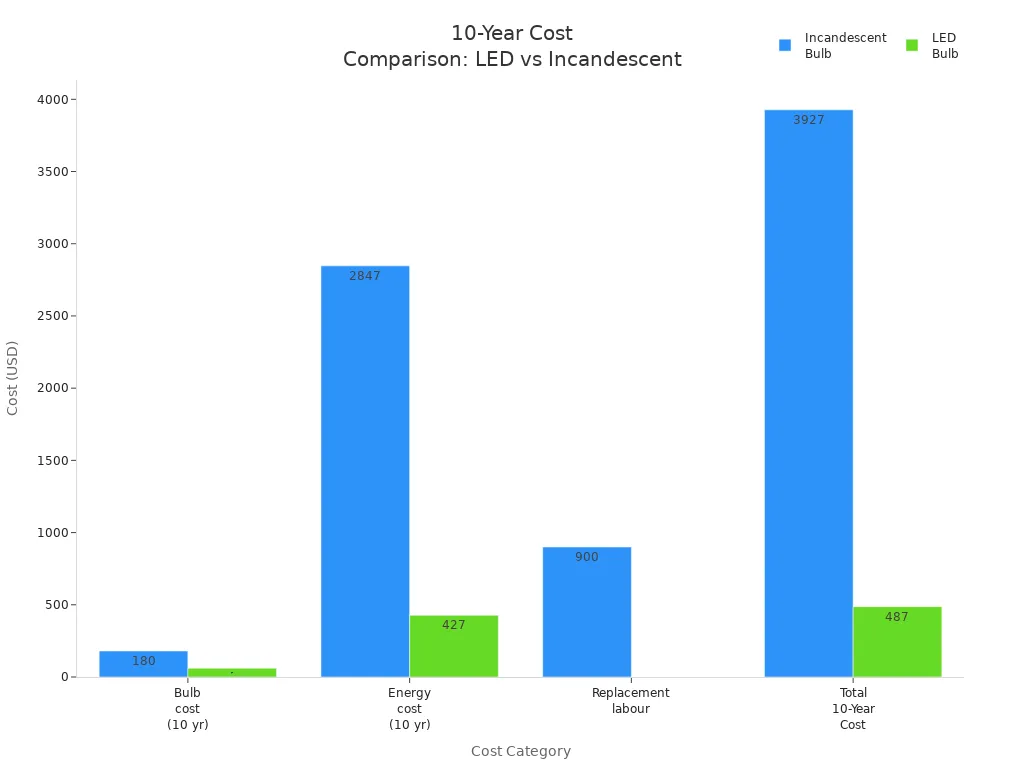
You also save a lot of money over time. Look at this cost comparison for using led bulbs instead of incandescent bulbs for ten years:
Cost Category |
Incandescent (60W) |
LED (9W) |
|---|---|---|
Bulb cost (10 yr) |
$180 |
$60 |
Energy cost (10 yr) |
$2,847 |
$427 |
Replacement labour |
$900 |
$0 |
Total 10-Year Cost |
$3,927 |
$487 |
Savings with LED |
$3,440 |
You must also think about fixture compatibility. Many led bulbs are dimmable, but you need the right dimmer switch. If you use the wrong one, you might see flickering or hear buzzing. Always check the fixture and dimmer before you buy a new bulb. Never use a bulb with higher wattage than your fixture allows. This keeps your space safe and your lighting smooth.
Note: Led bulbs give you better performance, lower costs, and more choices for every commercial space.
Incandescent vs LED: Quick Comparison Table
You want to pick the right light bulb. Comparing both types side by side makes it easier. The table below shows how incandescent and LED bulbs are different. You can look at each feature and see which bulb is better for you.
Feature |
Incandescent Bulb |
LED Bulb |
|---|---|---|
Wattage (for 800 lm) |
60W |
8-12W |
Brightness (Lumens) |
800 |
800 |
Energy Efficiency |
Low |
High |
Lifespan |
1,000 hours |
15,000–25,000 hours |
Upfront Cost |
Low |
Moderate |
Long-Term Cost |
High (frequent replacement, higher energy use) |
Low (lasts longer, uses less energy) |
Heat Output |
High |
Low |
Color Temperature |
Warm (2500K) |
Warm to Cool (2700K–5000K+) |
Dimming |
Always dimmable |
Dimmable (check packaging) |
Environmental Impact |
More waste, higher emissions |
Less waste, lower emissions |
Disposal |
Regular trash |
Recycle at local center |
LED bulbs use less energy but give the same light. You can pick from more colors and dimming choices. LEDs last a lot longer, so you change them less. You save money over time and help the planet by using less power.
Tip: Check this table before you buy bulbs. It will help you choose the best one for your home or office.
You get more benefits when you pick LED bulbs. LEDs use energy well and do not get very hot. They can last up to 50,000 hours. Incandescent bulbs give a warm light that some people like for a cozy feel. New LED technology lets you choose warmer colors too. Think about what you need:
Bulb Type |
Efficiency Rate |
Lifespan |
|---|---|---|
Incandescent |
10-20% |
~1,000 hours |
LED |
80-90% |
25,000-50,000+ hours |
Put LEDs where people walk a lot.
Look for lumens instead of watts.
Pick the right bulb shape and color for your lamp.
LEDs help you spend less money and use less energy. You also get more choices for your lighting.
FAQ
What is the main advantage of LED bulbs over incandescent bulbs?
You get much higher energy efficiency with LED bulbs. They use less power and last longer. This means you save money on your electric bill and buy fewer replacements.
Can you use LED bulbs in any fixture?
You can use LED bulbs in most fixtures. Always check the packaging for compatibility. Some older dimmers or enclosed fixtures may need special LED bulbs.
Do LED bulbs give off the same warm light as incandescent bulbs?
You can find LED bulbs that produce warm white light. Look for bulbs labeled 2700K to 3000K. These match the cozy glow of traditional incandescent bulbs.
Are LED bulbs safe for the environment?
You help the environment when you choose LED bulbs. They use less energy and contain no mercury. You should recycle them at local centers to reduce electronic waste.


